Indonesia certainly has unique characteristics and strategies to face the Industrial Revolution 4.0 through the current government. However, upon closer examination, these efforts are still suboptimal due to the increasing population density in large cities. On the other hand, this can lead to significant inequality between urban and rural areas. Furthermore, it faces the prospect of a demographic bonus, whose potential, if strategically harnessed, will make a significant contribution to the nation. The sharing economy phenomenon can also be optimized through widespread digitalization across Indonesia.
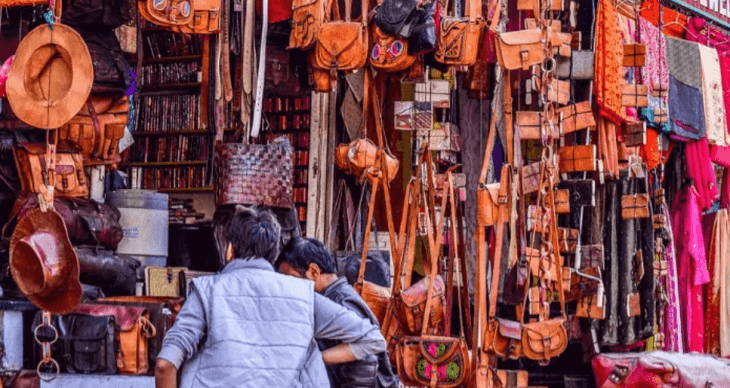
The optimal sharing economy phenomenon can be implemented by improving the quality and quantity of Micro, Small, and Medium Enterprises (MSMEs). The MSME sector has contributed significantly to the Indonesian economy, accounting for 57% of GDP in 2015 and absorbing 97% of the workforce. This figure is predicted to continue to increase as the number of entrepreneurs continues to grow, continuing the trend of 99.99% of the business share in Indonesia. The demographic bonus will greatly support this optimal implementation.
A fundamental yet crucial factor that needs to be addressed is the ability to master new technologies and financial readiness, which are key assets in creating a business, whether producing goods or services, that can be globally competitive. Furthermore, compared to the overexploitation of natural resources, the current digital era and future challenges require sustainable businesses oriented toward the creative economy, leveraging the crucial role of human resource mindsets.
Inclusive Economy
The World Economic Forum defines an inclusive economy as a strategy that provides broad access to all levels of society to increase prosperity and economic performance. It also aims to guarantee that people will have access to the economy, which can improve their well-being.
READ ALSO: Sustainable Development
Financial Technology
Financial Technology, or Fintech, is defined as the use of technology in the financial sector. Explained in detail, the development of the digital era has led to the application of advanced technology to solve financial intermediation problems. The World Bank also states that Fintech itself is a company-based industry that utilizes technology in its financial services delivery system to achieve effectiveness and efficiency.
Micro, Small and Medium Enterprises
The existence of MSMEs can be used as an alternative way to address the issue of inequality in Indonesia. However, a major challenge for MSMEs is the difficulty in accessing capital and even business collateral. This makes it particularly difficult for MSMEs in Indonesia to grow. As time goes by, numerous innovations have emerged, reflecting the development of the digital era, such as the development of the creative economy.
Sharing Economy
According to Benita Matofska of The People Who Share , the sharing economy is part of a socio-economic ecosystem designed to create shared opportunities across all aspects, from human resources to intellectual capital. These shared aspects include product creativity, buying and selling goods, consumption, production and distribution, and even services. This phenomenon presents a significant challenge for businesses in achieving market development.
Realizing an Equal Indonesia
The rapid development of the modern era has led to a significant economic transformation. Innovation is now paramount in business activities. Fierce competition occurs at the regional, national, and even international levels. The current business era also involves significant human resources, so a country's human resource potential must be well managed. Given the current challenges and problems, it is necessary to realize an Equitable Indonesia (Economic Capital for a Prosperous Society) through fintech, which has two main features: training to increase human resource capacity in mastering technology, digitalization, and business ideas, and then to understand wise financial management.
The innovative training and financing model is based on the concept that the management will collaborate with provincial governments throughout Indonesia to create synergy and avoid overlapping policies. This approach has six characteristics: Easy : Through synergy and digitalization, regular, detailed communication interactions with communities in each region are created, with optimal mentoring and training. Affordable : Because this program aims for equality, this collaboration will provide affordability to communities in each region.
READ ALSO: Initiating Sustainable Urban Green Open Spaces
Furthermore, other characteristics such as Proportional: The first feature provides training in developing innovation or business ideas and mastery of new technologies that can be tailored to the abilities, potential and capacity of each individual in each region. Then Low Interest : The second feature provides loans or credit for business costs with the lowest among other financial institutions, this is because the program through this Fintech has a social business orientation, economic equality and does not exploit natural resources throughout Indonesia. Then the next characteristic is Convenience : when these 2 features can be optimized by the community, each individual will be able to compete wisely without worrying about major risks that occur, because they already have the main capital base in doing business. Next, the last is Secure and Reliable : legality, permits have been obtained and economic factors have been owned, so it can create competitive business products and be commercialized to obtain optimal profits.
In light of the current digital era and the use of advanced technology, this program focuses on human resource innovation and creativity in managing each region's economic potential, tailored to its specific regional characteristics. Because the program also focuses on the creative economy, it will reduce the risk of environmental damage and natural resource exploitation. Improving quality through training, coaching, and outreach on the proper use of technology, as well as wise financial management, can facilitate the development of the community's potential.
Facilitated access to capital and non-cash finance will certainly minimize administrative processes and is believed to be a significant support for entrepreneurs when their willingness to learn technology and financial management is increased. In the short term, it can foster collaboration between entrepreneurs and investors. In the medium term, it can optimize the demographic bonus to provide significant potential through training, education, and coaching on technology mastery and financial management, as well as the ability to implement them. In the long term, it aims to achieve sustainable economic growth and increase the quality and quantity of MSMEs that can compete globally.
Molfane.co Creative Team


