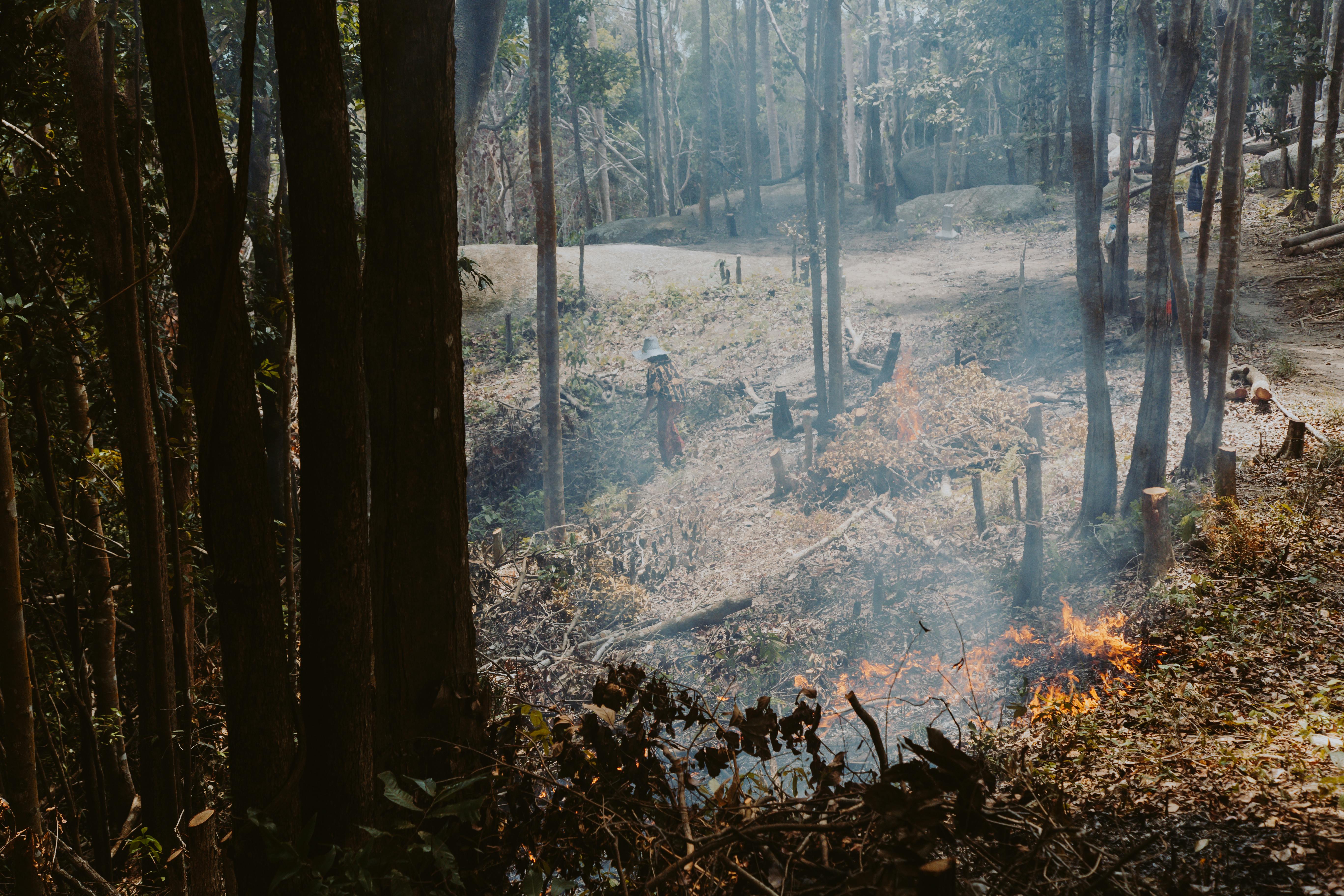
[Jakarta, 15 September 2025] Hot weather is not the main factor behind forest and land fires (karhutla), as repeatedly claimed by the Minister of Forestry, Raja Juli Antoni. The Minister has also blamed communities for the fires, accusing them of land clearing practices. In reality, Pantau Gambut and MADANI Berkelanjutan have found that massive large-scale monoculture plantation activities remain the primary driver of forest and land fires throughout 2025.
During the January–August 2025 period, MADANI Berkelanjutan recorded an Indicative Burned Area (Angka Indikatif Terbakar/AIT) of 89,330 hectares spread across oil palm cultivation rights (HGU), oil and gas, mineral and coal mining, and forest utilization permit (PBPH) concessions across Indonesia. Even when examined specifically within peatland ecosystems, the findings remain consistent. Pantau Gambut identified 9,336 fire hotspots within HGU and PBPH areas during the same period.
The Minister of Forestry’s claim becomes even less relevant given that the number of fires in 2025 is actually higher than in 2023, the year Indonesia experienced El Niño conditions. MADANI Berkelanjutan recorded 99,099 hectares burned in July 2025—nearly double the 53,973 hectares burned in July 2023. Even more alarming, Pantau Gambut found 3,157 hotspots in Peat Hydrological Units (KHG) in July 2023, which then surged fourfold to 13,608 hotspots in July 2025.
PT Sumatera Riang Lestari emerged as the PBPH concession holder with the largest contribution to forest and land fires within peat hydrological units in July 2025, covering 4,787 hectares. Meanwhile, among HGU holders, PT Alam Sari Lestari dominated fire incidents with 284 hectares burned.
Putra Saptian, Campaigner at Pantau Gambut, explained, “The Minister of Forestry’s statement that extreme weather is the cause of forest and land fires is misleading. This statement appears to justify wrongful practices by corporations operating within peat hydrological unit areas.”
Putra added, “The government should instead focus on protecting peatland ecosystems and ensure non-discriminatory law enforcement. Many companies have converted peatlands, which has led to forest and land fires. When the Minister of Forestry scapegoats weather as the source of these fires, it effectively absolves him of responsibility to prevent them from recurring.”
Both organizations also identified West Kalimantan as the province experiencing the sharpest surge in forest and land fires during the July–August 2025 period. In just two months, the indicative burned area in West Kalimantan jumped from 1,300 hectares in June to 40,000 hectares in August 2025. Over the same period, a similar upward trend was found in peat hydrological unit areas, where hotspots increased from 327 to 7,483.
Sadam Richwanudin, Legal Specialist at MADANI Berkelanjutan, expressed concern over fires occurring in protected areas and peatland cover. He explained, “The high incidence of forest and land fires during the July–August period was actually predictable. This means policymakers should have taken mitigation measures earlier to prevent the figures from becoming so severe. We know that South Kalimantan has already declared an emergency fire alert status; this policy should be followed by other provinces with high fire risks. We also regret that this year’s fires have spread into peatlands and protected areas—ecosystems that are supposed to be safeguarded.”
Sadam added, “Regarding fires on licensed land, we urge law enforcement authorities to continue taking action against companies whose concession areas are affected by fires. Especially since Indonesia already has the principle of strict liability, which obligates companies to be responsible for conditions within their concession areas.”
Framing weather as the sole cause behind the massive forest and land fires is a dangerous narrative. This argument not only ignores on-the-ground facts that demonstrate the dominance of exploitative activities, but also serves as an excuse for the government to evade responsibility. Instead of taking firm action against concession holders, the government chooses the easiest path—blaming natural conditions—making itself appear powerless in the face of climate change. In fact, the solutions to forest and land fires are already clear: strict oversight and serious law enforcement against corporations that continue to repeat the same mistakes.