[Jakarta, 18 June 2020] It is time for the government to correct and transform Indonesia’s economic development model toward one that strengthens national resilience—by avoiding environmental and forest destruction and reducing dependence on imports. National food security must also be built on a more diverse and balanced range of commodities, integrating food crops with plantation activities rather than relying on large-scale monoculture plantations. An economy that depends solely on extractive industries poses serious risks to food security and community welfare.
This was stated by Muhammad Teguh Surya, Executive Director of Yayasan Madani Berkelanjutan, in response to the Indonesian government’s preparedness in safeguarding food security amid the COVID-19 pandemic and forecasts of a prolonged dry season that could disrupt food production. The Food and Agriculture Organization (FAO) has warned of a looming global food crisis, prompting countries around the world to curb food exports to prevent the collapse of global food security. Several countries have responded by prioritizing domestic food needs and restricting food exports.
Relying on economic resilience through a single flagship commodity such as palm oil is no longer a prudent strategy and may instead exacerbate food insecurity. The government should focus on balancing commodity types at the regional level, enabling both plantation crops and food commodities to contribute to local economies and increase resilience amid economic volatility.
“Madani’s study in West Kalimantan, which has the third-largest planted oil palm area in Indonesia, shows that the province actually has the highest poverty rate on the island of Kalimantan. The expansion of oil palm plantations there has not translated into proportional local economic growth. Productivity levels remain low, ranking 10th out of 10 provinces with the largest oil palm plantation areas,” said Erlangga, Junior Researcher at Yayasan Madani Berkelanjutan.
“Meanwhile, Riau Province, which has the largest planted oil palm area in Indonesia at 3.4 million hectares, shows a significant imbalance between oil palm plantations and food crop areas. Madani’s study found that at least seven districts—Bengkalis, Siak, Rokan Hulu, Pelalawan, Kampar, Indragiri Hilir, and Rokan Hilir—exhibit severe disparities between oil palm and food crop land. In none of these districts does food crop land exceed 30 percent of oil palm plantation area. Bengkalis, for instance, has only 23,600 hectares (11 percent) of food crop land compared to 187,000 hectares of oil palm plantations, followed by Siak with 56,000 hectares (14 percent) and Rokan Hulu with 73,000 hectares (15 percent). These land-use imbalances have direct implications for food security. At least six districts show low food security (Pelalawan and Rokan Hilir), while four districts are classified as food-insecure (Bengkalis, Rokan Hulu, Indragiri Hulu, and Kampar),” explained Intan Elvira, Junior Researcher at Yayasan Madani Berkelanjutan.
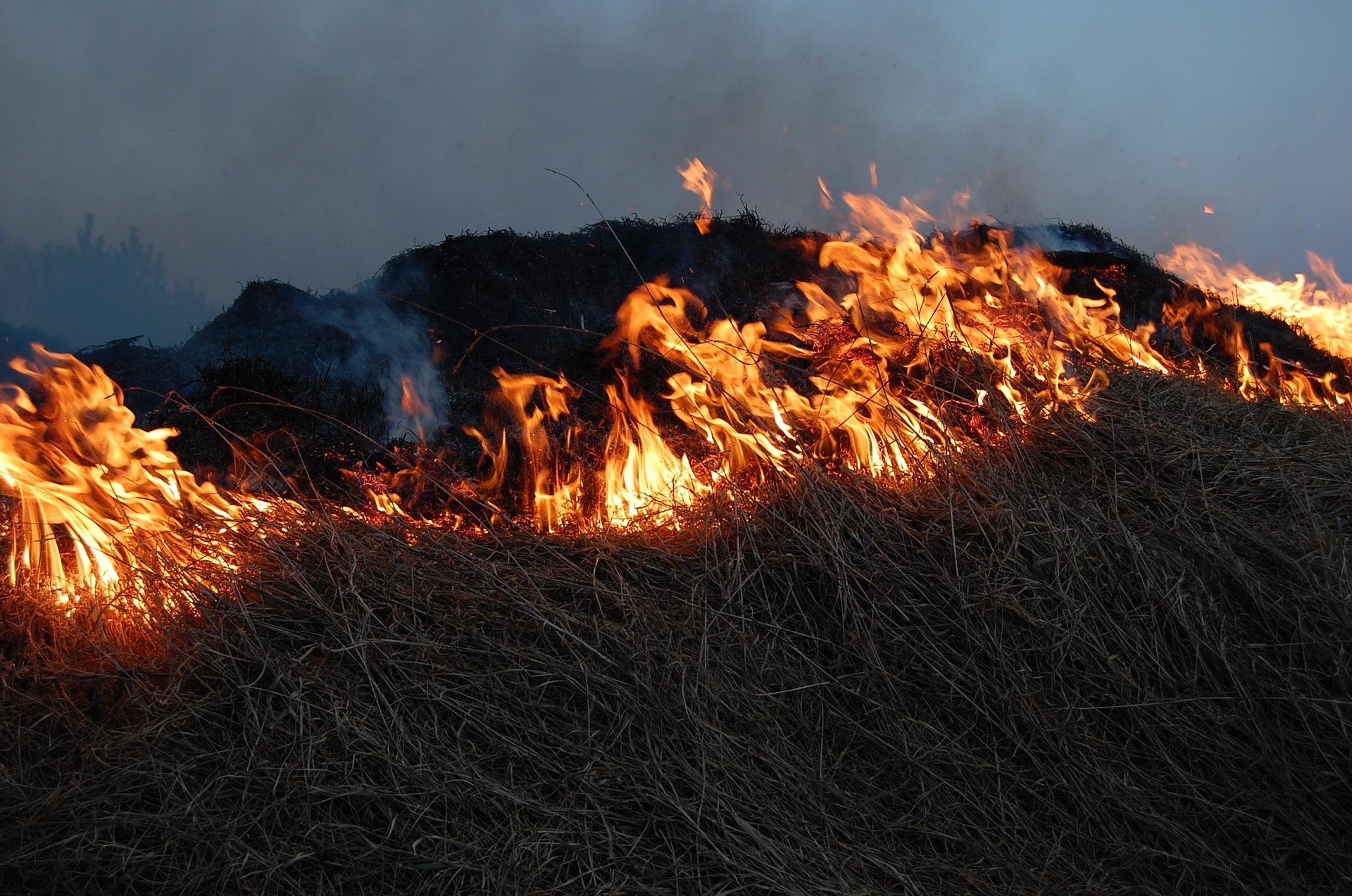
The diversification of priority food commodities through local crops such as sago and sorghum must be prioritized, moving away from an overreliance on rice-based programs. Moreover, the government’s plan to establish new rice fields on peatlands in Central Kalimantan—as part of efforts to maintain food security—poses serious risks to peatland ecosystems and could increase the likelihood of forest and land fires (karhutla) and toxic haze, further burdening communities during the COVID-19 pandemic.
“Forty-four percent of the 2019 forest and land fires occurred in peatland ecosystem functions. Government rice field development programs on peatlands, which involve opening peat swamp areas, risk increasing vulnerability to fires that not only harm communities but also jeopardize Indonesia’s climate commitments,” said Fadli Ahmad Naufal, GIS Specialist at Yayasan Madani Berkelanjutan.
“The presence of local food commodities such as sago can help preserve peatland ecosystems while serving as a sustainable local food source, thereby strengthening food security,” Teguh added. “It is time for the government to halt the expansion of large-scale monoculture plantations, such as industrial timber plantations (HTI) and oil palm, as they continue to erode productive land for food.”
Diversifying priority local food commodities is the key to national food security, ensuring that Indonesia can avoid food insecurity during the post–COVID-19 recovery period.
Contacts:
M. Teguh Surya
Executive Director, Yayasan Madani Berkelanjutan
Phone: +62 812 9480 1453Erlangga
Junior Researcher, Yayasan Madani Berkelanjutan
Phone: +62 852 0856 8896Intan Elvira
Junior Researcher, Yayasan Madani Berkelanjutan
Phone: +62 812 2838 6143Luluk Uliyah
Senior Media Communication, Yayasan Madani Berkelanjutan
Phone: +62 815 1986 8887