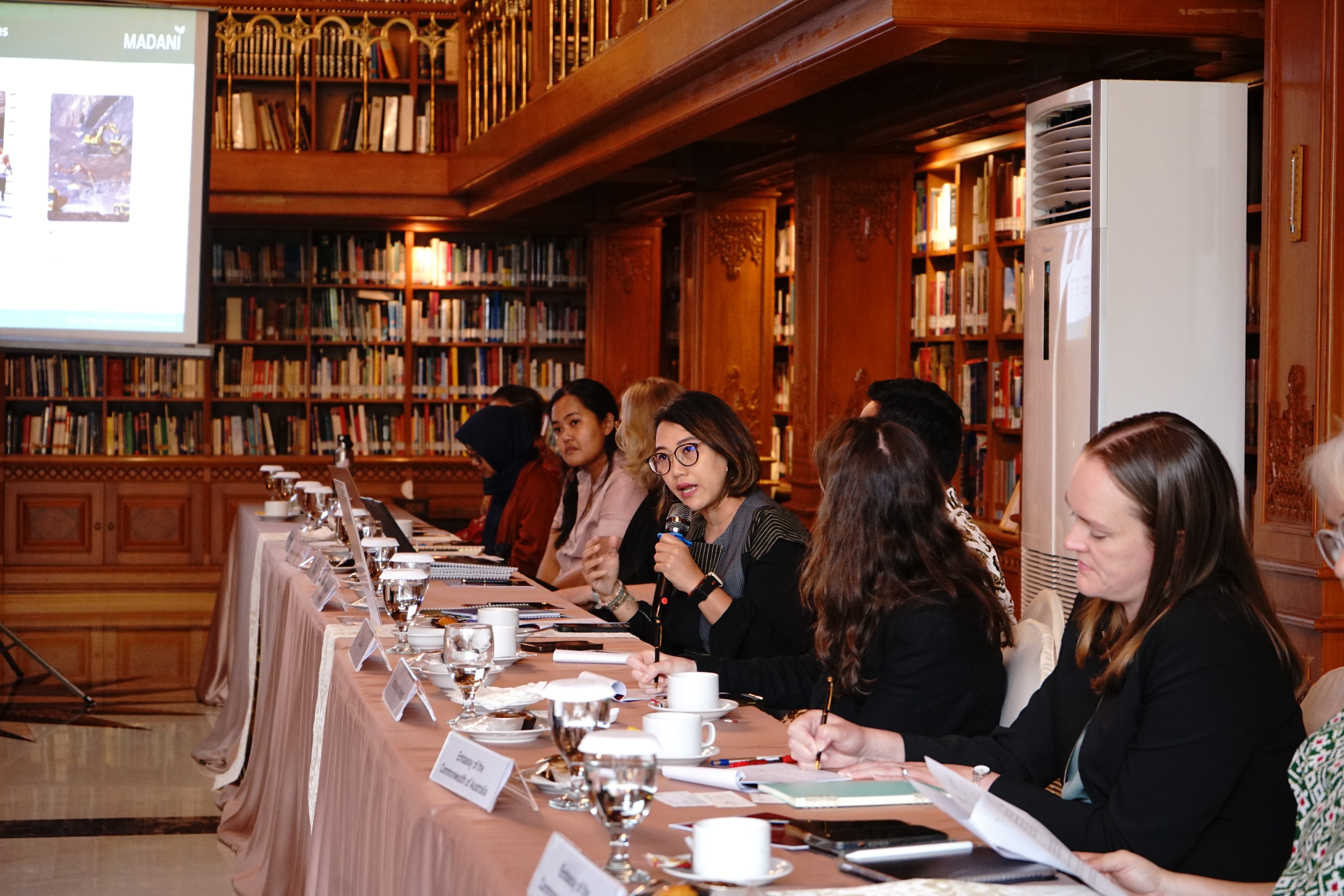
The Bonn Climate Change Conference, held from 3–13 June 2024 in Bonn, Germany, was the intersessional negotiation session under SBSTA 60 and SBI 60, collectively referred to as SB60. This meeting played a crucial role in preparing the climate negotiations for COP29, which will take place in Baku, Azerbaijan, from 11–22 November 2024.
Key Issues Negotiated at SB60
Three main issues dominated negotiations at SB60.
First, the implementation of the Global Stocktake (GST) outcomes to ensure global warming does not exceed 1.5°C by the end of the century.
Second, the discussion on the post-2025 climate finance target, commonly referred to as the New Collective Quantified Goal (NCQG).
Third, the operationalization of the Loss and Damage Fund to address climate-related losses and damages.
The Steep Road to Phasing Out Fossil Fuels
The 28th Conference of the Parties (COP28) in Dubai last year produced a landmark decision under the Global Stocktake, calling on all countries to transition away from fossil fuels within this decade. Unfortunately, the Bonn meeting failed to deliver meaningful progress on this issue.
According to the International Institute for Sustainable Development (IISD), countries were unable to agree on the modalities of a new dialogue to implement the GST outcomes and failed to reach consensus on the climate mitigation work programme. Carbon Brief reported that countries within the Like-Minded Group of Developing Countries (LMDCs)—particularly China and Saudi Arabia—blocked negotiations related to transitioning away from fossil fuels.
This lack of progress is deeply concerning, as the 1.5°C threshold is rapidly approaching. In other words, the fate of future generations hangs in the balance as climate change has evolved into a full-blown crisis.
At COP28, Indonesian civil society jointly called for the adoption of a global target to end fossil fuel use and accelerate a transition to renewable energy. The phase-out of all fossil fuels must be implemented gradually without exceptions, whether on-grid or off-grid, including captive power. This transition must also be just, ensuring the protection of the rights of the most affected communities—covering workers’ rights, gender equality, land rights, and the right to a healthy environment.
Indonesian civil society also urged the adoption of a global target to halt ecosystem destruction and restore all natural ecosystems—including forests, coastal areas, mangroves, and oceans—by 2030. This is critical, as six of the nine planetary boundaries that support human life and well-being have already been exceeded, including land-system change driven by forest loss and disruptions to freshwater systems.
READ ALSO: Civil Society Demands at COP28
Increasing NDC Ambition in Line with the Global Stocktake
The GST outcomes call on countries to submit more ambitious Nationally Determined Contributions (NDCs) aligned with the 1.5°C goal, no later than February 2025.
To stay within the 1.5°C limit, global emissions must decline by 43 percent by 2030 and 65 percent by 2035 compared to 2019 levels. The next round of NDCs (Second NDCs) must close the emissions gap of 20.3–23.9 Gt CO₂e by 2030, without undermining adaptation capacity in other countries—particularly developing and least-developed countries—and while fully protecting human rights.
This NDC update cycle must also be used as an opportunity to make the Second NDC formulation process more participatory and inclusive, ensuring meaningful engagement of civil society, including vulnerable groups.
Is There a Way Forward on Climate Finance?
Developed and developing countries remain deeply divided over post-2025 global climate finance, which must be agreed upon at COP29. Several sticking points persist, including claims that developed countries have failed to fulfill their commitment to mobilize USD 100 billion per year to support developing countries.
While developed countries argue that the target has been met, developing countries highlight that much of the finance has been delivered in the form of loans, rather than grants. They also criticize the practice of relabeling development aid as climate finance.
Disagreements continue over who should pay—whether responsibility lies solely with developed countries or should also include wealthier developing countries—and over the scale of finance required. The Arab Group, LMDCs (including China and India), and Small Island Developing States (AOSIS) are demanding climate finance in the range of USD 1.1–1.3 trillion per year.
Disputes over the use of funds are equally contentious, with developed countries opposing the use of climate finance for Loss and Damage. According to Carbon Brief, climate finance issues are likely to continue holding future climate negotiations hostage.
Indonesian civil society calls for a redirection of global financial flows away from emissions-intensive (“dirty”) sectors toward environmental restoration and recovery (“green”) sectors. Climate finance must also be accessible to affected communities, including young people seeking to contribute to mitigation and adaptation efforts, and must not create debt traps for developing countries.
According to MADANI, the obligation to provide climate finance must remain centered on developed countries (Annex I Parties), in line with the principle of distributive justice under climate justice, which recognizes their historical responsibility for climate change. However, non–Annex I countries may also be encouraged to contribute based on indicators such as ability to pay and historical emissions.
The scale of global climate finance must be calculated based on the needs and priorities of developing countries, particularly for addressing climate impacts. A key issue is ensuring a balanced allocation between mitigation and adaptation, as adaptation continues to receive significantly less funding. Climate finance must also be made available for Loss and Damage, potentially through sub-goals to guarantee adequate funding. Transparent frameworks and mechanisms are needed to track progress in climate finance delivery.
Operationalizing Loss and Damage Finance
The operationalization of finance to address Loss and Damage is critical for developing and least-developed countries.
Several unresolved issues remain, particularly regarding sources of funding. Developed countries oppose using the post-2025 NCQG to fund Loss and Damage, while developing countries demand a dedicated target. Other key questions include who is eligible to access the fund and how access will be facilitated.
For the initial two-year period, the World Bank will serve as the trustee and host of the Loss and Damage Fund Secretariat, while an Independent Board will establish eligibility criteria and risk management policies. The next steps include formally establishing the Secretariat and appointing an Executive Director.
Indonesian civil society emphasizes the importance of prioritizing assistance for countries and communities that are most affected and have the lowest capacity to respond to climate change. Six key civil society demands on Loss and Damage include:
COP must agree on a clear funding target for addressing climate-related loss and damage.
Developed countries, in line with the CBDR principle, must provide a fair, adequate, and new share of funding immediately.
Loss and Damage finance must be allocated based on vulnerability and capacity assessments, taking into account adaptation limits.
Funding mechanisms must be simple, free from excessive bureaucracy, and rapidly accessible to affected communities.
Loss and Damage finance must support reconstruction, restoration, and rehabilitation, including financial assistance for communities displaced temporarily or permanently.
Loss and Damage must also cover economic and non-economic losses, such as the loss of cultural heritage and biodiversity.
The Bonn Climate Change Conference 2024 revealed the scale of challenges that remain in the global fight against climate change. While progress on key issues was limited, hope persists, driven by increasingly strong calls from civil society and many countries for more ambitious and inclusive action.
As COP29 approaches, it is critical for all parties to remain committed to finding fair and sustainable solutions for the future of the planet and generations to come. Concrete and ambitious agreements are urgently needed to safeguard the 1.5°C limit and ensure just and effective climate finance, particularly for those most vulnerable to climate impacts.