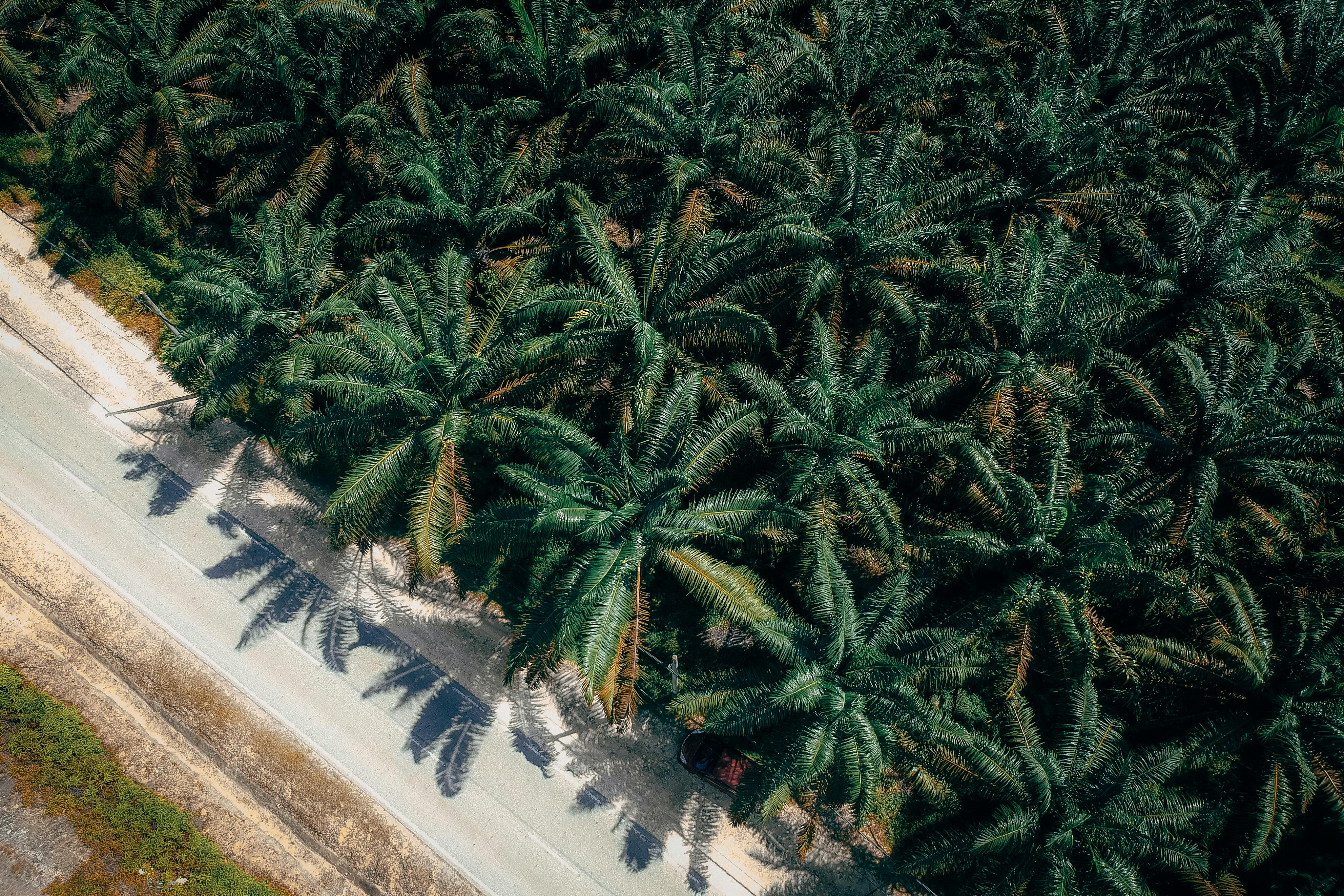
[Jakarta, 26 July 2021] The extension of Presidential Instruction (Inpres) No. 8/2018 on the Suspension and Evaluation of Oil Palm Plantation Permits and the Improvement of Palm Oil Productivity—commonly known as the Palm Oil Moratorium—is crucial and must be carried forward by the government. Extending the policy would generate positive impacts, including stronger global market support for Indonesian palm oil products, improved land productivity, resolution of overlapping land claims and conflicts, and meaningful contributions to Indonesia’s climate commitments under its NDC.
This was conveyed by Trias Fetra, Palm Oil Governance Program Officer at Yayasan Madani Berkelanjutan.
Indonesia has committed to reducing greenhouse gas emissions by 29 percent independently and up to 41 percent with international support by 2030. The largest share of emissions reductions is expected to come from the forestry and land-use sector, with a projected reduction of 17.2 to 38 percent by 2030.
During the kick-off meeting for Indonesia’s delegation to the Glasgow Climate Change Conference on 19 July 2021, the Minister of Environment and Forestry announced the “Indonesia FOLU 2030” agenda, envisioning Indonesia achieving a net carbon sink in the forestry and land-use sector by 2030. Extending the palm oil moratorium would help realize this ambition by curbing the expansion of oil palm plantations into forest areas and protecting natural forests that are already located within palm oil concessions. The extension would also reinforce corrective measures to significantly reduce deforestation rates.
“There are still around 5.7 million hectares of natural forest within Convertible Production Forest (HPK) areas that could legally be released for plantations. If the Palm Oil Moratorium is not extended and strengthened, deforestation rates may rise again, putting Indonesia at risk of failing to meet its climate commitments,” said Trias Fetra.
In 2019–2020, among six types of permits and concessions, the highest level of natural forest deforestation occurred within palm oil plantation permits, reaching 19,940 hectares.
“The extent of natural forest located within palm oil concession areas is also significant. Based on 2019 land cover data, 3.58 million hectares of natural forest are located inside palm oil concessions, including around 1 million hectares of primary forest. Of that total, approximately 1.43 million hectares are in released forest areas—making them subject to evaluation under the moratorium policy. The implementation of the moratorium has raised hope that remaining natural forests inside palm oil concessions will be reviewed and restored as forest areas.
Madani’s analysis also found that out of Indonesia’s 24.2 million hectares of peat ecosystems, about 6.2 million hectares fall within palm oil concessions, including 3.8 million hectares of peatlands. The evaluation and permit review mechanisms under the moratorium could safeguard these peat areas. Peatlands must be protected and restored, considering that 99.3 percent of Indonesia’s peatlands are degraded and highly vulnerable to fires during the dry season.
Our analysis shows that protecting 3.8 million hectares of peatland in its natural function could prevent the release of 11.5 million tons of carbon annually from burning or land conversion—significantly contributing to Indonesia’s climate commitments,” Trias Fetra added.
Adrianus Eryan, Head of Forestry and Land Division at ICEL, highlighted concerns about transparency and accountability in implementing the Presidential Instruction.
“It is important to note that transparency and accountability issues remain in the implementation of the Palm Oil Moratorium. The government should not hesitate to disclose data and progress under this policy—for example, how much data on palm oil within forest areas has been consolidated and verified, how many permits have been reviewed, and how many violations have been sanctioned. Greater transparency would open wider opportunities for participation and collaboration—not only with civil society organizations but also with regional governments that have taken positive initiatives to implement the policy. If the outstanding tasks under the moratorium have not yet been completed, then it is only appropriate that the policy be extended.”
Agung Ady, Campaigner at Forest Watch Indonesia (FWI), emphasized that success indicators should go beyond simply halting new permits.
“Over the past three years, the government has mainly focused on synchronizing data related to land cover and palm oil permits. But success cannot be measured solely by the absence of new permits during the moratorium period. It must also address productivity issues, global market acceptance, deforestation, legal certainty for smallholder farmers, and land conflicts and overlaps. The government must demonstrate its seriousness by extending the moratorium as a concrete step toward comprehensive reform of palm oil plantation governance.”
Rahmadha, Palm Oil Campaigner at Kaoem Telapak, added:
“Indonesia’s appointment as Co-Chair of COP26 alongside the United Kingdom reflects the global community’s positive trust in Indonesia’s climate mitigation and adaptation efforts, despite the ongoing pandemic and climate crisis. This momentum must be safeguarded through stronger regulations and governance in the FOLU (Forestry and Other Land Use) sector, including palm oil plantations. Extending and strengthening the Palm Oil Moratorium is therefore essential to prevent further forest conversion for oil palm expansion and to help Indonesia achieve its net emission target by 2030.”
Media Contacts:
Trias Fetra – Palm Oil Governance Program Officer, Yayasan Madani Berkelanjutan
fetra@madaniberkelanjutan.id | +62 877 4403 0366
Agung Ady Setiyawan – Campaigner, Forest Watch Indonesia
agung_ady@fwi.or.id | +62 853 3451 0487
Rahmadha – Palm Oil Campaigner, Kaoem Telapak
rahmadha.syah@kaoemtelapak.org | +62 812 8813 5152
Adrianus Eryan – Head of Forestry and Land Division, ICEL
adri@icel.or.id | +62 813 8629 9786