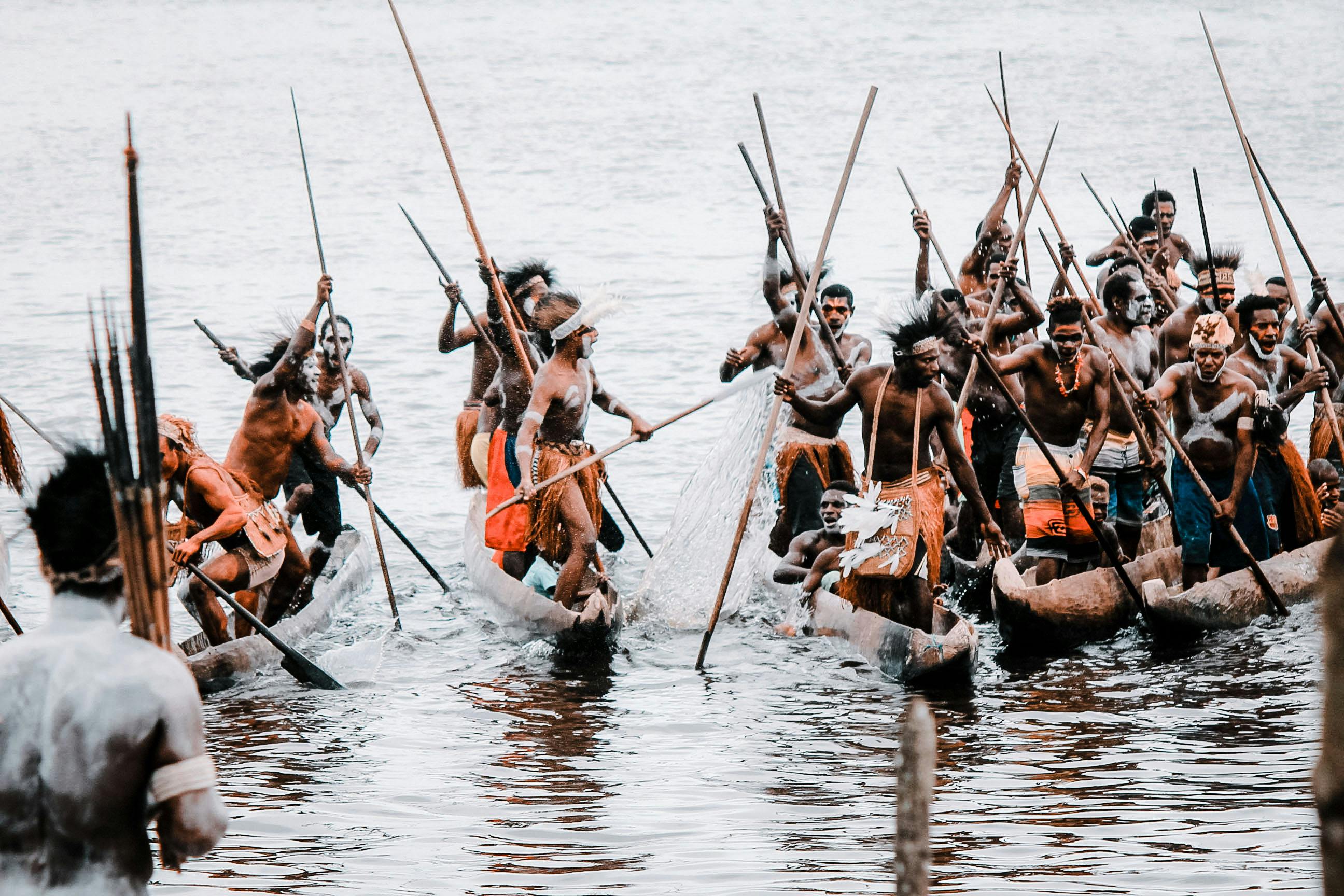
In the context of climate change mitigation and adaptation, Indigenous Peoples play a vital role—particularly in countries like Indonesia, which is home to diverse Indigenous communities and rich biodiversity.
Indigenous Peoples are deeply interconnected with nature itself. They live, grow, and thrive in close relationship with the environment—so much so that nature is not merely a resource, but their home.
Yet, the reality is deeply ironic. The report Reconciling Conservation and Global Biodiversity Goals with Community Land Rights in Asia notes that only 10 percent of Indigenous Peoples’ and local communities’ lands are formally recognized by national governments, despite their significant contribution to addressing the climate crisis.
Climate justice has yet to be articulated clearly and explicitly within Nationally Determined Contributions (NDCs). This is concerning, as in the context of climate mitigation, Indigenous Peoples and local communities can be considered the frontline defenders of nature—particularly the world’s remaining natural forests.
Through governance systems rooted in local knowledge and cultural practices, Indigenous communities are able to sustain ecosystems, secure their livelihoods, and contribute meaningfully to preventing deforestation.
READ ALSO: The Indigenous Peoples Bill: Uniting Diversity, Protecting Indigenous Rights, and Strengthening National Principles
According to data from the Rights and Resources Initiative (RRI), Indigenous Peoples and local communities occupy and manage more than 50 percent of the world’s land, with one-third of the world’s remaining natural forests located on Indigenous lands. Forests managed by Indigenous Peoples are known to harbor 80 percent of global biodiversity.
Meanwhile, a joint analysis by Forest Watch Indonesia (FWI) and the Indigenous Peoples’ Territory Registration Agency (BRWA) shows that at least 70 percent of remaining natural forests within Indigenous territories in Indonesia remain in good condition, and 72 percent of Indigenous territories constitute critical ecosystems, including mangroves, karst landscapes, key biodiversity areas, wildlife corridors, and others.
The Urgency of Centering Indigenous Rights in the Second NDC
As vulnerable groups, Indigenous Peoples and local communities must have their rights guaranteed and prioritized in the Second NDC (SNDC)—from land rights to meaningful participation in decision-making processes.
Yayasan MADANI Berkelanjutan has identified five key rights of Indigenous Peoples and local communities that must be prioritized in the SNDC:
1. The Right to Land and Territory
Recognition of land and territorial rights is a prerequisite for Indigenous Peoples’ meaningful participation in climate mitigation and adaptation efforts. Indigenous lands are central to livelihoods and cultural identity.
As of June 2024, the Ministry of Environment and Forestry (KLHK) has recognized only 286,000 hectares of customary forests, while BRWA has documented approximately 28.2 million hectares of Indigenous territories across Indonesia.
To achieve effective mitigation and adaptation targets, the SNDC must ensure the acceleration of land rights recognition and legal protection for Indigenous Peoples and local communities.
2. The Right to Uphold Culture and Local Traditions in Mitigation and Adaptation Actions
Climate mitigation and adaptation projects must accommodate local values and Indigenous knowledge systems to ensure effectiveness and relevance.
Indigenous cultures and traditions are deeply linked to sustainable environmental management. Therefore, the SNDC must respect Indigenous Peoples’ right to preserve and develop their traditions, including sustainable forest management practices, agroecology, and the harvesting of non-timber forest products as part of locally rooted climate solutions.
READ ALSO: Madani’s Insight: Forests, Climate Change, and Indigenous Rights in Indonesia’s 2022 Government Work Plan
3. The Right to Participate in Decision-Making
Indigenous Peoples and local communities must be guaranteed the right to participate in decision-making processes that affect their lands and territories.
Meaningful participation ensures that policies and strategies within the SNDC genuinely reflect Indigenous needs, priorities, and values—rather than imposing top-down solutions.
4. The Right to Sustainable Livelihoods
The SNDC must support Indigenous Peoples’ right to develop sustainable economic livelihoods. This includes access to markets, support for small-scale enterprises, and skills development aligned with the green economy.
In this way, Indigenous communities can be part of the climate solution while simultaneously improving their well-being.
5. Guarantees for Rights Restoration Following Development Impacts
National development projects—such as energy transition initiatives involving hydropower development and electrification—often exacerbate the vulnerability of Indigenous and local communities.
Climate mitigation and adaptation projects must not only reduce emissions, but also ensure social safeguards. Therefore, the SNDC must guarantee the restoration of rights for communities affected by development projects, particularly those carried out in the name of climate action.
By ensuring these rights, the SNDC can go beyond achieving mitigation and adaptation targets to lay the foundation for social and environmental justice.
The rights of Indigenous Peoples and local communities are not peripheral—they are integral to fair, effective, and sustainable climate solutions.


