[Madani News] A fair and inclusive approach will create a strong foundation for sustainable NDC implementation as it involves and empowers all stakeholders to work together to achieve climate targets.
That is the message that civil society wants to convey in the Dialogue Room event "Speaking Out for Climate: Realizing Climate Justice for the Marginalized " organized by the MADANI Berkelanjutan Foundation together with the Pikul Foundation and the Humanis Foundation on July 3-4, 2024 in Jakarta.
READ ALSO: Bonn Climate Change Conference 2024: A Rocky Road to COP 29
It is known that the Indonesian Government is currently preparing the Second Nationally Determined Contribution (Second NDC/SNDC) which will be submitted to the United Nations Framework Convention on Climate Change (UNFCCC) in August 2024. The preparation of the SNDC is expected to integrate climate justice so that it can address existing socio-economic-political inequalities while ensuring that the burdens and benefits of climate action are distributed fairly.
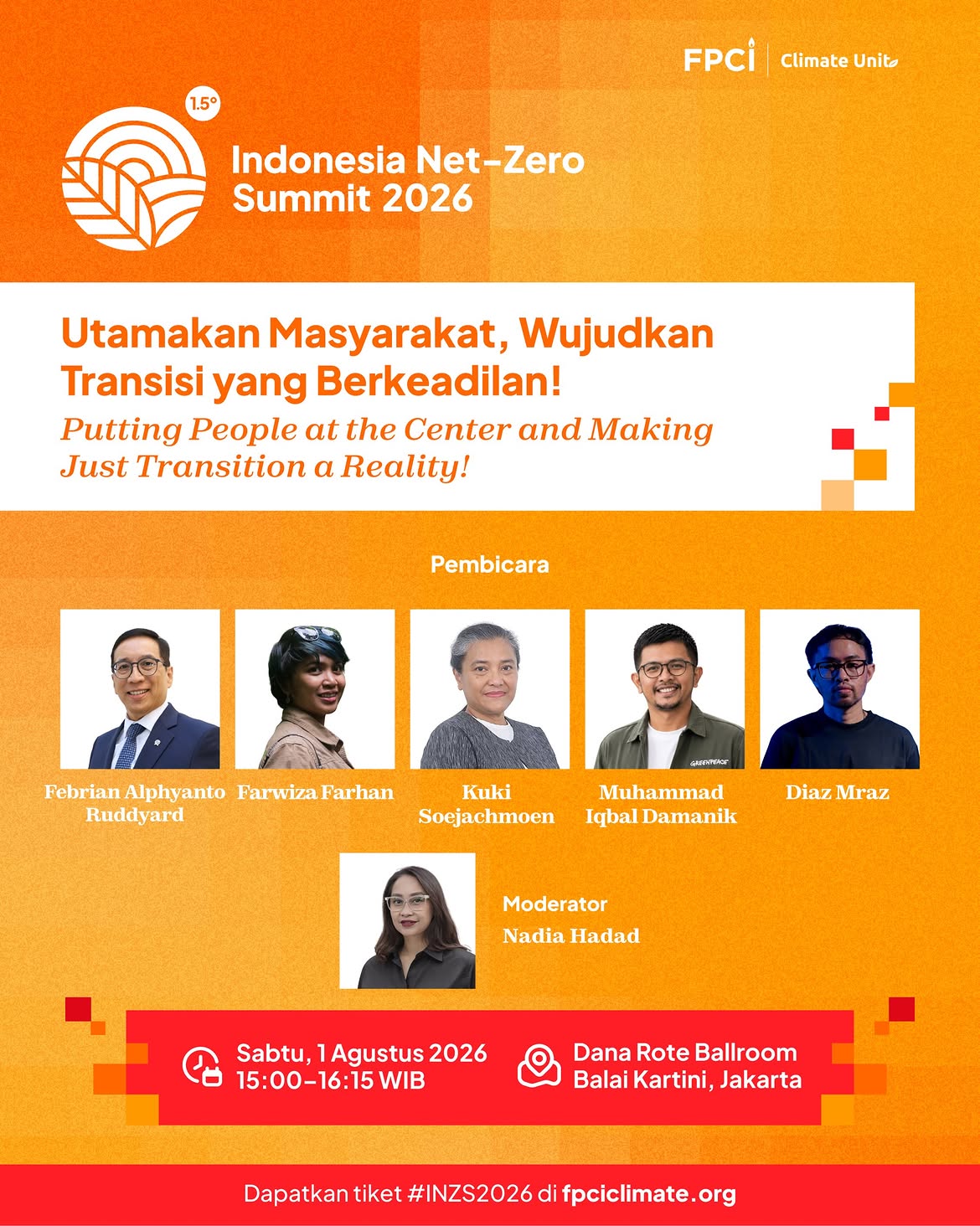
Nadia Hadad, Executive Director of the Sustainable Madani Foundation, said that to integrate climate justice into various government policies and programs, such as the National Development Planning (NDC), National Development Planning (SNDC), and various climate crisis response actions, it is necessary to consider four dimensions: recognitive justice, distributive justice, procedural justice, and restorative justice.
Nadia also reminded that Indonesia has now entered a climate crisis phase, given that its impacts are already being felt by Indonesian society at all levels.
" Whether in urban, suburban, or rural areas, the impacts are felt in different ways. That's the main reason why affected communities must be treated as subjects, not merely objects, in addressing the climate crisis ," Nadia said.
Currently, Indonesia has to bear the burden of the impact of Greenhouse Gas (GHG) emissions produced by developed countries since the industrial revolution 30 decades ago.
Furthermore, the Indonesian people also bear the ecological burden of natural resource extraction by developed countries. As a result, many indigenous and local communities have lost access to land tenure .
Nadia said that climate change requires communities to change their lifestyles and adapt. However, they don't feel involved in Indonesia's development planning process.
Therefore, he believes the government must involve all elements, especially vulnerable groups such as traditional fishermen, coastal communities, small farmers, indigenous communities, women, people with various disabilities, children and the elderly, urban and suburban poor groups, and workers in decision-making related to climate policy.
Through this dialogue space event, the MADANI Berkelanjutan Foundation hopes that the aspirations and input from vulnerable groups and civil society can be heard by policymakers in an effort to strengthen the ambition and dimensions of climate justice in relevant policy documents such as the SNDC and the 2025-2029 RPJMN. [ ]
Related documents: