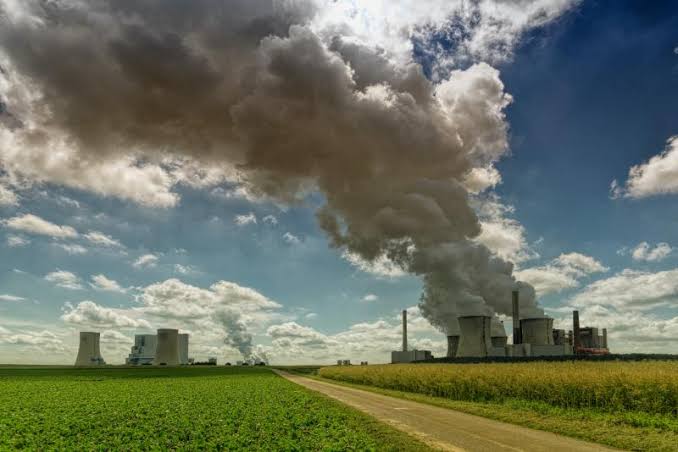
Press Release, December 14, 2023. The 28th Climate Change Conference (COP) in Dubai, United Arab Emirates, concluded on December 13 without a clear mandate to end fossil fuels. The Indonesian government is urged to intensify domestic climate commitments and speak out more forcefully against developing countries fulfilling their obligations. Future climate negotiations must be led by developing countries, poor countries, and those most impacted by the climate crisis.
COP-28 Dubai was a crucial moment, as countries received a "bad report card" on their collective progress in addressing the climate crisis that threatens the fate of future generations. COP 28's decisions also appeared contradictory and lopsided; they claimed to be aligned with science, yet failed to set sufficiently ambitious targets.
The results of the global stocktake (GST) assessment found that the implementation of policies in the climate commitments (NDCs) of countries that ratified the Paris Agreement would only reduce Greenhouse Gas (GHG) emissions by 2% in 2030 compared to 2019 levels. In fact, to ensure the rate of global increase does not exceed the safe limit of 1.5C by the end of this century, global GHG emissions must decrease by 50% in 2030 and reach net zero emissions by 2050.
"The world is deeply disappointed that COP 28 failed to produce a clear mandate to phase out fossil fuels, namely coal, oil, and natural gas. Despite calls to transition away from fossil fuels to achieve net zero by 2050, numerous compromises were made, including the use of Carbon Capture, Utilization, and Storage (CCUS), transitional fuels with unclear boundaries, and even the inclusion of nuclear as a solution," said Uli Arta Siagian, WALHI National Forest and Garden Campaign Manager.
If science is to be true, the world must reduce coal use by 95%, oil by 60%, and natural gas by 45% by 2050.
The slow pace of climate action has left communities increasingly vulnerable to the impacts of the climate crisis, including extreme heat, flooding, high waves, drought, widespread disease, and the loss of homes, livelihoods, and even cultural sites. The most severe impacts are felt by vulnerable groups such as people with disabilities, the elderly, children, women—including adolescent girls—indigenous and local communities, traditional farmers and fishermen, and laborers. According to BNPB data, over the past 10 years, more than 90% of disasters have been climate-related, claiming the lives of more than 32 million people.
Meanwhile, within the Global Goals on Adaptation agenda , COP 28 only managed to formulate a scope for adaptation goals, but without clear targets. Furthermore, while there was recognition of local knowledge and the leadership of indigenous communities in adaptation, there was no mention of tenure protection as a prerequisite for adaptation based on local knowledge and traditions.
To ensure equitable and sustainable climate solutions, all stakeholders, including local governments and vulnerable communities, must be meaningfully involved. However, the state cannot afford to give up on resolving the climate crisis.
"The most fundamental question is who should adapt to today's crisis? It's the government and corporations, because the policies, programs, and political decisions they produce are actually destroying the people's adaptive capacity and the mitigation actions they've been implementing," continued Uli Arta Siagian, WALHI National Forest and Garden Campaign Manager.
Mitigation planning and implementation must also be integrated with adaptation measures to prevent further weakening communities' ability to sustain themselves in the face of the impacts of the climate crisis. The reality is quite the opposite, with cases of massive destruction to meet electrification needs threatening small islands in Eastern Indonesia, and infrastructure development that has actually created a significant number of maladaptation cases in Indonesia.
"Although COP-28 produced one important decision regarding the already occurring and irreversible impacts of the climate crisis, namely the operationalization of funding to address Loss and Damage , the process has not yet provided certainty for those who have experienced Loss and Damage. This demonstrates the still steep path to climate justice," said Torry Kuswardono, Executive Director of the PIKUL Foundation.
Back from Dubai, countries have homework to do to strengthen their climate commitments to align with the 1.5C target.
"Indonesia's claim of success in reducing emissions by 42% should make Indonesia bolder and more decisive in addressing the climate crisis, including by increasing the ambition of its national contribution in the Second National Development Planning (NDC) in line with the 1.5C target," said Nadia Hadad, Executive Director of the MADANI Berkelanjutan Foundation.
Abimanyu Sasongko Aji, Manager of the Partnership's Climate Change Funding Program, added, "Climate action planning and implementation must be made more transparent, accountable, inclusive, and participatory, especially for vulnerable groups. These inclusive and participatory aspects are often overlooked."
As the country with the second-largest tropical forest area in the world, Indonesia has made the Forestry and Land Use ( FOLU) sector a key focus for reducing greenhouse gas emissions. Furthermore, as an archipelagic nation, Indonesia is highly vulnerable to the impacts of the climate crisis, particularly with increasing sea level rise, which could inundate small islands and pose a risk of homelessness.
"The Indonesian delegation, which just returned from negotiations in Dubai, must open their eyes to the realities on the ground. Natural forests continue to disappear, small islands are threatened, an unjust energy transition is destroying the environment and robbing communities of their rights, and the destruction of coasts, waters, coral reefs, and mangroves continues, thus destroying local communities' economies," concluded Torry Kuswardono, Executive Director of the PIKUL Foundation. "Furthermore, communities fighting for their right to a clean and healthy environment are still being intimidated and criminalized," Torry added.
Civil society recorded that between 2001 and 2022, there was a loss of 6.5 million hectares of natural forest cover, including mangroves. Of this loss, 176,000 hectares occurred in the last three years (Mapbiomas, 2023). Furthermore, environmental defenders faced at least 26 legal cases in 2021, an increase of 10 cases compared to the previous year (Environmentaldefender, 2021).
Civil society demands that Indonesia prioritize its climate crisis response. First , accelerate coal retirement, including captive coal power plants for downstreaming. Second , halt deforestation and restore and protect all remaining natural ecosystems while respecting and recognizing the rights of indigenous and local communities. Third , prepare for increasingly frequent climate disasters through effective and equitable adaptation and avoidance of maladaptation. Fourth, channel climate funding directly accessible to affected communities at the grassroots level. Fifth , the government must guarantee and protect the right of every citizen to a clean and healthy environment by stopping all forms of threats and intimidation against environmental and human rights defenders.
The results of the Dubai negotiations reinforce the evidence that developed countries have failed to demonstrate leadership in addressing the global climate crisis. "Therefore, it is time for developing, poor, and impacted countries to seize leadership in climate negotiations and speak out more forcefully, demanding that developed countries fulfill their obligations to reduce GHG emissions, assist developing countries in adapting, and address the destruction and damage caused by the climate crisis," Nadia concluded.
Contact Person:
Nadia Hadad, Executive Director of the MADANI Berkelanjutan Foundation, nadia@arsip.madaniberkelanjutan.id
Torry Kuswardono, Executive Director of the PIKUL Foundation, t.kuswardono@gmail.com
Abimanyu Sasongko Aji, Partnership Climate Change Funding Program Manager, abimanyu.aji@kemitraan.or.id
Uli Arta Siagian, WALHI National Forest and Garden Campaign Manager, ulisiagian@walhi.or.id
Call for the Indonesian Delegation Recently Returned from Dubai
Back to the field : natural forests continue to disappear, small islands are threatened, an unjust energy transition is damaging the environment and robbing communities of their rights, and the destruction of coasts, waters, coral reefs, and mangroves continues, resulting in the loss of local economies. Civil society data indicates that between 2001 and 2022, 6.5 million hectares of natural forest cover, including mangroves, have been lost. Of this, 176,000 hectares have been lost in the last three years (Mapbiomas, 2023).
Following up on and incorporating the GST evaluation into considerations will strengthen Indonesia's Second National Development Plan (NDC) ambitions in line with the 1.5C pathway , with more transparent, accountable, inclusive, and participatory implementation . The Second NDC development process must involve vulnerable and most impacted groups, civil society, and local stakeholders. The Second NDC must also emphasize mitigation and adaptation obligations, along with their funding, to those who have contributed most to the crisis.
Align all development plans, policies, and projects with efforts to reduce greenhouse gas emissions and increase climate resilience equitably, as well as fundamental corrections to high-carbon economic systems and models. Stop development projects that conflict with efforts to address the climate crisis, such as National Strategic Projects for the expansion of land-based businesses and forest products, including Food Estates, road and dam infrastructure, the development of new economic industrial areas and mining, and the provision of policy facilitation and supporting facilities for National Strategic Projects (PSN) that actually reduce the adaptive capacity of communities, increase greenhouse gas emissions, and violate human rights.
Adaptation and mitigation should not be carried out separately , but must always be carried out together so that mitigation actions do not reduce adaptive capacity and adaptation actions can contribute to reducing emissions with a balanced allocation of funding resources.
Implement a just and inclusive energy transition, encompassing policies that support upstream and downstream ecosystems, funding, technological breakthroughs, human resource development, participation, enabling conditions, and resource access. Support energy transition efforts determined at the local and community levels. The energy transition must include elements that address existing inequities and abandon exploitative energy management systems. The importance of the energy transition lies not only in focusing on return on investment but also in considering the social value of return on investment.
Protect and restore natural ecosystems, not limited to forests, peatlands, coastal ecosystems, and seas, but also include the biological wealth within them by stopping land use changes that reduce the capacity of communities to adapt, trigger rapid animal extinctions, and are not in accordance with efforts to reduce greenhouse gas emissions.
Prepare for and anticipate increasingly frequent climate disasters by encouraging locally led and contextualized adaptation and establishing mechanisms for disbursing Loss and Damage funds that reach the local level. Furthermore, the process should focus primarily on vulnerable groups, including, but not limited to, persons with disabilities, the elderly, children, women, including adolescent girls, indigenous communities, farmers, fishermen, laborers, and workers (formal and informal).
Recognize and protect the rights of indigenous peoples, farmers, and local communities (MAPKL), including land rights and the rights of vulnerable groups, as a prerequisite for effective adaptation and mitigation actions. Adaptation and mitigation actions based on local wisdom and traditional knowledge from MAPKL must be recognized and accommodated in line with past and present community experiences and learning.
Protect the rights of all citizens through human rights due diligence in mitigation and adaptation activities. Protection also needs to be implemented by strengthening guarantees of human rights, including the right to work and a decent living, especially for those who will be impacted by the energy transition, including those in the informal sector and informal actors who are affected and invisible within the system. Reforming labor regulations, including the Job Creation Law, to better protect labor and worker rights is a must in implementing the energy transition.
Stop all forms of threats and intimidation against every citizen who is trying to obtain the right to a clean and healthy environment for current and future generations.
Shift funding flows from emissions-intensive sectors to sectors focused on environmental recovery and restoration. Provide climate finance that is not only equitable but also accessible to impacted communities and youth networks who want to participate in mitigation and adaptation efforts. Avoid the debt trap in climate finance.
The new government must be more assertive in anticipating the risks of climate disasters and develop a more ambitious and measurable climate action plan until 2030.
Ensure that every proposed solution has a real impact on reducing emissions and curbing temperature rise. Leaving solutions solely to market mechanisms and interests is a step backward.