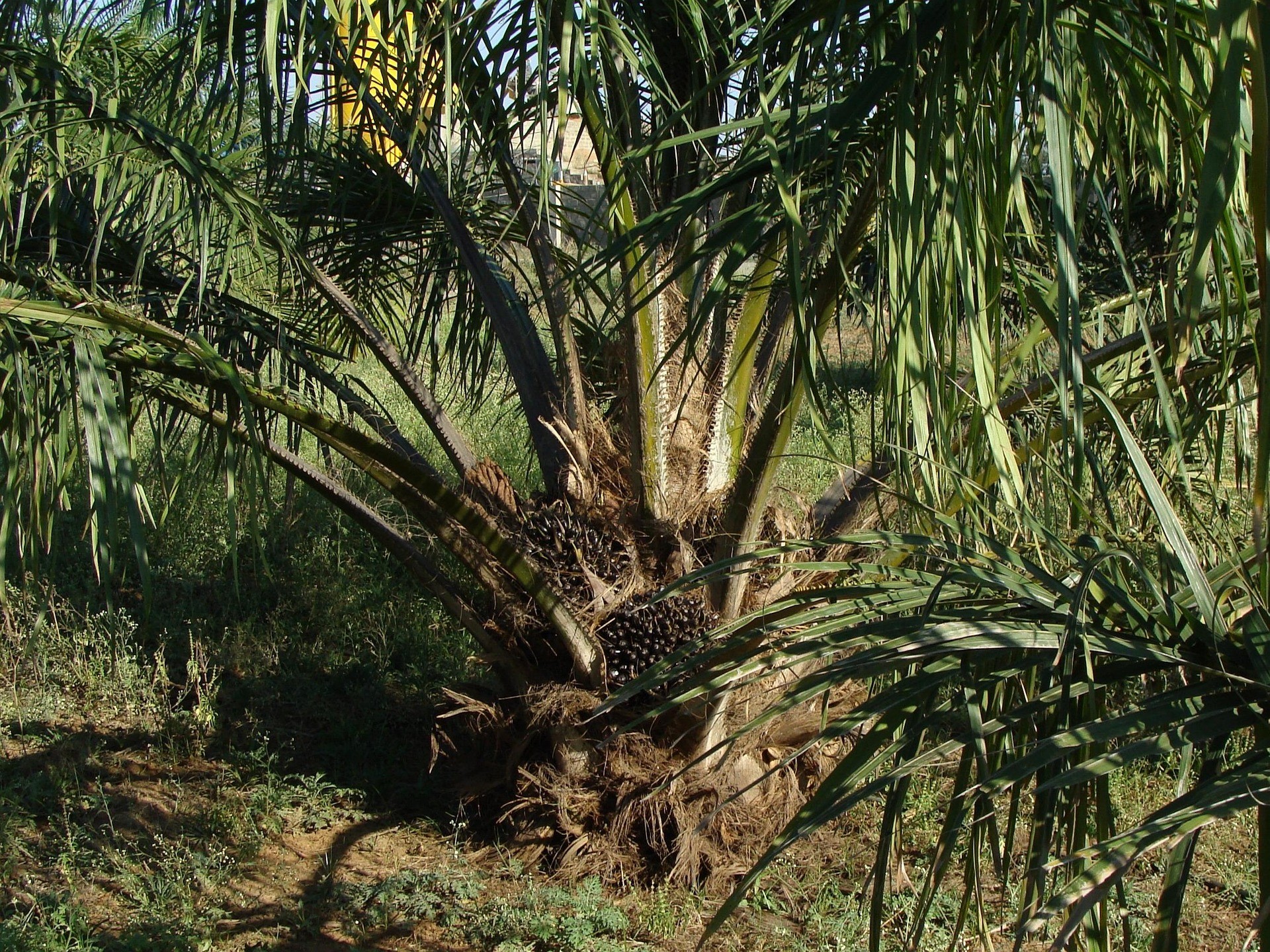
[Jakarta, 10 February 2019] The IUCN study on palm oil and biodiversity, presented to the Indonesian government last week, was welcomed by the Coordinating Ministry for Economic Affairs. In a statement released on 4 February 2019, Coordinating Minister Darmin Nasution noted that palm oil’s impacts on wildlife and biodiversity are relatively better compared to other vegetable oils, because oil palm requires less land.
However, the government must also pay attention to other critical findings highlighted in the study.
First, the study clearly states that oil palm plantations have been responsible for large-scale destruction of intact natural forests, which serve as habitats for threatened species such as the Sumatran tiger, orangutan, and Sumatran elephant species included on the IUCN Red List. In Kalimantan alone, 50% of deforestation between 2005 and 2015 was driven by palm oil expansion.
Second, the report stresses the urgent need to halt deforestation and prevent further expansion of oil palm plantations into remaining forest areas, as this would result in severe biodiversity loss. Therefore, both the government and palm oil producers must stop expansion immediately and instead focus on intensification to improve yields.
The government must also strengthen and uphold sustainability standards under its own certification system, including implementing traceability across the palm oil supply chain and establishing robust forest monitoring, reporting, and verification systems for deforestation.
The first essential step toward these improvements is opening concession data to enhance transparency and accountability.
“We do not deny that palm oil is one of the most land-efficient crops. The problem is that historically, palm oil has been produced by clearing forests, including millions of hectares of carbon-rich peatland forests. There are also other issues, such as inefficient and polluting production practices, for example from excessive use of chemical fertilizers,” said Indah Fatinaware, Executive Director of Sawit Watch, a civil society network monitoring the palm oil sector in Indonesia.
“No one is calling for a ban on palm oil. Palm oil can be beneficial for Indonesia, but only if forest governance is fundamentally reformed and if sustainability claims can truly be verified,” she added.
Given that the IUCN study was launched in the same week as the European Union vote on whether to accelerate the phase-out of palm oil-based biofuels from 2030 to 2023, Minister Darmin Nasution must seriously consider the full range of IUCN recommendations and implement them swiftly. This is essential to convince the EU and other major export markets that Indonesia is genuinely committed to producing palm oil sustainably—not merely prioritizing state revenue, but also ensuring environmental protection and respect for human rights.
Domestically, the government’s efforts to promote palm oil-based biofuels for local consumption, along with rising demand, risk driving deforestation back to previous high levels. Indonesia has indeed taken positive governance steps, including the moratorium on new permits, the palm oil moratorium, and peatland restoration.
However, implementation of these policies must be strengthened, as loopholes still allow intact forest areas to be cleared for plantation expansion such as the recent case of forest release for PT Hardaya Inti Plantation in Buol, Central Sulawesi.
“At this point, it is crucial for Indonesia to fundamentally reform forest and plantation governance and enhance the sustainability of palm oil production starting with stronger implementation of the palm oil moratorium, strengthening ISPO, and prioritizing BPDPKS funding to support smallholders in adopting best practices. All of this is necessary so that Indonesian palm oil sustainability can truly be verified,” concluded Muhammad Teguh Surya, Executive Director of Yayasan Madani Berkelanjutan.
Footnotes
(1) IUCN presented the findings of its palm oil and biodiversity study to the Government of Indonesia on 4 February 2019.
See: https://www.ekon.go.id/berita/pdf/studi-iucn-kelapa-sawit.4578.pdf
(2) One of the report’s authors, Eric Meijaard, emphasized the negative impacts of palm oil production in Indonesia:
“Africa may seem vast and unlimited as a future destination for oil palm planting, but Kalimantan and Sumatra once seemed that way too. It is entirely possible to manage palm oil better.”
See: Palm Oil Paradox: Sustainable Solutions to Save the Great Apes.
Media Contacts
Indah Fatinaware
Executive Director, Sawit Watch
+62 811-448-677 | inda@sawitwatch.or.idMuhammad Teguh Surya
Executive Director, Yayasan Madani Berkelanjutan
+62 819-1519-1979 | teguh.surya@madaniberkelanjutan.idLuluk Uliyah
Senior Communication Officer, Yayasan Madani Berkelanjutan
+62 815-1986-8887 | luluk@madaniberkelanjutan.id
Supported by
Sawit Watch | Yayasan Madani Berkelanjutan | Kaoem Telapak | ELSAM | Greenpeace Indonesia | Forest Watch Indonesia | Indonesian Center for Environmental Law | BYTRA Aceh