The Sustainable Madani Foundation summarizes several important events related to the economic-political conditions that occurred in the past week (July 27, 2021 – August 2, 2021). Here are the excerpts:
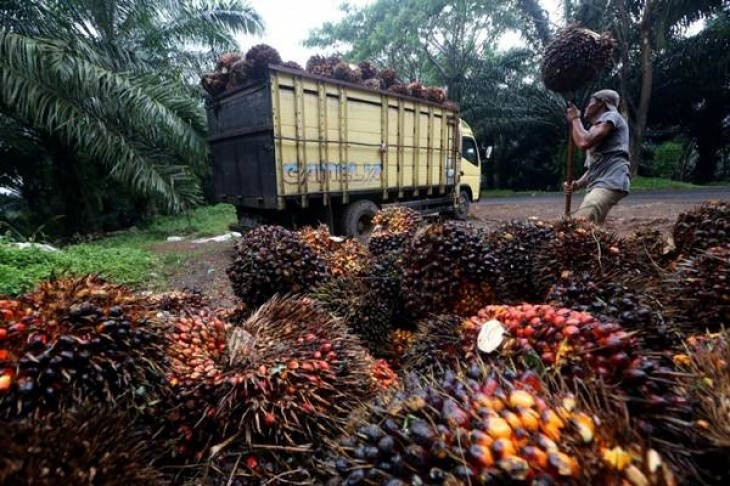
1. The government is currently evaluating the moratorium on oil palm plantations.
The government is currently evaluating Presidential Instruction (Inpres) number 8 of 2018 concerning the Postponement and Evaluation of Oil Palm Plantation Permits and Increasing Oil Palm Plantation Productivity.
Musdhalifah Machmud, Deputy for Food and Agribusiness Coordination at the Coordinating Ministry for Economic Affairs (Kemenko Perekonomian), stated that the Coordinating Ministry, along with relevant ministries and agencies, is currently preparing an evaluation report on the implementation of the Presidential Instruction. The evaluation report will be submitted to the President.
Musdhalifah stated that the implementation of activities stipulated in Presidential Instruction No. 8 of 2018 has been quite successful. These include improving oil palm plantation governance, legal certainty, maintaining and protecting environmental sustainability, reducing greenhouse gas emissions, and improving development for oil palm farmers and increasing plantation productivity. However, it has not yet been decided whether Presidential Instruction No. 8 of 2018 will be extended.
Joko Supriyono, Chairman of the Indonesian Palm Oil Association (Gapki), stated that Presidential Instruction 8/2018 is currently being implemented. This includes evaluating permits and resolving overlapping regulations following the enactment of the Job Creation Law.
The Indonesian Palm Oil Farmers' Association (POPSI) has called on President Jokowi to extend Presidential Instruction No. 8 of 2018 concerning permit evaluation and productivity improvement, or the palm oil moratorium.
2. Joe Biden Says Jakarta Will Sink in 10 Years
The dangers of global warming were a keynote address by United States (US) President Joe Biden at the Office of the Director of National Intelligence on Tuesday (July 27, 2021). In his address, he reiterated that climate change and global warming could alter national strategic doctrine.
He said that if sea levels rose by just 2.5 feet (7.6 cm), millions of people would be forced to relocate from their current locations and compete for fertile land. According to him, if this were to happen, Jakarta would sink within the next 10 years, as projected. This is what prompted the Indonesian government to begin implementing plans to move the capital to Kalimantan.
Biden also called on the US to work with the world to prevent further impacts of climate change. Separately, in 2019, the US space agency, NASA, also stated that Jakarta's land was sinking due to climate change and a number of other issues. NASA also cited several other factors contributing to environmental damage in Jakarta, including high urbanization rates, misuse of land, and population growth.
3. Indonesia will raise climate change issues during its 2022 G20 presidency.
Finance Minister Sri Mulyani Indrawati stated that Indonesia will raise the issue of climate change when hosting or holding the presidency of the G20 Summit in 2022. She added that a sustainable finance working group (SFWG) will also be established at the forum.
The working group will discuss five areas: aligning financial flows, access to reliable and timely information, assessing climate risk management and sustainability, and optimizing public funding and incentive systems. Furthermore, cross-cutting issues or elements such as technology catalysis, innovation, digitalization, and financial transition strategies will be addressed.
The Minister of Finance stated that the five financial domains will be integrated with sustainability and climate change threats in every decision-making process. He believes such initiatives need to be prepared, not simply anticipated. He hopes the SFWG can develop concrete actions by developing an enabling environment for the mobilization of international financing, including commitments from developed countries and support from multilateral financial institutions.
4. Successfully Issuing Green Bonds, Sri Mulyani Prepares SDGs Bonds.
Finance Minister Sri Mulyani Indrawati is currently preparing a Sustainable Development Goals (SDGs) bond. It is currently under review by international institutions. According to her, the SDGs bond was created by the government following the success of green bonds, or green financing, established in 2018.
The SDGs bond will have the same scheme as the green bond, namely, it will be used for sustainable development or environmentally friendly projects in accordance with international standards. This aligns with Indonesia's efforts to reduce carbon emissions. He stated that implementing this sustainable development will require an estimated budget of US$5-7 trillion. This substantial budget requires private sector participation and international funding to meet the needs.
5. The government debt burden could reach 55% of GDP by 2023
The international agency Moody's estimates that the government debt-to-GDP ratio could potentially balloon above 45% of GDP in 2023. This figure exceeds the government's target of 43.21% to 43.99% of GDP in 2023, set in the Macroeconomic Framework and Fiscal Policy Principles (KEM PPKF).
Similarly, Bhima Yudhistira, Director of the Center of Economic and Law Studies (CELIOS), estimates that government debt in 2023 will be significantly higher than the government's target. He even projects it could exceed 55% of GDP in 2023. This is due to the large spending needs and the projected low tax revenue ratio.
However, this doesn't mean there are no solutions for the government to narrow the debt ratio. One way is to cut non-urgent spending, such as reducing bureaucratic costs for personnel and goods.
The government is also advised to postpone infrastructure projects funded through the State Budget (APBN). Furthermore, the government can take additional measures to boost revenue, such as increasing the income tax (PPh) rate for wealthy individuals or those earning more than IDR 5 billion to a higher rate of 40% to 45%.
The government is also expected to encourage compliance in paying and reporting tax returns for non-employee individual taxpayers. Furthermore, the government can optimize tax revenue by synchronizing data between commodity exporters and those in destination countries.