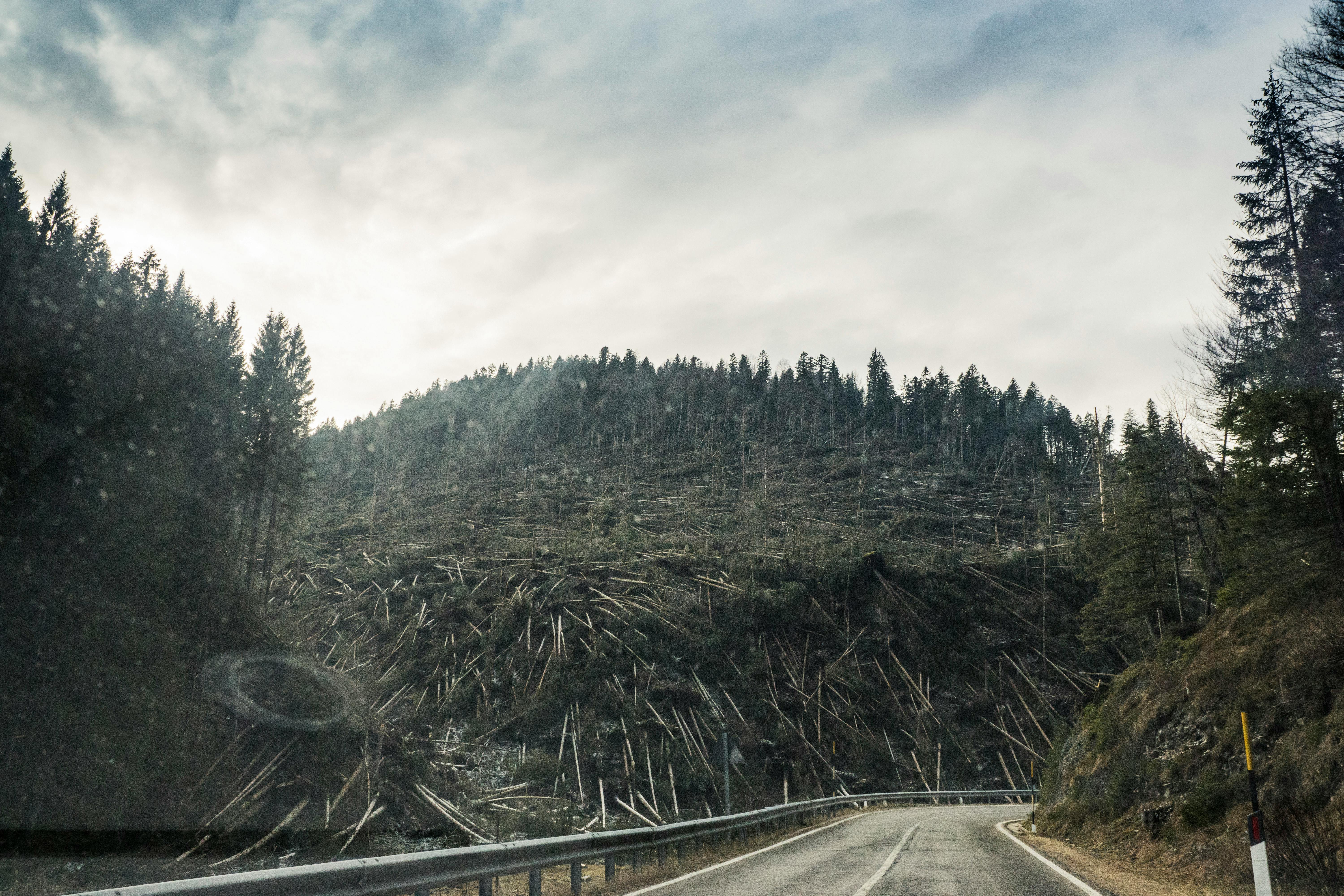
[Jakarta, September 24, 2020] An open letter addressed to the President of the Republic of Indonesia, Joko Widodo—signed by more than 500 Indonesian health professionals—was read by dr. Arif Wicaksono, M.Biomed (Lecturer, Faculty of Medicine, Tanjungpura University) during a webinar titled “Prevent Deforestation for a Healthier Indonesia.”
The webinar was organized by Tempo Media Group in collaboration with Yayasan Madani Berkelanjutan and Yayasan Alam Sehat Lestari (ASRI) on Thursday, September 24, 2020.
Speakers included:
drg. Monica Nirmala, MPH (Senior Public Health Advisor, ASRI Foundation)
Muhammad Teguh Surya (Executive Director, Yayasan Madani Berkelanjutan)
Dr. H. Andi Akmal Pasluddin, M.M. (Commission IV, House of Representatives)
General TNI Doni Monardo (Head of the COVID-19 Task Force / Chief of BNPB)
The session was moderated by Wahyu Dhyatmika, Editor-in-Chief of Tempo Magazine, and opened by Prof. Dr. dr. Nila Moeloek, Sp.M (K) (Minister of Health 2014–2019) as keynote speaker.
Attended by 234 participants, the webinar was organized in response to the risk of a double disaster—COVID-19 and forest and land fires (karhutla). The initiative, led by ASRI Foundation through the open letter to the President, had garnered the support of more than 500 health professionals by the time of the event.
“I am deeply grateful to my colleagues who took the time—amid their intense efforts battling the COVID-19 pandemic—to support and sign this open letter. Public health issues must be addressed from upstream to downstream. Preventing forest and land fires and deforestation is an integrated effort to safeguard and improve public health in Indonesia and globally. We must not allow the already complex COVID-19 situation to be worsened by haze from forest fires. We may be fortunate this year that the dry season has not been as severe as usual. Moving forward, let us continue protecting our forests—for a healthier Indonesia,” said drg. Monica Nirmala.
A particularly alarming scenario would be the simultaneous spread of COVID-19 and forest fires, both of which could have fatal consequences for public health. Hospitals are already under heavy strain from the pandemic, and additional respiratory cases from wildfire haze would further burden the healthcare system. Disaster response efforts at the regional level would also be divided and less effective.
Prof. Nila Moeloek echoed this concern:
“Smoke—whether from cigarettes or forest fires—damages the lungs. The lungs must absorb oxygen easily for breathing. But when the lungs are already compromised due to fire-related smoke, the risks from COVID-19 become much greater.”
Government data recorded approximately 64,600 hectares of burned areas between January and July 2020. MADANI’s analysis also showed an expansion of Potential Burned Area (APT) from 18,000 hectares in July to 84,000 hectares in August. By September, as the dry season transitioned to the rainy season, hotspot numbers began to decline.
Despite relatively milder weather conditions this year, the rise in APT indicates that the government must remain vigilant and intensify prevention efforts. The situation could worsen if public awareness remains low, corporate law enforcement is weak, and monitoring systems fail.
Muhammad Teguh Surya, Executive Director of Yayasan Madani Berkelanjutan, stressed that forest fires must not be underestimated, as structural drivers beyond weather conditions—such as land-use change and ecosystem degradation—remain major concerns.
“MADANI’s five-year analysis (2015–2019) shows that 5.4 million hectares of forests and land burned. There are three main factors influencing fire incidence: land-cover change, licensing practices, and peat ecosystem degradation. Therefore, effective mitigation requires forest protection, peatland restoration, and strict compliance by permit holders to prevent fires,” he explained.
The link between forest fires and the pandemic is further compounded by the controversial Job Creation Bill (Omnibus Law), which has faced strong public opposition. Critics argue that the bill could accelerate forest loss and threaten the livelihoods of forest-dependent communities and biodiversity.
MADANI’s study indicates that natural forests could decline more rapidly if the bill is enacted. Five provinces—Central Java, Bangka Belitung, South Sumatra, Jambi, and Riau—are at risk of losing all remaining natural forests due to deforestation. Several others—including Central Kalimantan, Aceh, West Nusa Tenggara, West Kalimantan, West Sumatra, South Kalimantan, and Jambi—risk losing natural forests outside protected areas (PIPPIB). The negative impacts would extend beyond forests to sectors such as marine affairs, fisheries, and the broader economy.
The interconnection between forest sustainability, public health, and sound governance is undeniable. If one of these pillars fails, the consequences can be severe—not only for the environment but for human life itself, potentially even triggering future pandemics.
For that reason, preventing deforestation must remain a continuous effort, alongside sustained public education and strong environmental governance—to build a healthier Indonesia.
—###—
For further information, please contact:
Image Dynamics
Ayunda Putri
+62 812 2001 411
ayundapputri@gmail.com