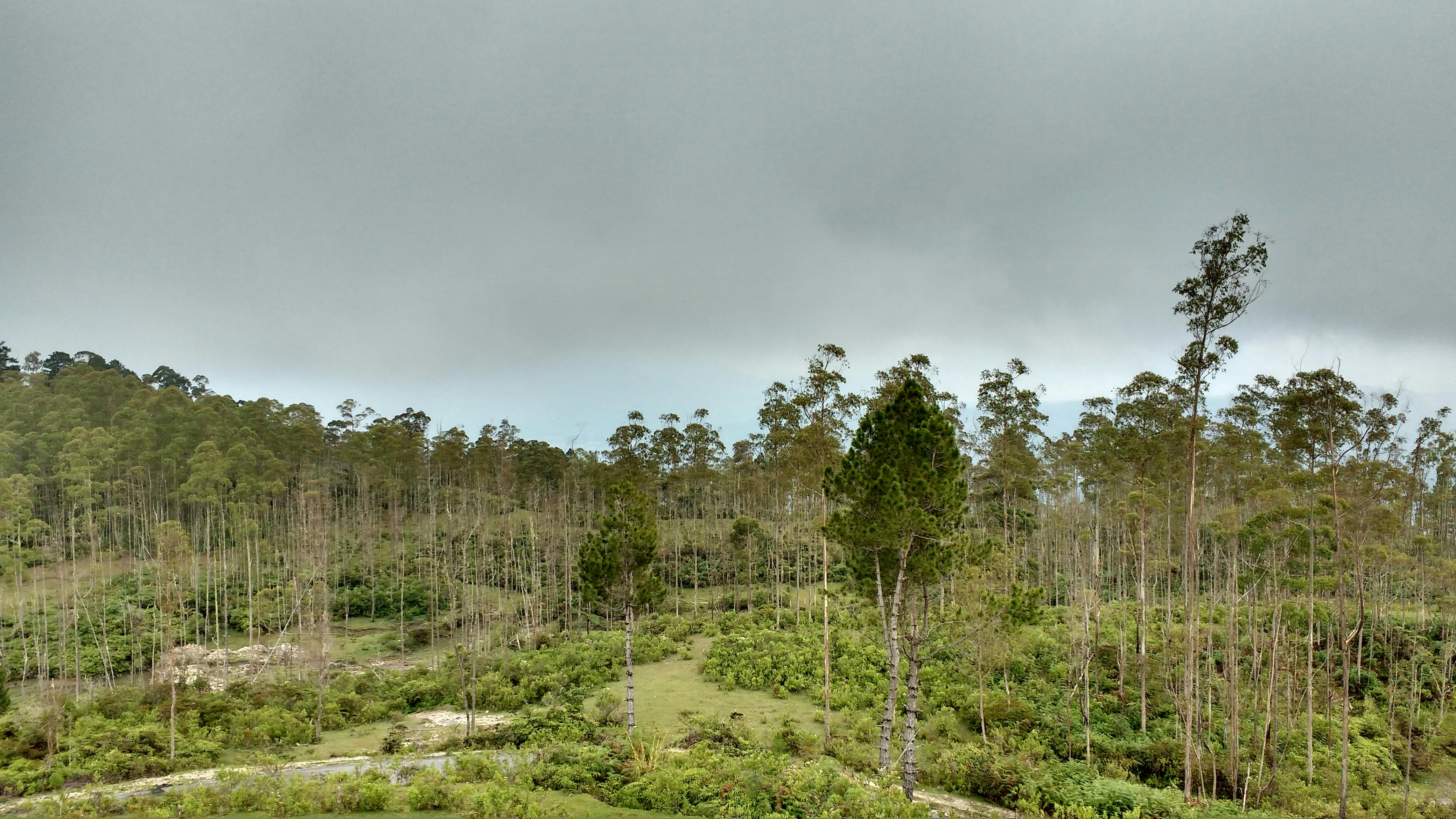
[Jakarta, March 11, 2021] Yayasan Madani Berkelanjutan welcomes the efforts of the Ministry of Environment and Forestry (KLHK) in reducing deforestation by 75% during the 2019–2020 period, as announced in its release on March 3, 2021. This decline marks an important starting point for Indonesia to build an economy without destroying forests and the environment, and should be sustained as a reference for other tropical forest countries.
“It is therefore urgent for the government to ensure that all current development policies—from the National Economic Recovery (PEN), National Strategic Projects (PSN), to Food and Energy Security Programs—are aligned and coherent with efforts to achieve Indonesia’s climate commitments,” said Yosi Amelia, Forest and Climate Project Officer at Yayasan Madani Berkelanjutan, responding to the deforestation report released by the Directorate General of Forestry Planning and Environmental Governance (Ditjen PKTL KLHK).
“However, the largest decline in deforestation actually occurred in plantation forests, which fell by 99%, rather than in natural forests. Meanwhile, primary forest deforestation decreased by 48%, from 23.9 thousand hectares in 2018–2019 to 12.3 thousand hectares in 2019–2020. Unfortunately, deforestation in secondary forests declined far less—only 36%, from 164 thousand hectares to 104.6 thousand hectares over the same period. This shows the urgent need to strengthen protection for secondary natural forests, including those within concessions that are not yet protected by the PIPPIB, for example through policy innovation and REDD+ implementation,” explained Fadli Ahmad Naufal, GIS Specialist at Yayasan Madani Berkelanjutan.
“If we look only at gross natural forest loss, there was indeed a commendable reduction of 38%, from 187.9 thousand hectares in 2018–2019 to 116.9 thousand hectares in 2019–2020. However, based on Madani’s preliminary analysis, around 9.4 million hectares of natural forest—almost 16 times the size of Bali—remain outside permits, concessions, PIAPS, and PIPPIB areas, meaning they are not protected by forest moratorium policies and remain highly vulnerable to deforestation,” Fadli added.
At the same time, the government has also introduced policies that could potentially increase deforestation rates in the coming years. Without strengthened environmental and social safeguards, these development programs risk undermining Indonesia’s climate commitments and low-carbon development goals, while also escalating conflicts with Indigenous peoples and local communities.
In the near future, the risk of rising deforestation is evident in the large areas of natural forest included within Food Estate Areas of Interest (AOI) across four provinces—Papua, Central Kalimantan, North Sumatra, and South Sumatra. These areas cover approximately 1.5 million hectares of natural forest, nearly three times the size of Bali, with an estimated timber value of IDR 209 trillion, creating strong incentives for forest clearing.
“Therefore, it is critically important for the government to strengthen protection for secondary natural forests, both those already within concessions and those not yet covered by PIPPIB. One key pathway is the implementation of REDD+ with strong environmental and social safeguards, supported by transparent data,” Yosi emphasized.
“Madani stands ready to be on the front line should the government open space for collaboration in implementing concrete actions to reduce deforestation,” she concluded.
oooOOOooo
Media Contacts:
Yosi Amelia, Forest and Climate Project Officer, Yayasan Madani Berkelanjutan – +62 813 2217 1803
Luluk Uliyah, Senior Media Communication Officer, Yayasan Madani Berkelanjutan – +62 815 1986 8887


