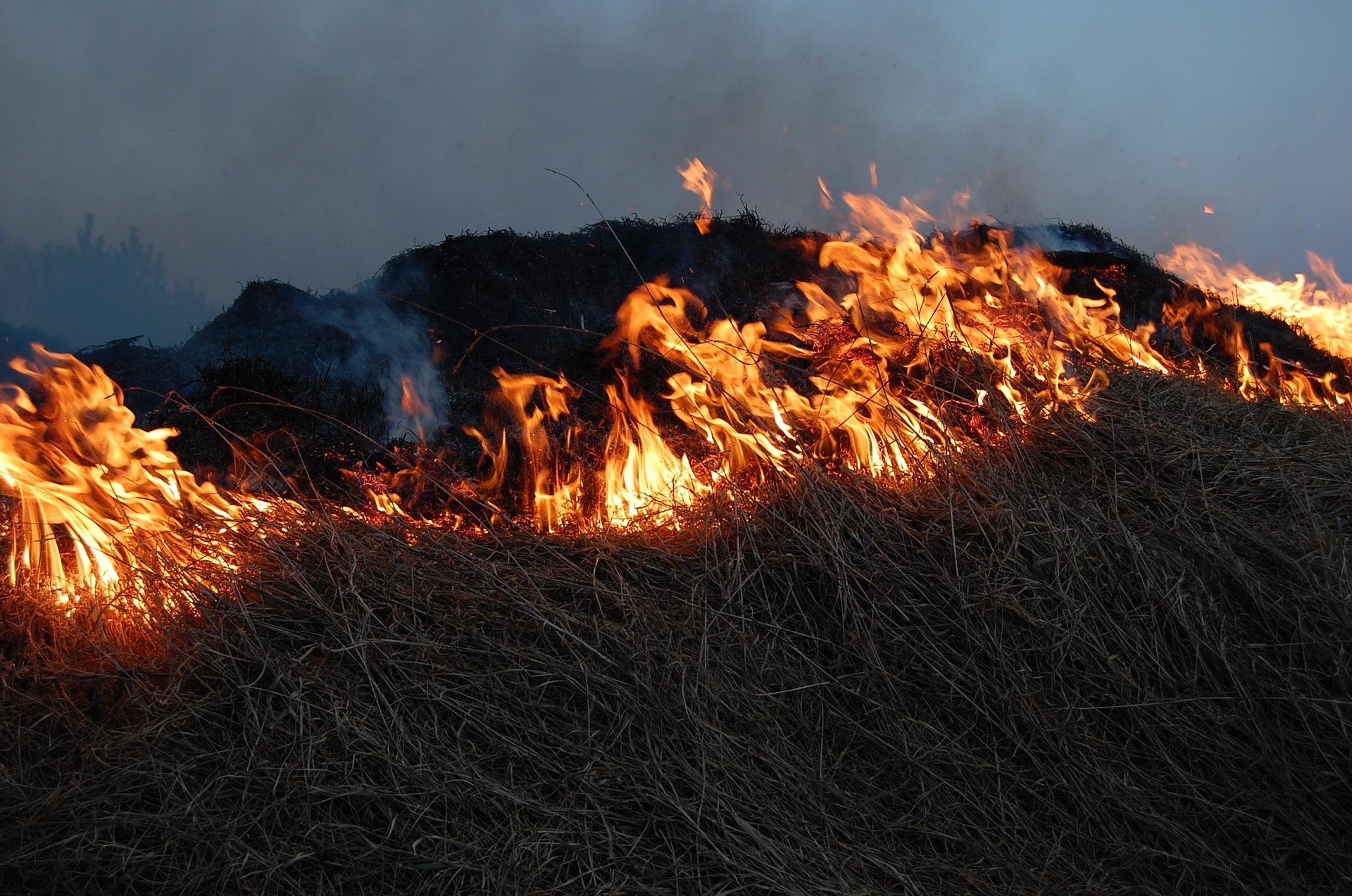
[Jakarta, 4 May 2017] At least 2.7 million hectares of primary natural forest and peatland equivalent to five times the size of Bali Island have disappeared over six years of implementing Indonesia’s forest and peatland moratorium policy. During the same period, an average of 28% of fire hotspots each year occurred within forest areas officially protected under the Moratorium Map.
These alarming findings were revealed today in Jakarta by the Civil Society Coalition for the Rescue of Indonesia’s Forests and the Global Climate. The coalition found that over six years of implementation, the moratorium area designated for delaying new permits has been reduced by 2,701,938 hectares. Ironically, it remains unclear how or for what purposes this land has been reallocated.
“The logic of forest and peatland protection under the moratorium should be that the amount of saved forest increases. Instead, it has decreased through unclear processes and reasons. The lack of transparency is the main factor behind the policy’s ineffectiveness,” said Linda Rosalina from Forest Watch Indonesia.
For more than two decades, environmental disasters resulting from forest destruction have had serious impacts on communities. The forest and peatland fires in the last quarter of 2015 were the worst in Indonesia’s history.
In response, the Government of Indonesia committed to improving forest and peatland governance by issuing Presidential Instruction (INPRES) No. 10/2011 on the Suspension of New Permits and the Improvement of Governance in Primary Forests and Peatlands, initially valid for two years. The policy was extended through INPRES No. 6/2013 and again through INPRES No. 8/2015, without strengthening its substantive protections.
“In practice, although implemented for six years, the policy has not been able to address governance problems in primary forests and peatlands. It has been applied only partially and has not had a significant impact on efforts to save remaining forests and peat ecosystems,” said Yustina Murdiningrum from Epistema Institute.
Zainuri Hasyim from Kaoem Telapak further emphasized that in 2015 there were 69,044 hotspots nationally. Around 31%, or 21,552 hotspots, were located within areas designated as protected under the Indicative Moratorium Map for the Suspension of New Permits (PIPPIB). Between 2011 and 2016, hotspots inside the PIPPIB consistently accounted for around 28.5% of national hotspots—showing an increasing trend.
Meanwhile, from PIPPIB Revision I to Revision XI, forest cover within the moratorium map decreased by 831,053 hectares. This indicates that the policy has failed to stop deforestation even within moratorium areas.
Another concern is that community-managed areas under social forestry schemes remain included within PIPPIB zones. This could disrupt existing and proposed community management permits, undermining Indonesia’s social forestry targets.
“Land conversion and changes in forest designation continue across regions to facilitate megaprojects. This threatens not only forests and peatlands, but also the rights of Indigenous Peoples and local communities,” said Yoseph Watopa from Yali Papua.
Why Has the Moratorium Failed to Address Deforestation and Governance Problems?
The coalition identified several key weaknesses:
As a non-legislative document, a Presidential Instruction (INPRES) carries no legal consequences if not implemented.
The Ministry of Agriculture and the Ministry of Energy and Mineral Resources were not included in INPRES No. 10/2011, No. 6/2013, or No. 8/2015, despite plantation and mining expansion being major drivers of forest loss.
The policy excludes secondary forests with good canopy cover, meaning most protected areas are already legally protected conservation and protection forests.
Numerous exemptions weaken the moratorium’s purpose, such as excluding forests already holding “principle permits,” land for so-called vital development projects, and allowing permit extensions for ongoing exploitation.
There remains a lack of transparency and public access to information on forest and natural resource governance, including the absence of open forest maps and closed revision processes for PIPPIB.
Conflicting interpretations of peatland categories between local governments and technical units within MoEF have resulted in peat areas being removed from subsequent PIPPIB revisions.
Call for Stronger Legal Foundations and Strategic Action
Forests are essential for Indonesia’s economic sustainability and represent a critical last defense against environmental and global climate disasters. Recognizing this, the Civil Society Coalition fully supports President Jokowi’s commitment to continuing forest and peatland ecosystem protection under a stronger legal framework, namely a Presidential Regulation (Peraturan Presiden).
The coalition urges the President, together with other stakeholders, to take strategic actions, including:
Developing a Roadmap Toward a Deforestation-Free Indonesia by 2020
Establishing a National Action Plan Toward Deforestation-Free Indonesia by 2020
Monitoring implementation of the Action Plan
Accelerating the One Map Policy
Conducting integrated licensing evaluations
Strengthening law enforcement and alternative dispute resolution mechanisms
“These six strategic actions are strong and measurable indicators that Indonesia can present to the world as proof of its commitment to halting tropical rainforest destruction, as promised by President Jokowi in Paris in 2015,” said Teguh Surya from Yayasan Madani Berkelanjutan.
Contacts
Linda Rosalina (FWI) — +62 857-1088-6024
Yustina Murdiningrum (Epistema Institute) — +62 822-2654-0885
Zainuri Hasyim (Kaoem Telapak) — +62 811-754-409
Yoseph Watopa (Yali Papua) — +62 813-4483-5232
Teguh Surya (Madani Berkelanjutan) — +62 819-1519-1979
Civil Society Coalition for the Rescue of Indonesia’s Forests and the Global Climate
(Madani | Kaoem Telapak | FWI | Epistema | JKPP | Pusaka | WRI Indonesia | Greenpeace Indonesia | JPIK | Sawit Watch | Kemitraan | WALHI and others)