[Jakarta, 29 September 2022] A civil society coalition consisting of Yayasan Madani Berkelanjutan, Kemitraan, WALHI, Yayasan PIKUL, and the Institute for Essential Services Reform (IESR) welcomes the Indonesian government’s decision to increase its 2030 greenhouse gas (GHG) emission reduction target—from 29 percent to 31.89 percent through domestic efforts, and from 41 percent to 43.2 percent with international support. This increase reflects the government’s growing seriousness in addressing the global climate crisis.
However, the coalition stresses that stronger ambition must be accompanied by meaningful and inclusive public participation mechanisms and cross-sectoral considerations, to ensure that climate mitigation and adaptation actions in Indonesia are truly effective and do not further harm vulnerable groups.
The climate crisis faced by communities across Indonesia is becoming increasingly tangible. In fact, some climate adaptation and mitigation measures have instead weakened ecosystem and community resilience. When implemented without adequate safeguards, such actions often overlook social and environmental impacts and risk becoming maladaptive.
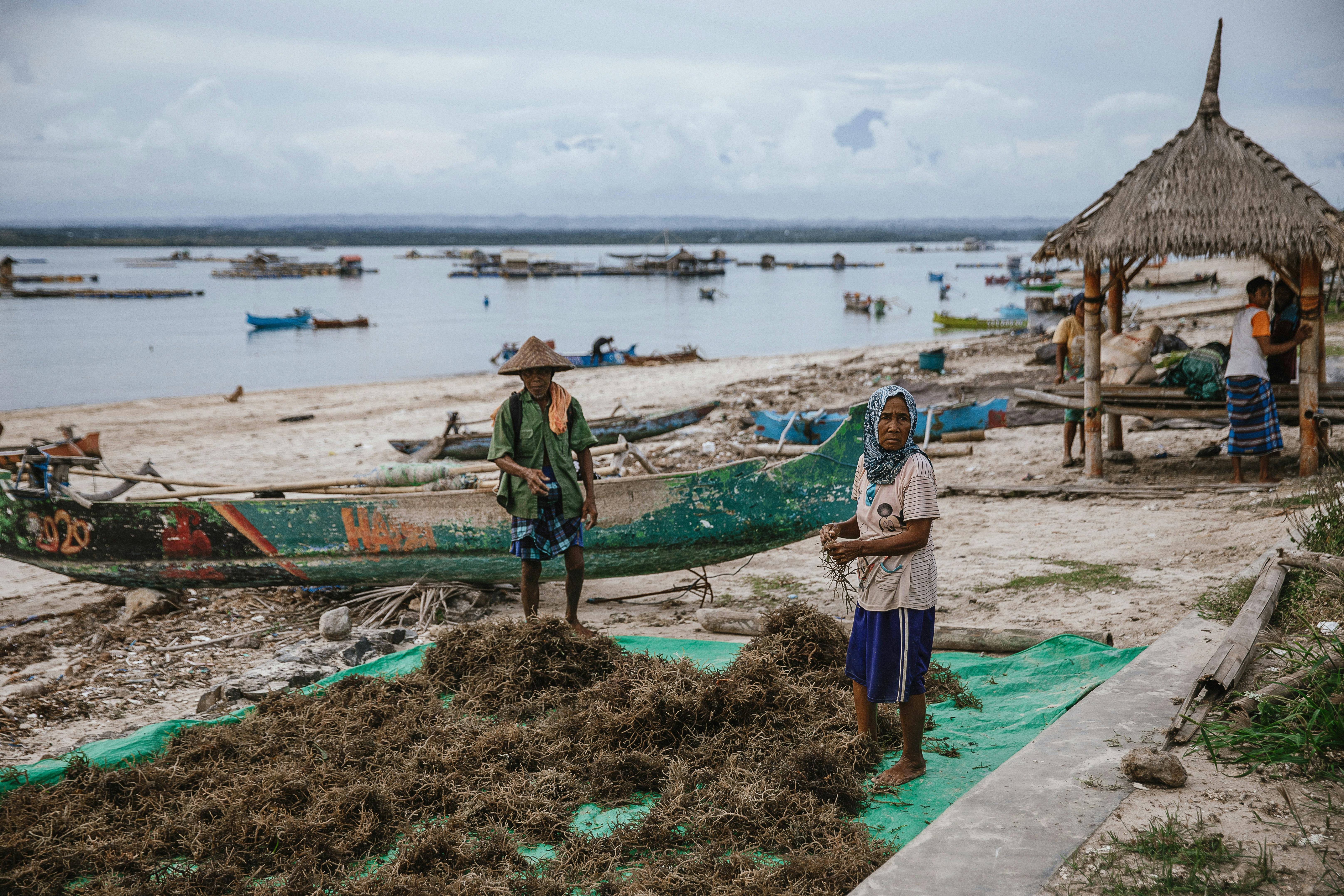
In Kupang City, East Nusa Tenggara, for example, the construction of coastal protection infrastructure as a climate response has ignored the needs of traditional fishers. In Malaka Regency, East Nusa Tenggara, flood prevention infrastructure has actually increased community vulnerability to flooding. Meanwhile, in Pekalongan, Central Java, seawalls built to prevent tidal flooding have disrupted nutrient flows, preventing mangroves from thriving.
On Obi Island in North Maluku—an island of just 2,500 square kilometers—19 nickel mining permits have been issued, partly to supply materials for electric vehicles. Mining operations and smelters there still rely on coal-fired power plants, generating significant emissions.
“The primary subjects of climate action are people and ecosystems, which are fundamentally interconnected. Climate interventions must be balanced, and in Indonesia’s context, adaptation efforts should receive equal—or even greater—priority than mitigation. Both central and local governments must ensure participatory approaches and identify community needs when choosing climate mitigation and adaptation options,” said Dewi Rizki, Program Director at Kemitraan.
The Climate Justice Coalition also highlights the strengthening of Indonesia’s climate ambition in the forestry and land-use (FOLU) and energy sectors, which are currently the main contributors to emission reductions in the Enhanced NDC.
“The increased emission reduction target deserves appreciation, especially considering the scale of funding and multi-stakeholder collaboration required,” said Nadia Hadad. “However, this ambition could—and should—be higher, given Indonesia’s much larger FOLU Net Sink 2030 target. This target should be fully incorporated into Indonesia’s next NDC,” added Nadia Hadad, Executive Director of Yayasan Madani Berkelanjutan.
Under the Enhanced NDC, total deforestation for the 2020–2030 period under the unconditional scenario is projected to rise to 359,000 hectares per year—higher than the deforestation levels set in Indonesia’s First NDC (2016) and Updated NDC (2021), both at 325,000 hectares per year. This projection contradicts Indonesia’s achievement in reducing deforestation rates for four consecutive years.
In the energy sector, the coalition welcomes the higher emission reduction target of 44 MtCO₂e—an increase of 14 percent compared to the Updated NDC. However, this level of ambition still falls short of what is required to align with global efforts to limit temperature rise below 2°C or ideally 1.5°C.
“Emission reductions from the energy sector could be significantly increased by raising the renewable energy share target to 42 percent by 2030,” said Fabby Tumiwa, Executive Director of IESR. “Additional reductions could be achieved through early retirement of coal-fired power plants, accelerated adoption of electric vehicles, and stronger energy efficiency measures in buildings and industry—none of which are currently fully reflected in the NDC.”
On adaptation, the coalition emphasizes that adaptation actions must align with development agendas and must not result in harm or maladaptation.
“Although the NDC mentions cross-sectoral integration, coordination and collaboration across sectors at the national implementation level remain highly questionable, as climate-related and non-climate development actions continue to clash and pose risks to public safety,” said Torry Kuswardono, Executive Director of Yayasan PIKUL.
The coalition also raises serious concerns over the lack of consultation and public participation—particularly involving civil society and Indigenous Peoples—in the preparation of the Enhanced NDC. Communities are on the front lines of climate impacts, yet their voices remain marginal.
The Paris Agreement explicitly affirms the importance of public participation, access to information, and the involvement of all stakeholders throughout climate action processes, including NDC formulation. Both the development and implementation of the NDC must be guided by the principle of “no one left behind” in addressing climate change and achieving the Sustainable Development Goals.
Strengthening meaningful consultation and participation mechanisms for all stakeholders—both in the formulation and implementation of the NDC—is therefore essential.
“Only through meaningful public participation can Indonesia truly claim that the actions outlined in its NDC are capable of protecting its people from the climate crisis—one that is already unfolding and will only intensify,” concluded Hadi Jatmiko, Head of the National Campaign Division at WALHI.
Contacts:
Nadia Hadad – Executive Director, Yayasan Madani Berkelanjutan
📞 +62 811 132 081
Hadi Jatmiko – Head of Campaign Division, WALHI National
📞 +62 813 1006 8838
Fabby Tumiwa – Executive Director, IESR
📞 +62 811 949 759
Torry Kuswardono – Executive Director, Yayasan PIKUL
📞 +62 811 383 270
Dewi Rizki – Program Director, Sustainable Governance Strategic
📞 +62 811 8453 112