Rationalizing the Energy Mix and Transforming Biofuel (BBN) Governance in Indonesia
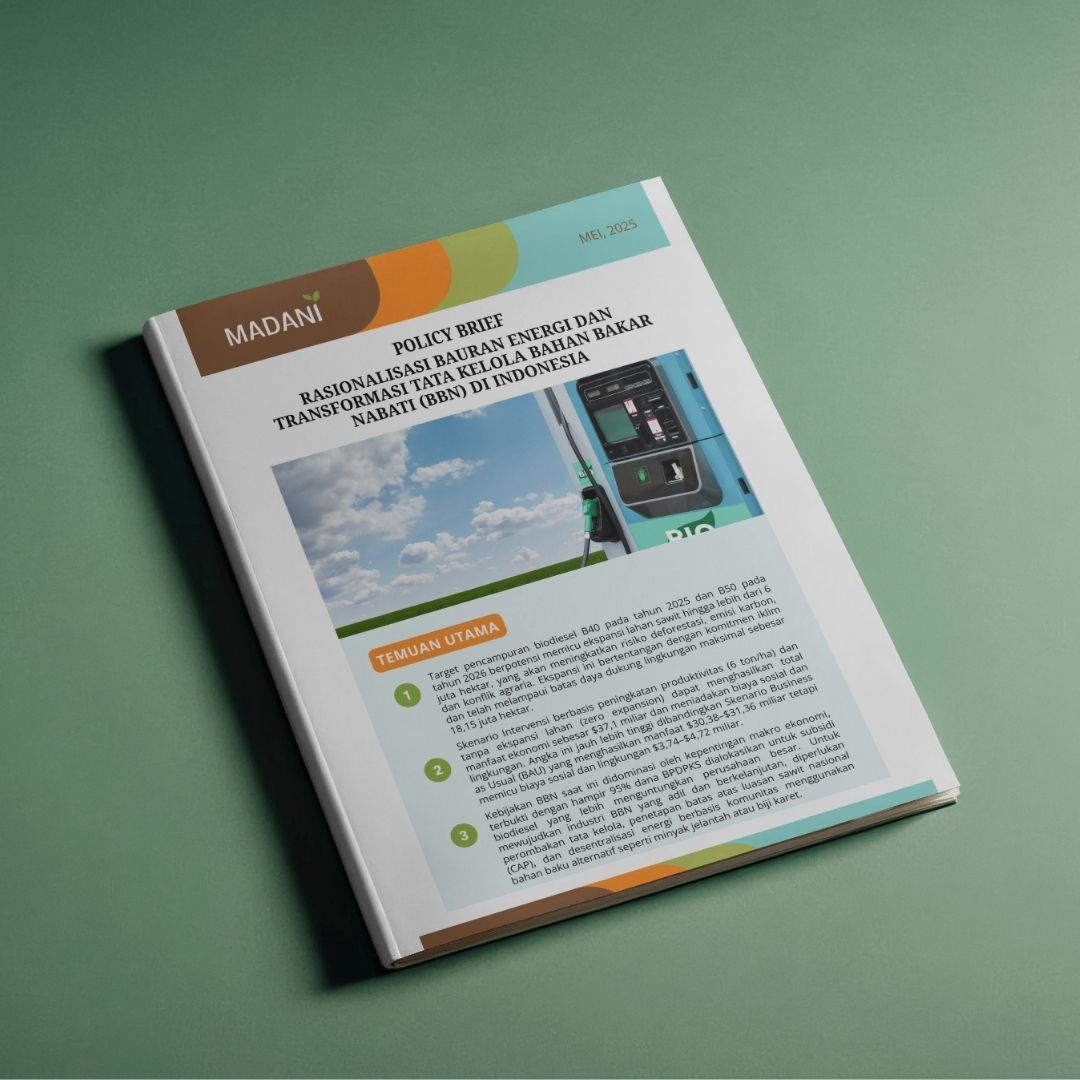
The biodiesel blending targets of B40 in 2025 and B50 in 2026 have the potential to drive oil palm expansion of more than 6 million hectares, increasing the risks of deforestation, carbon emissions, and agrarian conflicts. This expansion contradicts climate commitments and exceeds the maximum environmental carrying capacity of 18.15 million hectares.
An Intervention Scenario based on productivity improvements (6 tons/ha) and zero land expansion could generate total economic benefits of USD 37.1 billion while eliminating social and environmental costs. This figure is significantly higher than the Business as Usual (BAU) scenario, which yields benefits of USD 30.38–31.36 billion but incurs social and environmental costs of USD 3.74–4.72 billion.
Current biofuel policies are dominated by macroeconomic interests, as evidenced by the allocation of nearly 95% of BPDPKS funds to biodiesel subsidies that disproportionately benefit large corporations. To achieve a just and sustainable biofuel industry, comprehensive governance reform is required, including the establishment of a national oil palm area cap (CAP) and the decentralization of community-based energy systems using alternative feedstocks such as used cooking oil or rubber seeds.