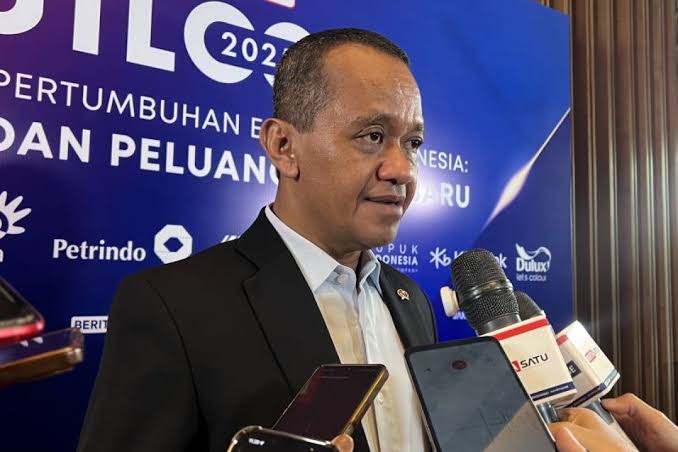
[Jakarta, January 31, 2025] — The People's Alliance for Climate Justice (ARUKI) believes that Bahlil Lahadalia, Minister of Energy and Mineral Resources,'s statement regarding the Paris Agreement in "Bahlil Lahadalia, Minister of Energy and Mineral Resources on the Paris Agreement: The US Withdrew, Why Should We Continue?" (January 30, 2025) demonstrates the government's lack of commitment to climate justice and its indifference to the suffering of the people affected by the climate crisis. This statement once again demonstrates the government's disregard for the people's suffering caused by the climate crisis and the Indonesian government's legal and moral obligation to fulfill the right to a good and healthy environment. Instead of responding to the climate crisis that threatens the community, economic priorities continue to emphasize extractivism and exploitation, the primary causes of the climate crisis.
The struggle to produce a binding Paris Agreement among the world's participating countries, including Indonesia, is a struggle to hold industrialized countries accountable for the climate crisis and to protect the rights of the people of poor and developing countries. Bahlil Lahadalia's statement that the US is the "driving force" of the Paris Agreement is a misguided view. The decision to withdraw from the Paris Agreement is a step backward, unwise, and will damage Indonesia's credibility in the eyes of the international community. "This statement demonstrates the government's lack of understanding and indifference to the urgency of the climate crisis and its reluctance to prioritize the climate justice agenda," said Giorgio B. Indrarto, Deputy Director, MADANI Berkelanjutan.
The government's statement not to seriously implement the climate commitments in the Paris Agreement also constitutes a violation of its legal obligations. Indonesia ratified the Paris Agreement through Law No. 16 of 2016 and further regulates the fulfillment of these commitments through Presidential Regulation No. 98 of 2021. Furthermore, Law No. 32 of 2009 also explicitly imposes a legal obligation on the government to address the climate crisis. Ignoring this commitment, citing the withdrawal of other countries, not only ignores the suffering of the people caused by the climate crisis, but also deviates from the principle of shared responsibility enshrined in the Paris Agreement, particularly the responsibility of industrialized countries.
Minister Bahlil's statement questioning Indonesia's continued participation in the Paris Agreement turns a blind eye to the suffering, losses, and impacts of the climate crisis faced by vulnerable communities and groups. Ignoring the Paris Agreement commitments simultaneously disregards the safety of the people, especially vulnerable groups, from the increasingly unavoidable threat of the climate crisis. Yet, the European Climate Change Agency (Copernicus) recorded that global temperature rise has exceeded 1.5 degrees Celsius for the first time.
In Indonesia, the National Disaster Management Agency (BNPB) recorded that in 2023-2024, there were 6,827 weather and climate-related disasters, impacting more than 13 million people.
"Indonesia's withdrawal from the Paris Agreement (PA) will have fatal consequences: it will lose access to international climate finance, erode global trust in sustainable development commitments, and threaten civil society's environmental advocacy efforts. The weakening of climate commitments also reflects a disregard for millions of vulnerable communities who depend on nature and exacerbates energy poverty," said Indira Hapsari of the Foundation for Strengthening Indonesian Community Participation, Initiatives, and Partnerships (YAPPIKA).
Konsultasi rakyat yang dilakukan ARUKI di 13 provinsi di Indonesia, menunjukkan bukti bahwa kelompok rentan menanggung lebih berat dampak krisis iklim. Orang Muda, Petani, Nelayan, Perempuan, Ragam Penyandang Disabilitas, Buruh, Kelompok Miskin Urban dan Pekerja Informal, serta Masyarakat Adat telah menghadapi dan mengalami langsung dampak kerusakan dan kehilangan tempat tinggal, tanah, pendapatan, hingga di beberapa wilayah telah terjadi migrasi penduduk akibat krisis iklim.
Mundur dari Paris Agreement juga menegaskan bahwa pemerintah Indonesia tidak mengakui ada dampak dan kebutuhan yang berbeda terhadap perempuan, anak-anak dan kelompok rentan, sebagaimana yang tercantum dalam Perjanjian Paris. “Pernyataan Bahlil memperlihatkan bahwa pemerintah tidak mengakui terhadap dampak krisis iklim yang berbeda. Padahal kelompok rentan telah menghadapi triple planetary crisis. Implementasi Paris Agreement yang berlandas pada prinsip keadilan iklim dapat menyelamatkan rakyat dari triple planetary crisis.” Kata Torry Kuswardono, Direktur Eksekutif Yayasan PIKUL
Pernyataan Bahlil ini membuktikan watak pemerintah Indonesia yang tetap memprioritaskan agenda pembangunan dan ekonomi yang berorientasi pada eksploitasi sumber daya alam dan industri ekstraktif, khususnya batubara, di atas komitmen terhadap keadilan iklim yang meniscayakan keselamatan lingkungan, dan keselamatan serta kesejahteraan rakyat Indonesia.
Batubara sebagai penyebab krisis iklim adalah fakta. Alih-alih ambisius untuk penghentian batu bara, pemerintah Indonesia justru masih memprioritaskan penggunaan batu bara sebagai sumber energi. Risma Umar, Direktur Eksekutif Aksi! Gender, Social, and Ecological Justice mengatakan,“Rasionalisasi kelanjutan penggunaan batubara sebagai sumber energi utama, mengabaikan implikasi serius terhadap keadilan iklim serta mereduksi kewajiban negara-negara industri dalam konteks hutang ekologi dan prinsip Common But Differentiated Responsibilities – Respective Capabilities (CBDR-RC).”
“Pemikiran yang mendasarkan kedaulatan dan ketahanan energi pada batubara adalah paradigma yang keliru. Eksploitasi sumber daya alam, khususnya batubara, justru selama ini meningkatkan kerentanan masyarakat, terutama kelompok rentan seperti perempuan dan anak. Membangun kedaulatan dan ketahanan energi dengan membiarkan masyarakat
menanggung dampak negatif dari batubara sama saja dengan tindakan yang secara aktif melanggar hak atas lingkungan hidup yang baik dan sehat.” Ujar Syaharani dari Indonesian Center for Environmental Law (ICEL)
Padahal, lanjut Syaharani energi terbarukan justru menawarkan solusi yang lebih berkelanjutan dan berkeadilan dalam mencapai kedaulatan energi melalui pengembangan energi terbarukan khususnya yang berbasis komunitas. .
“Komitmen iklim yang melemah, ditambah justifikasi ‘kedaulatan’ yang keliru, berpotensi memicu eksploitasi hutan melalui klaim energi hijau dari bioenergi. Bioenergi, melalui perluasan kebun energi seperti kebun kayu dan kebun sawit menjadi ancaman serius terhadap hutan Indonesia. Terbukti dengan belum lama ini terbitnya program Hutan Cadangan Pangan dan Energi. Pemerintah perlu meluruskan konsep kedaulatan energi, dan mulai mengusung konsep transformasi energi yang berkeadilan dan berkelanjutan.” Ujar Amalya Reza Oktaviani, dari Trend Asia.
Untuk itu, ARUKI menyerukan dan menuntut kepada pemerintah Republik Indonesia:
Pertama, Pemerintah harus mengimplementasikan Perjanjian Paris dengan tindakan konkret, termasuk dengan menentukan target pemensiunan dini PLTU Batubara di Indonesia;
Kedua, Pemerintah harus memfasilitasi dan mendorong transisi menuju energi terbarukan yang inklusif dan adil serta meningkatkan akses terhadap energi bersih bagi rakyat;
Ketiga, mengedepankan Keadilan Iklim dan tidak mengorbankan kepentingan kelompok rentan dalam agenda-agenda penanganan perubahan iklim dan pembangunan.
Keempat, ARUKI juga menyerukan agar pembahasan RUU Keadilan Iklim yang telah masuk ke dalam Program Legislasi Nasional segera dibahas dengan partisipasi publik bermakna khususnya kelompok rentan untuk menunjukkan komitmen Indonesia dalam mengatasi krisis iklim, dan menyelamatkan bangsa dan warga global dari bencana iklim.
Lampiran:
Narahubung: Omen Bagaskara (085 314-451-953)
Tentang ARUKI (Aliansi Rakyat untuk Keadilan Iklim)
ARUKI merupakan aliansi organisasi masyarakat sipil yang dibentuk pada 20 November 2023, organisasi masyarakat sipil tersebut di antaranya: Wahana Lingkungan Hidup (Walhi) Eksekutif Nasional, Indonesian Center for Environmental Law (ICEL), Kemitraan, Yayasan Penguatan Lingkar Belajar Komunitas Lokal (PIKUL), Madani Berkelanjutan, Yayasan Penguatan Partisipasi, Inisiatif, dan kemitraan Masyarakat Indonesia (YAPPIKA), Yayasan Pusaka, Aksi! For Gender Social Ecological Justice, Koalisi Rakyat untuk Kedaulatan Pangan (KRKP), Solidaritas Perempuan, TUK Indonesia, Yayasan Lembaga Bantuan Hukum Indonesia (YLBHI), Koaksi Indonesia, 350.org Indonesia, ELS FH Univ. Indonesia, Aliansi Masyarakat Adat Nusantara (AMAN), Konsorsium Pembaruan Agraria (KPA), Kesatuan
Indonesian Traditional Fishermen (KNTI), People's Coalition for Fisheries Justice (KIARA), Healthy Soul Association (PJS), Indonesian Women with Disabilities Association, Climate Ranger (CR) Jakarta, XR Indonesia, Koprol Iklim, DPP Kasbi, PSHK, Trend Asia, Walhi Jakarta, Celios, and the Huma Association.
ARUKI was formed to promote the realization of the Climate Justice Law, which is believed to be the highest legal instrument capable of fostering collaboration and harmonization in addressing the climate crisis. ARUKI's vision is to promote changes in the state system to achieve climate justice in Indonesia, prioritizing the principles of justice, democracy, and sustainability. Its mission is: (1) Building people's power in promoting climate justice; (2) Encouraging changes in the state's democratic system to achieve climate justice; (3) Expanding the climate justice movement at the local, national, regional, and global levels.
ARUKI is divided into working groups, including: (1) Substance and Academic Paper Working Group: compiling a knowledge narrative on climate justice and developing a position paper into an academic paper for the Climate Justice Bill. (2) The People's Organizing Working Group: raises awareness among affected communities and encourages public involvement in realizing climate justice. (3) The Advocacy and Strategic Communication Working Group: connects advocacy at the grassroots level with decision-making at the regional and national levels.
ARUKI demonstrates the commitment of various civil society organizations to fighting for climate justice in Indonesia and is expected to be a key driver in realizing sustainable systemic change.