Jakarta, November 18, 2026 – Closing the three-day Women's Voices for Climate Justice workshop held since November 16, 2026, nearly one hundred representatives of young women's and disability movements from 27 provinces formulated the "Declaration of Women's Voices for Climate Justice."

Representatives of the workshop participants read out the Joint Declaration of Women's Voices for Climate Justice before participants and respondents from the Ministry of Women's Empowerment and Child Protection (KemenPPPA), the Ministry of Forestry, the Ministry of Environment, and the National Commission on Violence Against Women (Komnas Perempuan) in Jakarta on Wednesday, November 18, 2026. Photo: Women's Voices for Climate Justice Coalition
In this joint declaration, representatives of women's and disability movements voiced 12 demands. The primary demand is the meaningful participation of women and persons with disabilities as an absolute prerequisite in public decision-making, including in just energy transition policies and other climate actions. They also demand the right of veto for women to reject projects that destroy women's living spaces and livelihoods.
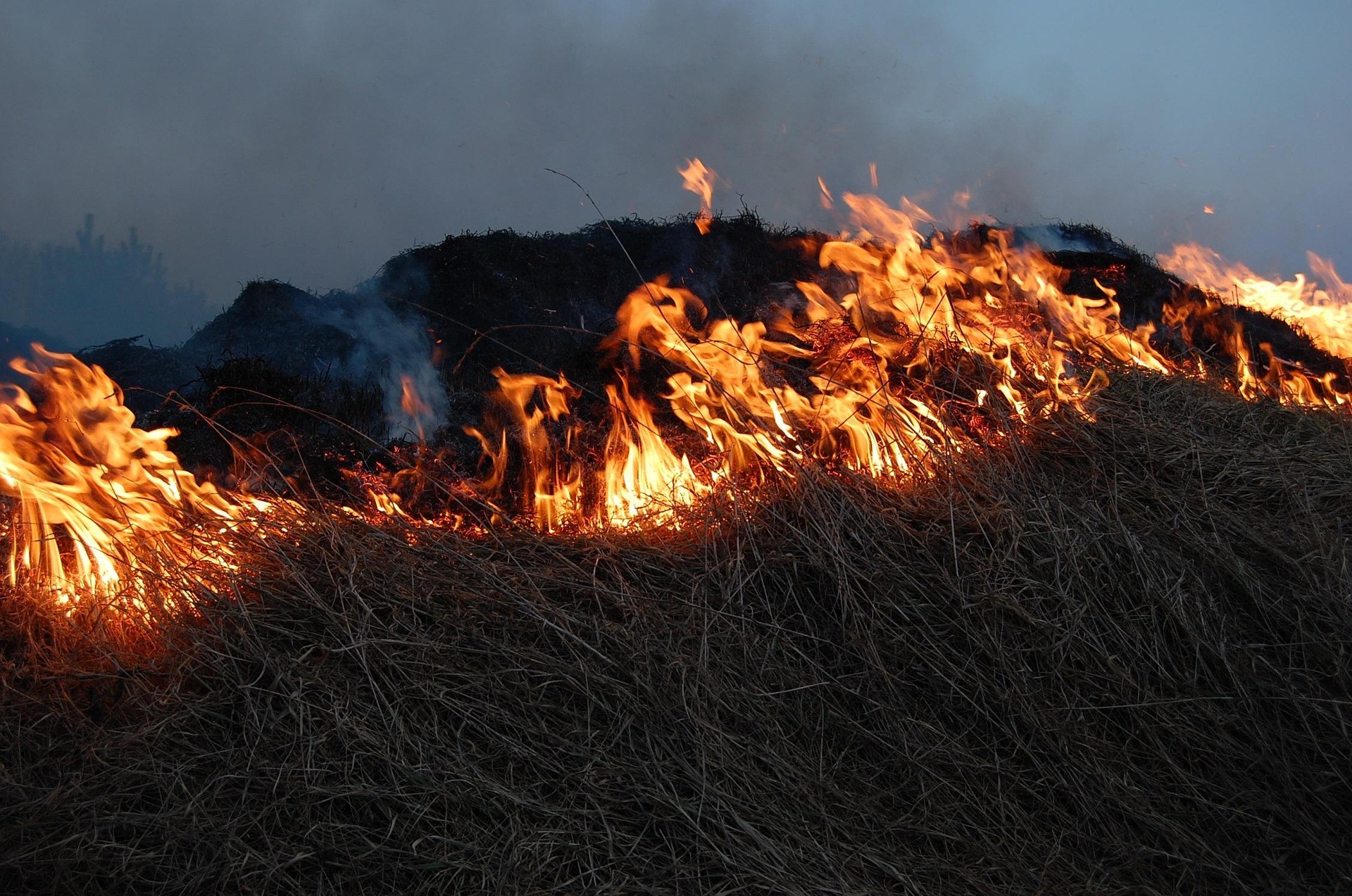
This stance stems from realities on the ground. Women and persons with disabilities are forced to wade through flash floodwaters, inhale soot from forest and land fires (karhutla), and defend their living spaces under unequal conditions.
Women and Persons with Disabilities Bear the Layered Burdens of the Ecological Crisis

All participants of the Women's Voices for Climate Justice workshop and representatives of the Ministry of Women's Empowerment and Child Protection (KemenPPPA), the Ministry of Forestry, the Ministry of Environment, and the National Commission on Violence Against Women (Komnas Perempuan) pose for a group photo in Jakarta on Wednesday, November 18, 2026. Photo: Women's Voices for Climate Justice Coalition
“In Riau, persons with disabilities face recurring floods and forest and land fires every year. We are increasingly exposed to acute respiratory infections (ARI), while healthcare facilities remain inaccessible and often lack reasonable accommodation—for instance, no ramps or overly steep ramps, no accessible toilets, and no priority parking. Special queues are also frequently denied to persons with disabilities due to differing perceptions of disability itself,” said Claudya Fritsca of the Indonesian Association of Women with Disabilities (HWDI) Riau.
Barbara from HWDI East Nusa Tenggara (NTT) added, “In NTT, prolonged dry seasons cause droughts, clean water scarcity, and crop failures. Women bear a heavier burden, while we Deaf women face additional barriers because hazard warning information is often inaccessible, lacking both Sign Language Interpreters and captions. The climate crisis is already real; adaptation policies must not leave us behind simply because the needs and rights of persons with disabilities have not been taken into account.”
The escalation of the ecological crisis adds to the heavy burden borne by vulnerable groups. Deforestation, the seizing of customary forests, and forest and land fires erode women's living spaces and livelihoods.
“During El Niño, a thousand of my cacao trees burned to the ground, even though they were my investment for the future. Residents' clove and coconut plantations also burned, even though many of them were putting their children through college. The fires in our area may be small and invisible on social media, but their impacts directly strike the lives of Indigenous peoples,” revealed Anjelin Melna A. Meut, a workshop participant from the Seram Islands, Maluku.
The climate crisis is also altering the landscape and livelihoods of communities in South Central Timor, East Nusa Tenggara.
“South Central Timor used to be known as a cool region producing tangerines and apples. Now that is merely a story of the past,” said Cici Thalar, a workshop participant from So’e, South Central Timor, NTT.
Along the coast, coastal abrasion and coral reef destruction threaten the livelihoods of women fisherfolk and residents of small islands. Hanum from Tunas Bahari Maluku described the changes unfolding along the coast: “In my area, the weather is getting hotter and drier. Our well water has already turned brackish because seawater is starting to intrude.”
Meanwhile, green policies and climate actions designed without meaningful participation can instead threaten the living spaces of vulnerable groups, including Indigenous peoples.
“For us, the forest is life. Babies born in our village are brought to the forest when they are two weeks to one month old. Yet now, in the name of conservation, our land is being taken away. Residents of nine villages inside the national park have been criminalized simply for cutting down timber to build houses. Elsewhere, 84 homes are set to be evicted for a coconut downstreaming project, and four heads of households were arrested for resisting,” Anjelin recounted.
From Objects of Development to Policymakers
Representative of MADANI Berkelanjutan Foundation, Anggalia Putri Permatasari, emphasized that vulnerable groups particularly women and persons with disabilities contribute the least to emissions yet bear the heaviest impacts of the climate crisis. According to her, the aspirations of women and persons with disabilities must be a primary consideration at the negotiating table, and climate finance must be ensured to reach grassroots communities, including through funding mechanisms directly accessible to women's groups and persons with disabilities.
Echoing this sentiment, National Presidium of the Indonesian Women's Coalition (KPI), Dian Kartikasari, stressed that the disproportionate impacts of the climate crisis cannot be resolved with a one-size-fits-all strategy. State climate change adaptation and mitigation measures must strictly adopt a gender-responsive and inclusive perspective. The principles of Gender Equality, Disability, and Social Inclusion (GEDSI) must serve as the core foundation of sustainability not a mere formality by guaranteeing equal access to protection, technology, and funding so that no citizen is left behind.
Meanwhile, Rina Prasarani of the Indonesian Association of Women with Disabilities (HWDI) urged a shift in the government's approach from charity-based models toward the fulfillment of constitutional human rights. Persons with disabilities must no longer be excluded from access to information or policymaking. True inclusion is not merely fulfilling attendance quotas, but integrating disability perspectives and needs mapping into spatial planning and disaster mitigation, accompanied by dedicated budget allocations and fully accessible evacuation facilities.
The Association of Centers for Women's Resources Development (PPSW) affirmed that women are not merely a group requiring protection from climate change impacts, but vital actors in building solutions and community resilience. According to PPSW, climate justice can only be achieved if every climate policy, mitigation, and adaptation strategy ensures no group is left behind by providing equal space for them to be heard and involved in charting the course of change.
Commitments and Responses from Relevant Ministries and Institutions

The formulation of the declaration document during the Women's Voices for Climate Justice workshop in Jakarta on Wednesday, November 18, 2026. Photo: Women's Voices for Climate Justice Coalition
The "Declaration of Women's Voices for Climate Justice" was presented directly to representatives of relevant ministries and institutions, namely the Ministry of Women's Empowerment and Child Protection (KemenPPPA), the Ministry of Forestry, the Ministry of Environment (KLH), the Ministry of Energy and Mineral Resources (ESDM), and the National Commission on Violence Against Women (Komnas Perempuan).
Assistant Deputy for Gender Mainstreaming in Human Development and Culture at KemenPPPA, Dewa Ayu Laksmiadi Janapriati, warmly welcomed the 12-point demands produced through the collective formulation.
“We stand ready to convey these voices from the grassroots to our leadership, forward them to relevant ministries, and elevate them to the Mothers of the Nation Forum (Musyawarah Ibu Bangsa) alongside women legislators during the upcoming Mother's Day commemoration, ensuring that policy advocacy advances in parallel from the grassroots level to decision-makers,” affirmed Laksmiadi.
In response to the ecological crisis affecting seven vital sectors such as food, energy, coastal and marine affairs, and health KemenPPPA has scheduled a high-level dialogue for late November or early December 2026. This strategic meeting aims to initiate a cross-sectoral working group to accelerate the implementation of the National Action Plan on Gender and Climate Change in collaboration with civil society networks.
Responding to the declaration, Anny Meilani, Head of Facilitation for the Implementation and Development of Forestry Hydrometeorological Disaster Mitigation and Adaptation at the Ministry of Forestry, regarded the movement as a positive step that must be realized through concrete action plans and cross-ministerial synergy under the coordination of KemenPPPA. She emphasized the importance of clear roles and guaranteed protection for women in the forestry sector, particularly those directly involved in forest patrols and firefighting.
Regarding demands to halt environmental destruction, Meilani reaffirmed her commitment to compiling climate change mitigation and adaptation reports as well as enforcing the law against perpetrators of forest fires. Moving forward, the detailed declaration document will be discussed with Echelon I officials and submitted to ministry leadership for follow-up.
Welcoming the declaration, Heny Puspita Affan from the Directorate of Climate Change Adaptation at the Ministry of Environment (KLH) commended the grassroots data successfully gathered by women's groups across various regions. She asserted that KLH encourages women not merely to be objects, but to emerge as leaders and drivers of climate action in society through gender mainstreaming.
As a supervising institution, KLH is committed to providing full support not only at the policy level, but also through on-the-ground program implementation such as the Climate Village Program (Program Kampung Iklim / ProKlim). The program has already established quotas for women's participation and will continue to be expanded to become increasingly inclusive by actively engaging persons with disabilities, older persons, and youth.
This national-scale gathering, held from November 16 to 18, 2026, was initiated by MADANI Berkelanjutan Foundation, the Indonesian Association of Women with Disabilities (HWDI), the Indonesian Women's Coalition (KPI), and the Association of Centers for Women's Resources Development (PPSW), in collaboration with KemenPPPA.
Following this workshop, women and disability delegates from the 27 provinces committed to expanding consolidation efforts in their respective regions. They hold firmly to a fundamental principle: climate justice can never be achieved without social justice, ecological restoration, and equality for all people.
Media Contacts
Jay Fajar, MADANI Berkelanjutan. Email: jay@madaniberkelanjutan.id, Mobile: 08567872102
Mahretta Maha, HWDI. Email: hwdi.info@gmail.com, Mobile: 081219935244
Mega Puspitasati, KPI. Email: mega@koalisiperempuan.or.id, Mobile: 089681465189
Tati Sulastri, PPSW. Email: tatippswpd@gmail.com, Mobile: 083824900818