Jakarta, November 18, 2021. The 26th Conference of the Parties (COP26) to the UNFCCC in Glasgow, Scotland, concluded on November 13, 2021. The meeting produced the Glasgow Climate Pact, but it has not satisfied many parties. Efforts to save the earth from the climate crisis require the involvement of many parties to ensure that the work to save the earth is more concrete, accountable, and implementable.
COP26 produced the Glasgow Climate Pact. Key points of the Glasgow Climate Pact include: acknowledging that current commitments by countries to reduce planet-warming greenhouse gas emissions are insufficient to prevent global warming exceeding 1.5 degrees Celsius above pre-industrial levels. Second, it explicitly states the reduction in the use of fossil fuels, particularly coal. Third, it affirms the need for funding commitments from developed countries for developing countries for climate adaptation.
However, to overcome the climate crisis and prevent greater impacts in the future, the results of COP26 are still far from expectations and are considered disappointing. According to Dewi Rizki, Program Director for Sustainable Governance Strategic at KEMITRAAN, COP26 does have an ambitious target of preventing global warming from exceeding 1.5 degrees Celsius. However, its implementation needs to be aligned with the stated target. According to Dewi, Indonesia needs to adhere to its Nationally Determined Contribution (NDC) to reduce carbon emissions and build climate resilience. "So that the commitment to maintaining the earth's temperature can truly be implemented," she said. The NDC is a document of a country's commitment to the Paris Agreement agreed at the 2015 climate conference to reduce carbon emissions and build climate resilience.
To achieve the NDC, the government needs to open up the participation of many parties across multiple sectors. COP26 emphasized collaboration to prepare affected countries to protect ecosystems. The role of non-party stakeholders (NPS) such as civil society, local governments, indigenous communities, and the private sector must be open to ensure the NDC's plans can be implemented. " The key is to involve all sectors ," Dewi said.
Primarily in the energy sector. One of the achievements of the NDC is the reduction of coal use. The Glasgow Climate Pact failed to completely phase out coal use. Coal has long been the source of carbon emissions that fuel global warming. In the final minutes of signing the draft agreement, India and China lobbied to weaken the complete phaseout. Both countries insisted on removing the word "phase out" from coal use and replacing it with "phased reduction."
The issue of financial aid from developed countries also impacts Indonesia. Last week, Finance Minister Sri Mulyani explained that Indonesia needs a cumulative funding of IDR 3,779.63 trillion to achieve its net-zero emissions target by 2030. Of the IDR 3,779.63 trillion in climate adaptation costs, the largest item is the transportation and energy sector, accounting for 92 percent, or around IDR 3,500 trillion. According to Fabby Tumiwa, Executive Director of the Institute for Essential Services Reform (IESR), the energy sector remains dependent on coal. This dependence exists on two fronts: mining and utilization.
According to data from the Ministry of Energy and Mineral Resources, last year's coal production exceeded the target. In 2020, the coal production target was 550 million tons. However, production reached 561 million tons, or 102 percent of the target. This indicates that, from a development perspective, Indonesia continues to over-extract coal.
Coal remains the primary source of electricity. According to the Ministry of Energy, 80 percent of electricity still relies on coal. This dependence on coal clearly needs to be reduced. Fabby explained that coal contributes 40 percent to global emissions. Indonesia is making progress with plans to early retire several coal-fired power plants (PLTUs). " Indonesia needs to make an energy transition from dirty energy to green energy ," Fabby said.
This transition can begin by disincentivizing sectors that rely on coal. The transportation sector also needs to transition away from fossil fuels to prevent the planet from becoming increasingly polluted by vehicle emissions. Furthermore, the government needs to provide incentives to sectors that use environmentally friendly energy. This will encourage the increased use of green energy, while coal is increasingly being displaced.
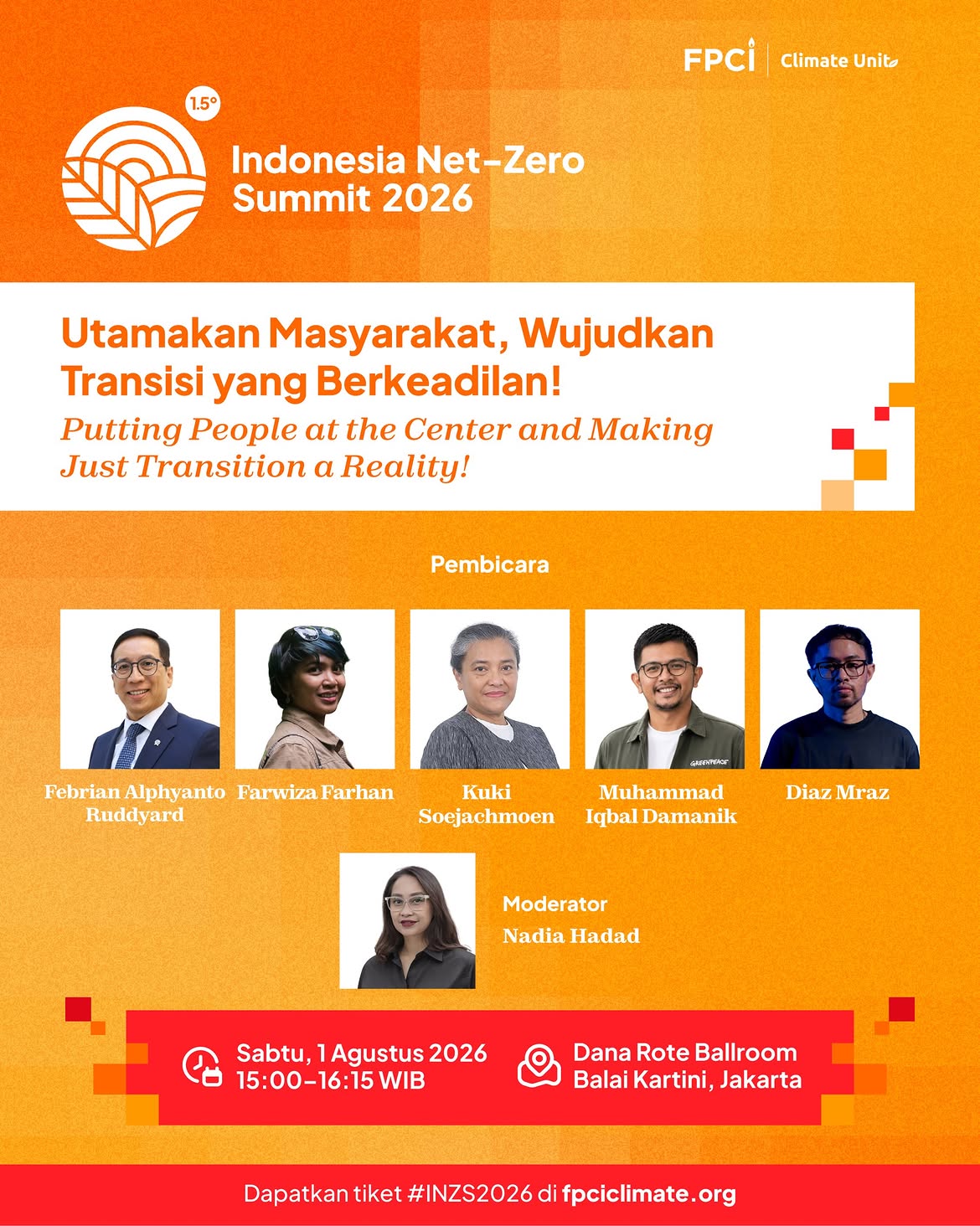
COP26 also underscored the importance of forests and land. President Jokowi conveyed positive steps at the Presidential Event on Forest and Land Use, highlighting that forests are a global climate solution, building alternative funding, and realizing pro-environment, pro-development, and people-centered forest management requires consistent forest and land management policies. Currently, 9.6 million hectares of natural forest remain unprotected by the policy of halting new permits and are therefore at risk. " The President must be firm in protecting all of Indonesia's remaining natural forests and peatlands to help Indonesia achieve its 2030 net carbon sink target ," said Nadia Hadad, Executive Director of the Madani Berkelanjutan Foundation.
Furthermore, Nadia also encouraged the government to pass the Indigenous Peoples Bill. This regulation is the foundation for protecting remaining natural forests and recognizing the rights of local communities, as this is essential for achieving Indonesia's climate ambitions. Furthermore, it is crucial to accelerate and strengthen social forestry. This measure has the potential to contribute up to 34.6 percent to the NDC target of reducing deforestation. The government also needs to accelerate peat restoration, particularly in permit and concession areas, as well as mangrove restoration, which is a government target for 2021-2024.
On the other hand, the Indonesian government through the Ministry of Environment and Forestry has emphasized that the 2030 FOLU net sink can be achieved by controlling deforestation as low as possible, through forest and land fire prevention, peat management, the Natural Forest and Peat Moratorium, reducing land degradation, and law enforcement. To achieve the 2030 FOLU net sink target, operational policies and synergy between programs and government planning down to the regional level are needed, including the importance of coherence between FOLU sector policies (forest utilization and land use) and the land-based renewable energy sector. " In addition, National Strategic Projects such as the Food Estate and the development of Biofuels (BBN) which currently focus on biodiesel from crude palm oil must have strong safeguards so as not to clear natural forests and peatlands, and respect the rights of indigenous and local communities ," added Nadia Hadad.
Laetania Belai Djandam, a young environmental activist and member of the Dayak indigenous community, explained that COP26 is opening up a wide space for young people and indigenous communities, not just academics or scientists. According to Belai, young people must popularize climate issues at COP26 to reach indigenous communities and other vulnerable groups. " Because the decisions at COP26 will impact them the most ," she said.
According to Belai, youth participation in climate action needs to be redefined. It should encompass either mere consultation or even leadership. Youth involvement needs to be institutionalized nationally so that youth input is taken into account nationally. "This national council is necessary so that young people have a formal voice," Belai said. This work must be translated into concrete, detailed, and transparent actions to eliminate the issue of distrust in climate action efforts.
The agreements reached in the Glasgow Climate Pact will certainly be in vain if they are ignored only by climate activists. Any act of concern, no matter how small, will help improve the earth. Start by reducing energy consumption or simply consuming environmentally friendly products. Now is the time for us to take action to save the earth. #TimeforActionIndonesia
* * *
About the Community
The Climate Crisis Care Community is a civil society group committed to addressing the threat of the climate crisis. This community aims to encourage the government to enact policies that support environmental sustainability and sustainable public access to environmental rights.
Contacts that can be contacted:
Luluk Uliyah (MADANI): email luluk@arsip.madaniberkelanjutan.id contact: +62 815-1986-8887
Dewi Rizki (PARTNERSHIP): 08118453112