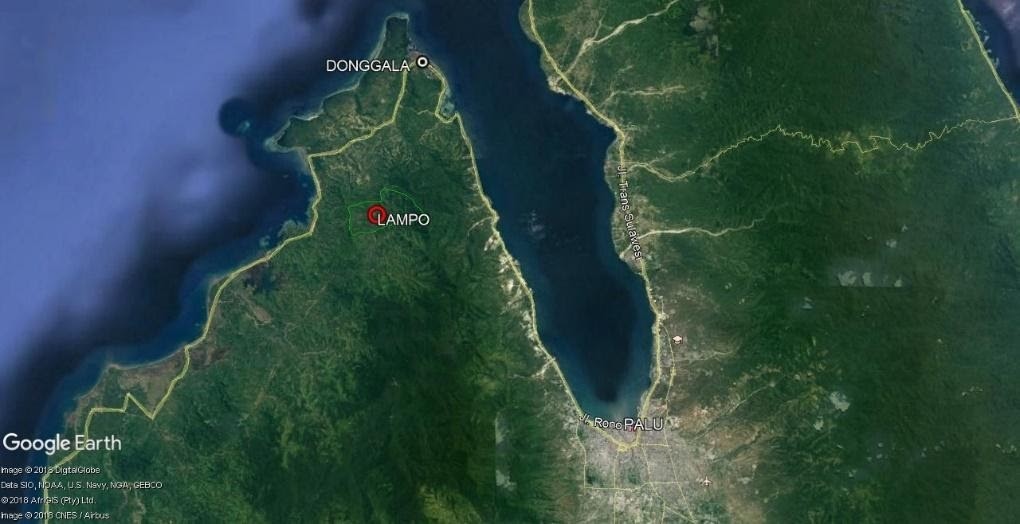
Lampo Village, 13 kilometers from the capital of Donggala Regency, Central Sulawesi, suddenly became bustling on July 10, 2020. That day, the villagers planted 20,000 trees in their village. They planted a variety of trees, including durian, avocado, rambutan, and others. Kasman Lassa, the Regent of Donggala, was a distinguished guest who participated in the tree-planting event.
The 20,000 tree planting activity also commemorates World Population Day, celebrated annually on July 11. It also supports the Climate Village Program (ProKlim) in Lampo Village. This initiative was initiated by the Lampo Village Forest Management Institution (LPHD) with support from the Central Sulawesi Merah Putih Foundation (YMP), the Madani Berkelanjutan Foundation, the Banawa Lalundu Forest Management Unit (KPH), and the Palu Poso Forest Management Agency (BPDAS HL).
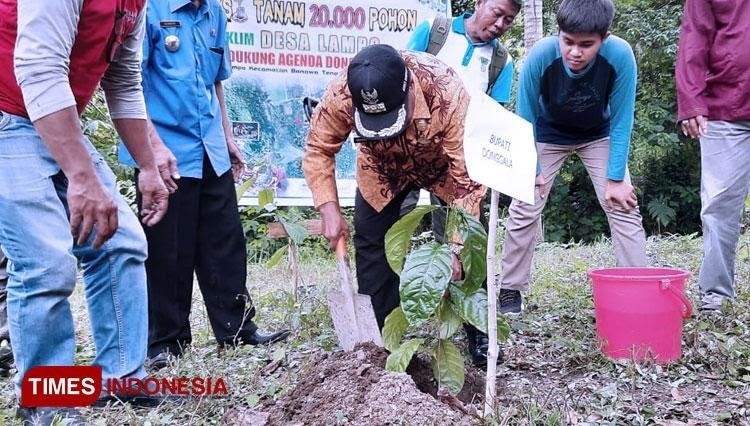
(Photo Source: Sarifah Latowa/Times Indonesia)
The Donggala Regent expressed enthusiasm and promised that Lampo Village Forest would be prioritized as an ecosystem support system in Donggala, including as a clean water supply, as other areas are currently overcrowded. He also supported this, including the use of village funds to empower community forest management.
Lampo Village is administratively located in Banawa Tengah District, Donggala Regency, Central Sulawesi. It covers an area of 852 hectares, having been split off from Lumbu Dolo Village in Banawa Tengah District in 2012. It borders a protected forest area. The majority of the village's residents are farmers, cultivating crops such as cocoa, nutmeg, candlenut, cloves, durian, and various other fruits.
Lampo Village Forest obtained forest management rights through the Social Forestry scheme in 2016 through the Decree on the Determination of the Work Area for Lampo Village Forest No. SK.87/Menlhk/Setjen/PSKL.2/2/2016. The area is 215 hectares. And on March 27, 2017, Lampo Village Forest through the Decree of the Minister of Environment and Forestry Number 1637/2017 received the Granting of Management Rights for Lampo Village Forest which was handed over directly by the Director General of PSKL KLHK to the Head of Lampo Village on March 29, 2017 in Palu during the Workshop on Building Synergy for Accelerating Social Forestry in Central Sulawesi.
Lampo Village has undertaken numerous village forest development activities managed by the Lampo Village Forest Management Agency (LPHD). These include developing a waterfall ecotourism program within the Lampo Village forest, tree planting, and utilizing Non-Timber Forest Products (NTFPs). These activities, in addition to preserving the forest, also help increase community income.
The management of the Lampo Village Forest, carried out by the Lampo Village Forest Management Agency (LPHD), assisted by YMP and supported by the Madani Berkelanjutan Foundation and the Ministry of Environment and Forestry (KLHK), is currently developing the Climate Village Program (ProKlim). Proklim is a national program managed by the Ministry of Environment and Forestry (KLHK) to increase community and stakeholder participation in climate change and reduce greenhouse gas emissions. This is regulated in Ministerial Regulation No. 84 of 2016 concerning the Climate Village Program.
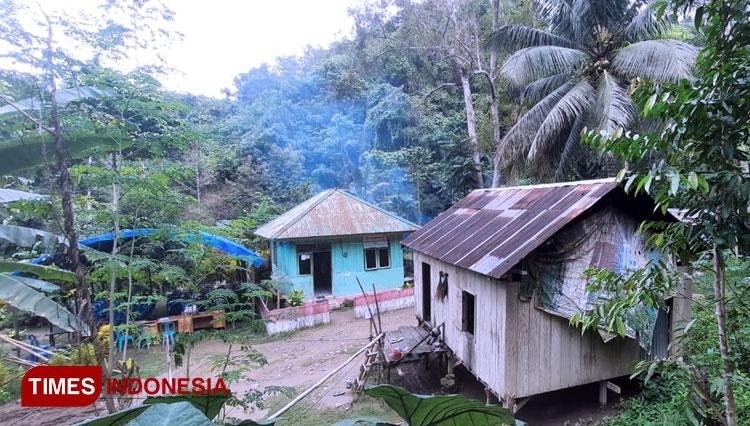
The atmosphere in Salubalimbi Hamlet, Lampo Village Forest, Banawa Tengah District, Donggala Regency. (Photo Source: Sarifah Latowa/Times Indonesia)
Lampo Village will also be used as a role model for the development of the Climate Village Program for areas with Social Forestry areas as well as being a pilot project for community-based environmental conservation, especially in Central Sulawesi.
The Red and White Foundation (YMP) of Central Sulawesi has been assisting the management of the Lampo Village Forest since its inception. The opening of access to the management of the Lampo Village Forest, which is now available to the people of Lampo Village, was actually a long process that began in 2013. At that time, the forest was still a protected forest, which made residents afraid to farm and garden in the area even though the forest was included in the village administration area. Criminalization was one of the threats when entering the forest, even though the indigenous people there (Kaili Unde) had long lived with the forest. YMP, together with the community, encouraged the government to provide access for villagers to continue to interact with the forest while maintaining its sustainability.
While awaiting the government's decision, villagers rejected cooperation proposals from several companies seeking to invest in forest clearing. Palm oil and furniture companies had previously offered investment, but all were rejected. Residents feared the potential disaster if hundreds of hectares of their forest were converted into oil palm plantations. The water source, sourced from the Pangansitoli waterfall, would be lost. This source also serves as a source of clean water for Donggala Regency.
In 2016, the residents of Lampo Village finally gained access to forest management through a Social Forestry scheme, in the form of a Village Forest. The community utilizes this by farming and planting productive trees for the benefit of the community, as well as developing environmental services such as tourism and the use of non-timber forest products.
This environmental service development was undertaken because the Lampo Village Forest also boasts a beautiful waterfall. Pangasintoli Waterfall has five levels. The fourth level is the highest, rising approximately 10 meters. The waterfall is surrounded by a stretch of towering trees. It is approximately 400 meters from Salubalimbi Hamlet II. This waterfall will become a nature-based ecotourism destination with an emphasis on environmental education. In addition to the waterfall, there are also river trekking, camping areas, crafts, fruit orchard tours, and arts and culture that attract local villagers. Moreover, Lampo Village is known as a fruit producer, such as durian, rambutan, and langsat. During the fruit season, Lampo Village is visited by many people from various regions.
Currently, residents of Lampo Village have formed the Village Forest Management Institution (LPHD), a forum for community members to work together to preserve the forest and ensure its well-being. Various activities are underway. For example, on July 20, 2020, the LPHD held a waste recycling training session with the community, inviting the Donggala Environmental Agency as speakers.
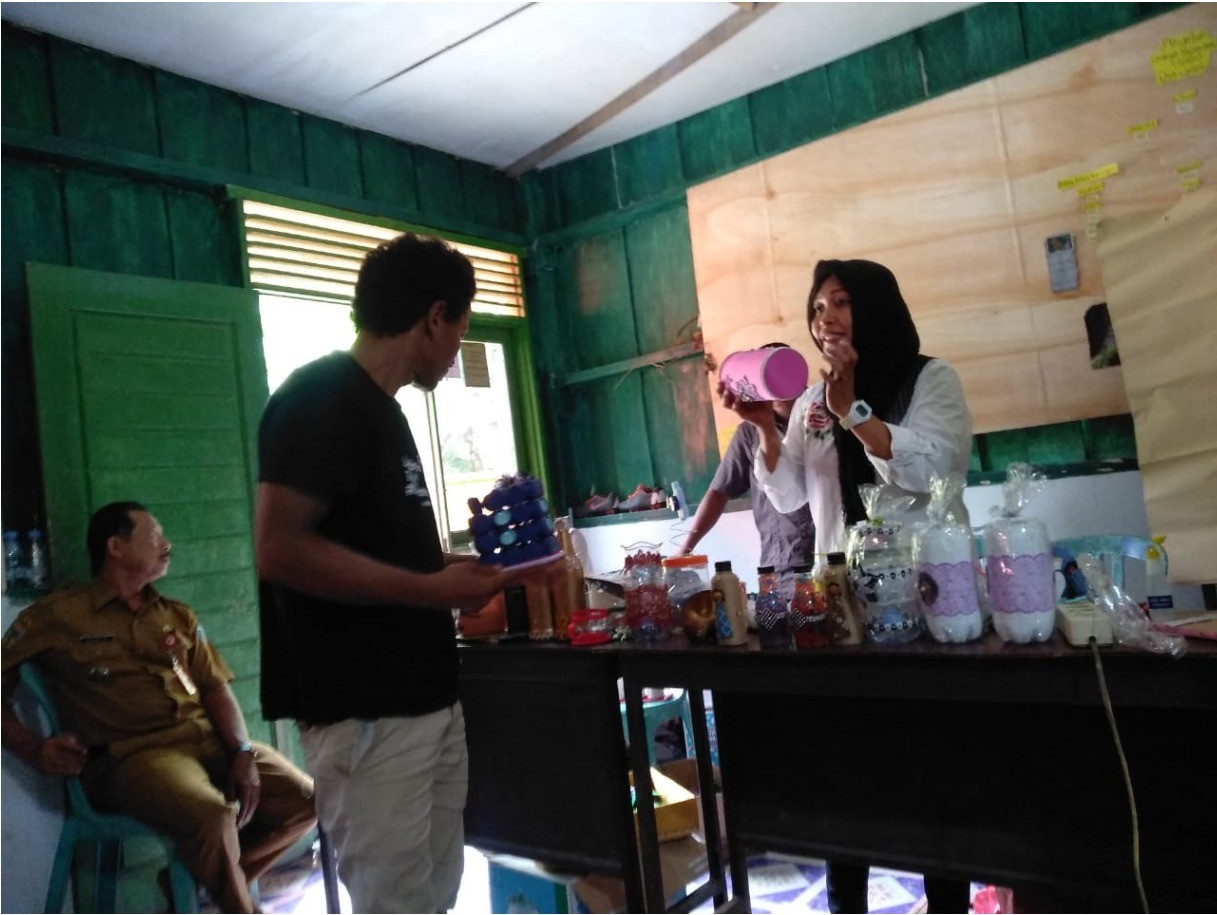
Photo source: Red and White Foundation (YMP) Central Sulawesi
This training demonstrates how to process waste into creative, reusable items, as well as how to process organic waste into compost. The resulting decorations, such as pen holders made from used cans and flower pots made from used plastic bottles, become souvenirs to be used at home. The workshop also includes processing organic waste into compost, which will be used as fertilizer in residents' gardens.