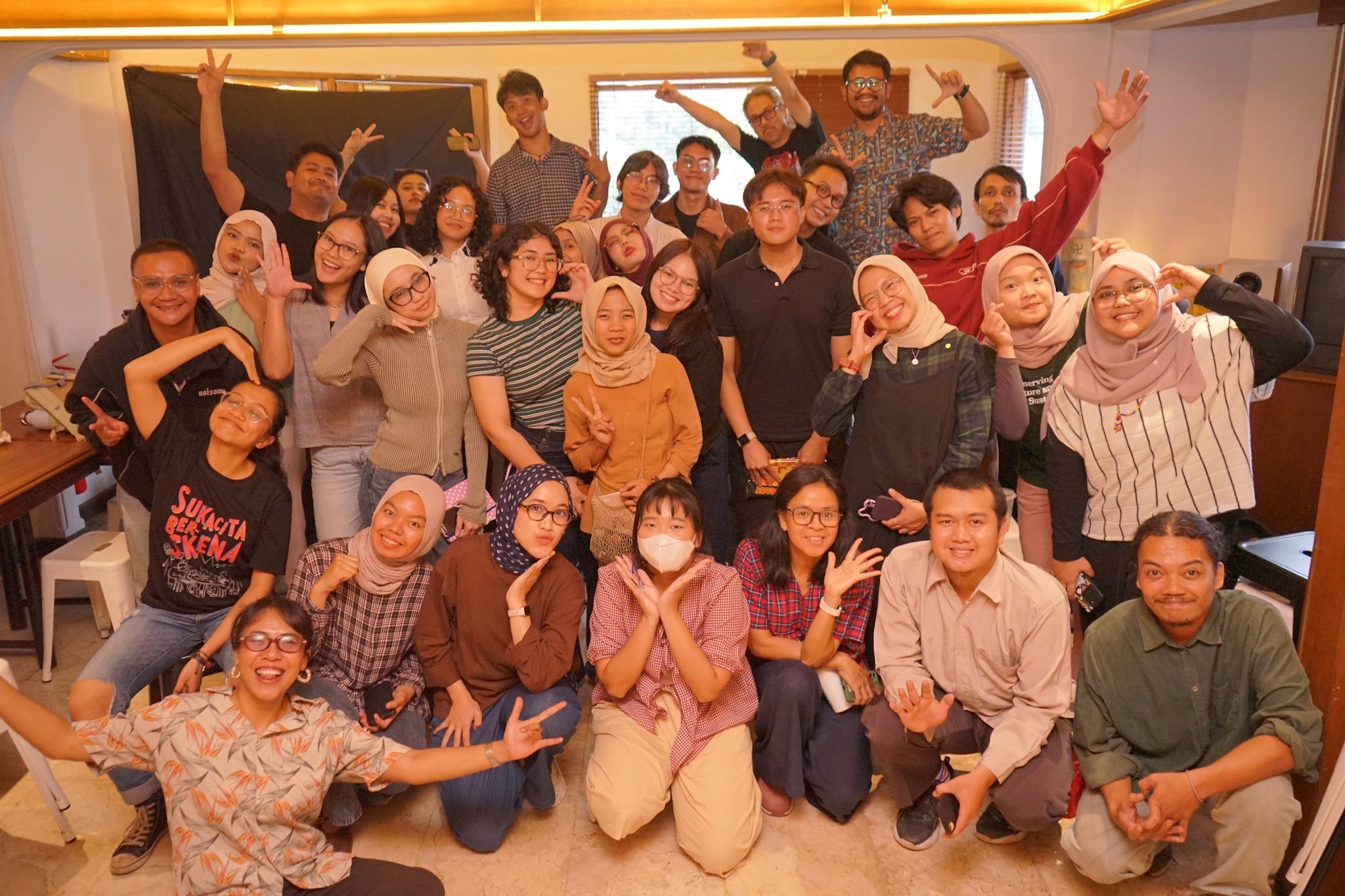
A documentary film was screened, then the audience was asked to draw a body and express their impressions through a zine. From there, the climate crisis ceased to be mere numbers and transformed into hunger, memories, and questions about the future they wished to take home.
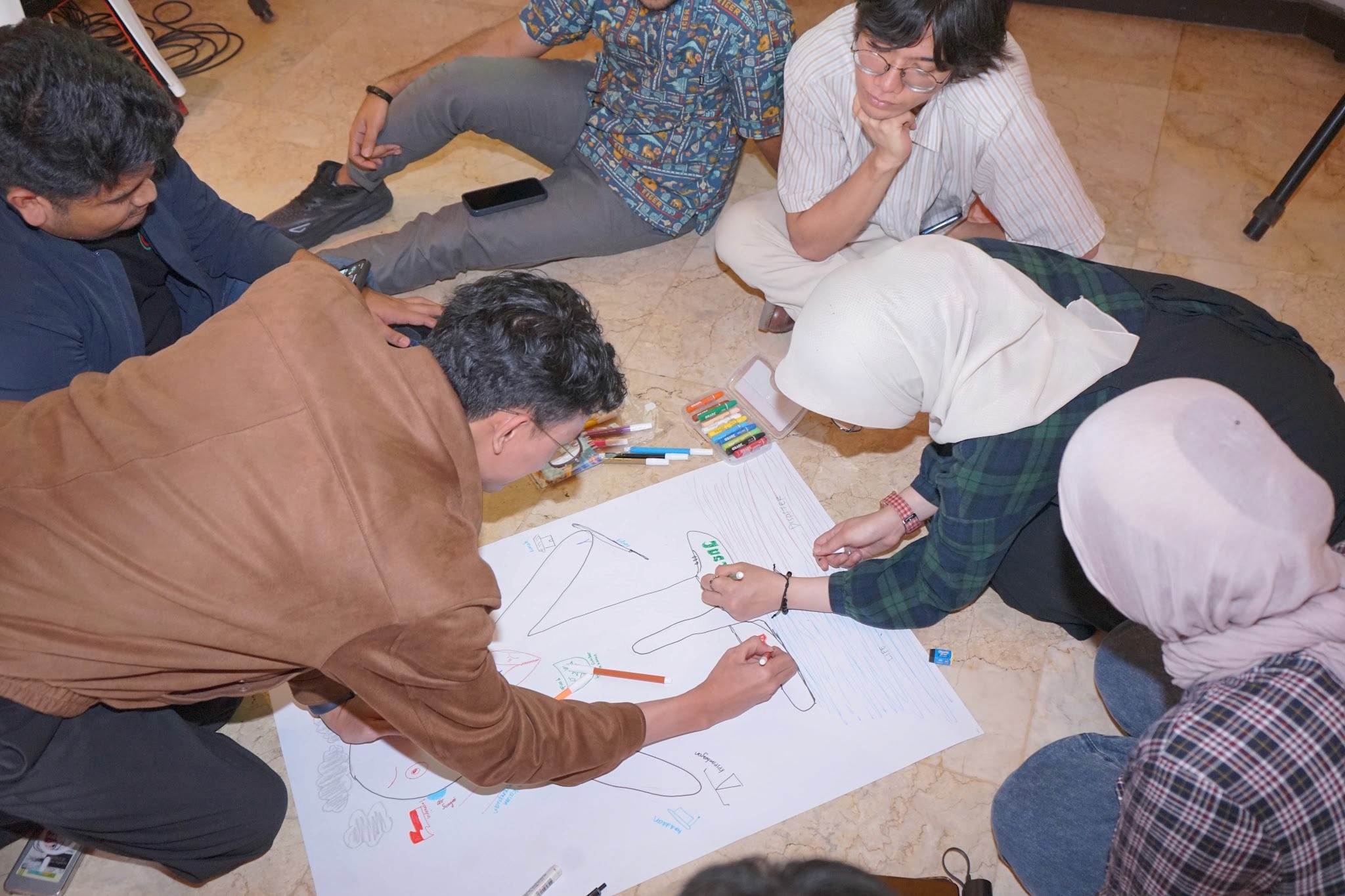
In a coffee shop located in the Kemang area, South Jakarta, the floor of the room turned into drawing paper. Three large sheets were rolled out, each bearing a blank silhouette of a human body. Markers were scattered around them.
Thirty-six people had just finished watching a film. Now, they were asked to do something unusual: transfer what remained in their heads and chests into the bodies on those drawings. No discussion yet. No Q&A session yet. Just blank bodies, markers, and fresh memories.
The event took place on Friday (July 10, 2026) during Climate Creative Lab #2, a learning space developed by CIVIC Toolkit together with MADANI Berkelanjutan. Instead of lectures, this activity used film, art, and reflection to understand the ecological crisis.

The film screened was titled Negosiasi Punan (Punan's Negotiations), a 25-minute documentary directed by Rhino Ariefiansyah. His camera took a long journey to the upper reaches of the Tubu River in North Kalimantan, to the territory of the Punan people. The audience was invited to see the forest that serves as both a home and a kitchen, the rivers that act as roads, traditions passed down by word of mouth, and the changes arriving through the state, development, and corporations.
The Body That Tells Stories
So, they drew.
On one paper, a head was crying. Written on its forehead was "AFRAID". Surrounding it were clustered questions about the scarcity of teachers and the children waiting to be taught.
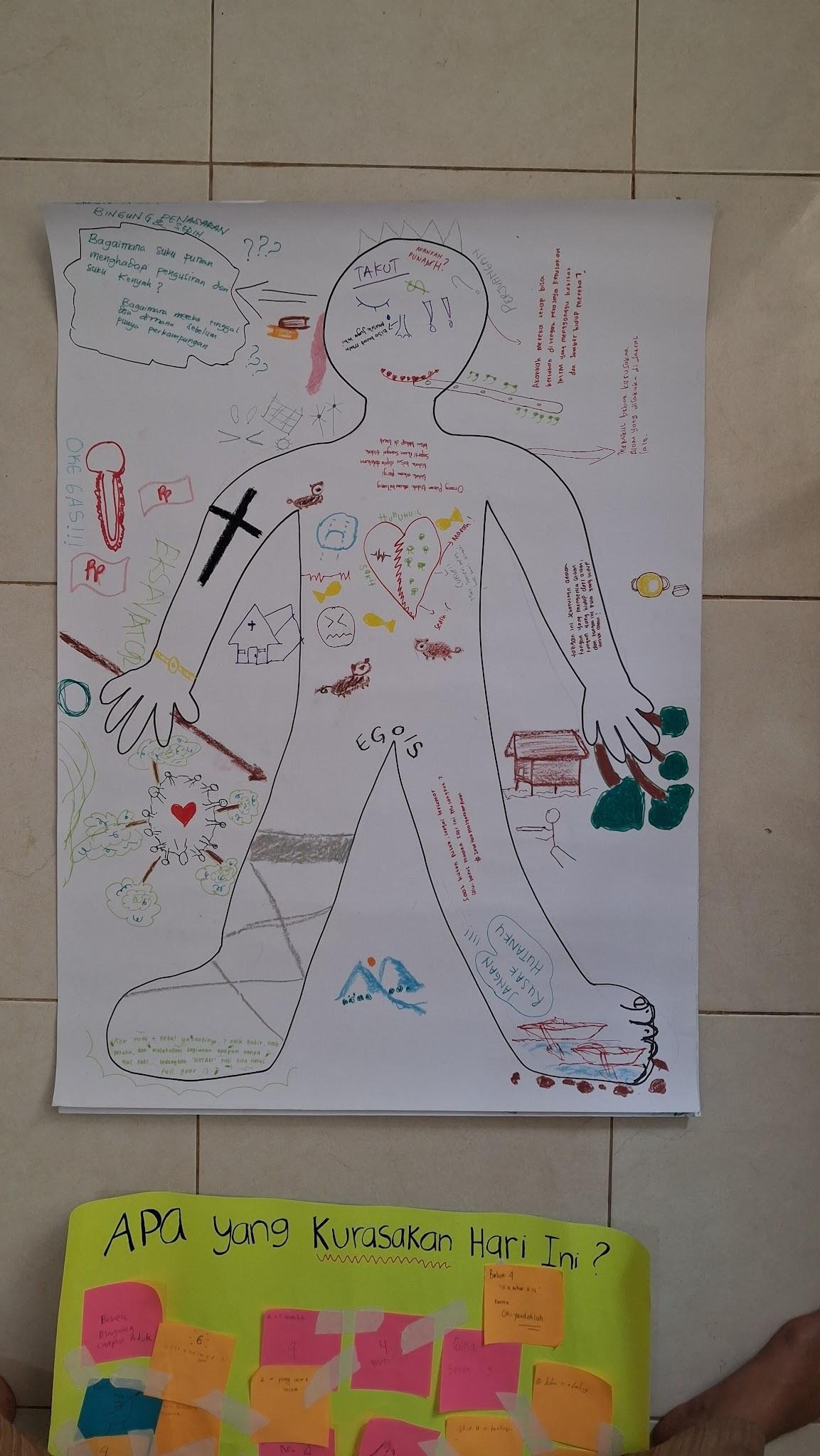
On another sheet, a heart was drawn broken. The group that created it explained why:
"In its heart, there is a broken heart because the living space there is threatened."
In the stomach area, drawings of fish and wild boars appeared. A participant expressed the anxiety that still lingered after the film ended:
"The community fears going hungry. Because the forest is disappearing, access to food has become difficult, catching fish is hard, and hunting boars has also become difficult."
On the palm of a hand, someone wrote "STEP UP" (TURUN TANGAN). Nearby, the words "Warrior", "PEACE", and "JUSTICE" appeared. The hand became a place to hold the intention of protecting the forest, territory, and rights. Moving down to the feet, the drawing turned bleak. There were pebbles, crisscrossing lines, piles of money, chainsaws, and excavators. Gray shade filled the space. A participant stared at their group's drawing and asked:
"When the forest is destroyed and the river is polluted, where should these feet walk next?"
Captured Before Being Explained
Surprisingly, all these drawings emerged before the director even had a chance to speak. There was no prior explanation about the research background, the film's premise, or the development context in the Punan region. The participants had already captured it through the body silhouettes.
Rhino Ariefiansyah observed the three sheets of paper and said:
"One interesting thing for me in this process is that, even without prior discussion, so many things were grasped by everyone."
Betharia Nurhadist from the production team felt the same way. The premise they had carried in the film was conveyed without needing explanation:
"I didn't expect that the premise we wanted to convey about how the construction of the future and modernization arrive in the community could reach them and be instantly grasped by everyone."
This method of drawing body silhouettes is called body mapping. It does not measure who interprets the film correctly. It simply makes one thing visible: what remains within the audience after the lights turn back on.
The Forest as a Living Network
One theme emerged most consistently: the forest. Participants did not draw it merely as a green landscape to be conserved. The forest was present as home, food, water, territory, knowledge, and intergenerational relationships.
One group drew trees, fish, wild boars, water, and a heartbeat inside the heart area. A participant explained the meaning behind it:
"These two things are actually not separate nature and human life."
The loss of the forest was not read simply as a reduction in the number of trees. When the forest changes, access to food changes, fish and game disappear, travel is disrupted, and cultural practices face pressure.
One line from the film stuck in the memories of many for a long time. The sentence re-emerged when a group presented their drawing:
"The Punan people cannot be relocated. Just like the fish in the river, they cannot live in the sea."
Another group drew sad faces, the Indonesian flag, a home, and a school in a single frame. When presenting it, a participant briefly remarked, "Faces of Indonesian citizens. Having no hometown." The phrase held a tension: a community recognized as part of Indonesia, while their connection to their land remains under pressure.
Questioning the Filmmakers
After all groups presented their drawings, the direction of the conversation turned around. Where previously the audience absorbed the film, now it was their turn to meet the production team and ask sharper questions. This session was called Saling-Silang (Cross-Interactions).
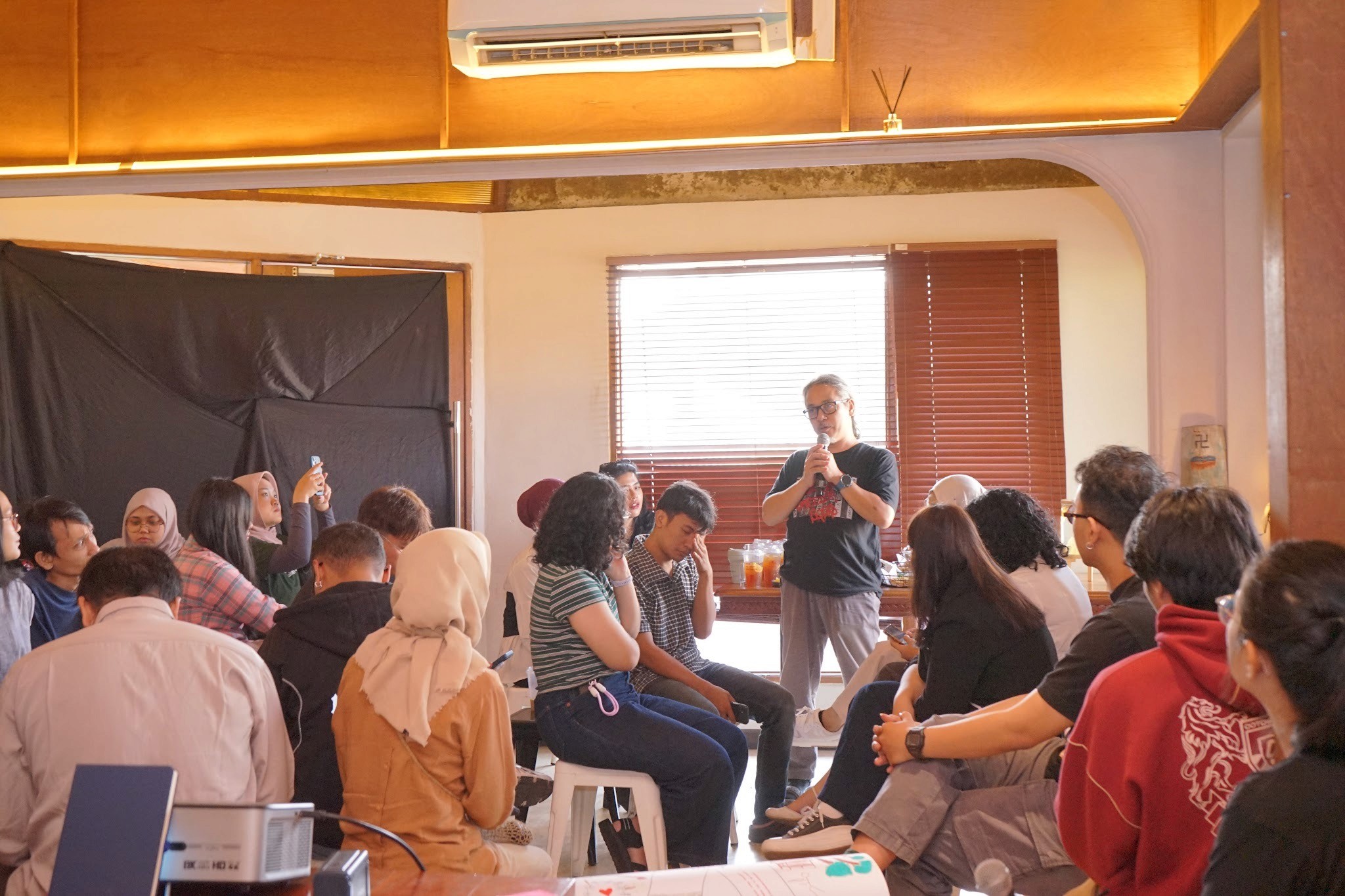
Rhino shared that the raw footage was originally hours long before being condensed into 25 minutes. Every scene selection meant another story was left out. From here, the conversation moved to uncomfortable yet necessary questions: Who determines the narrative? Which images are allowed to be seen? What returns to the community after the cameras leave?
These questions did not stop at the film. They also touched upon how we research, report on, and document the lives of others.
A Single Sheet to Take Home
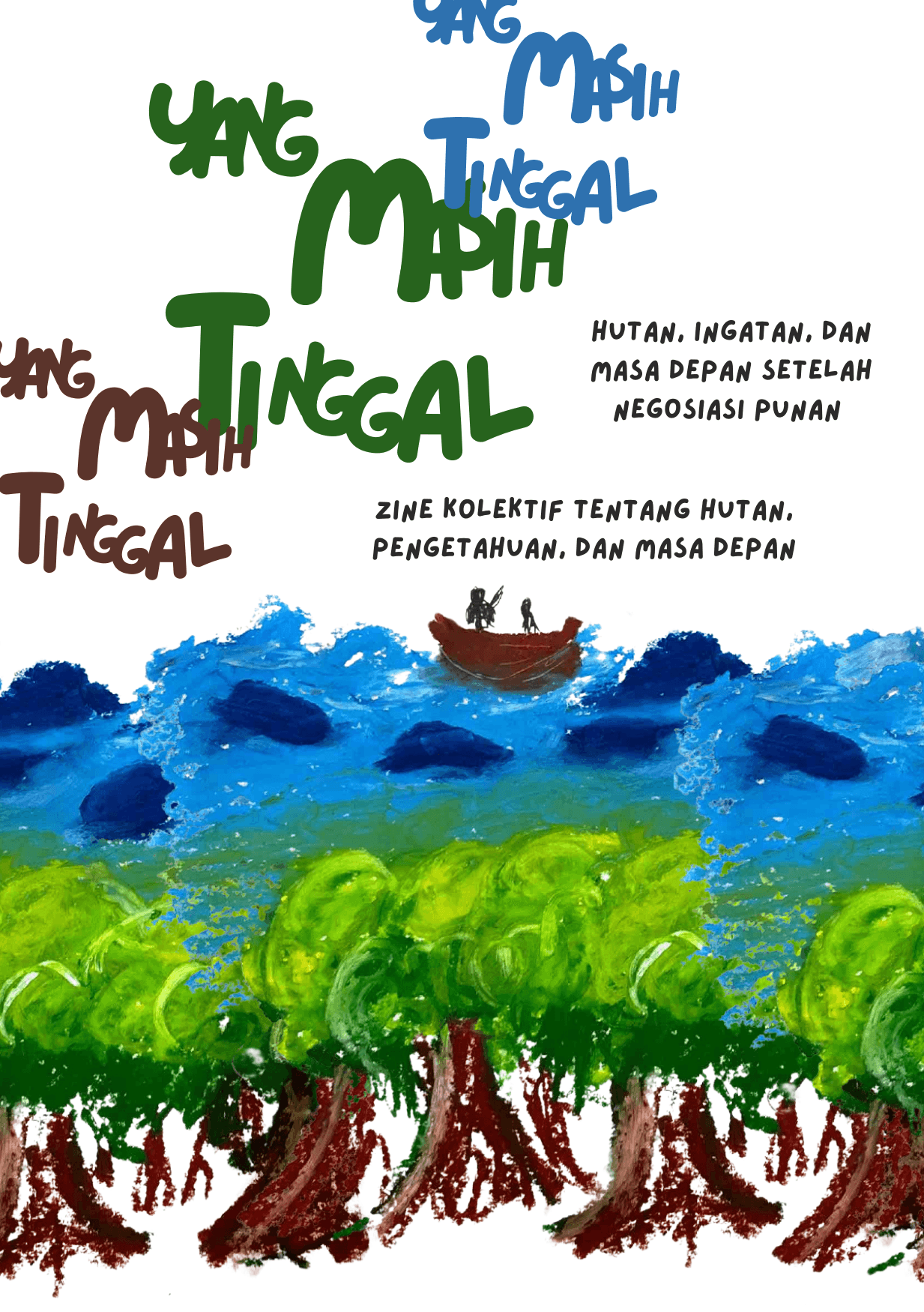
The event concluded with the creation of zines. After watching, drawing, and debating in groups, each participant returned individually to a single sheet of paper. There was only one task: choose the one thing they most wanted to hold onto, then express it through words, drawings, colors, or questions.
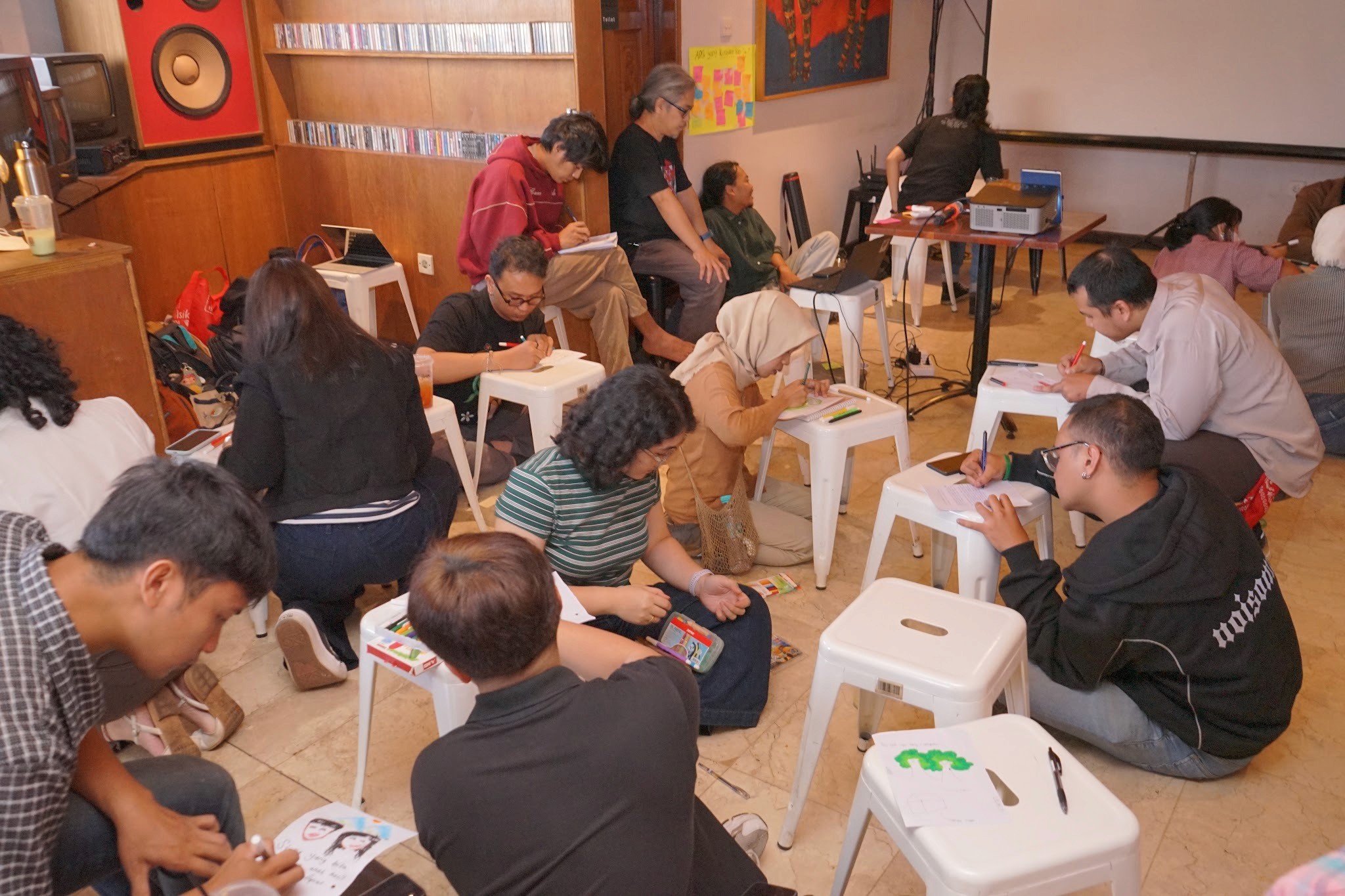
Among the 24 sheets born that day, some wrote briefly, "Hutan kita jaga, jaga kita" ("We protect the forest, the forest protects us"). Some wrote from the perspective of the Punan people, "Kami ingin hidup, bukan bertahan hidup" ("We want to live, not just survive"). And one turned the usual question upside down:
"I am confused why people ask what the future of the Punan is. Why ask that? Shouldn't it be the Punan who ask us?"
Lessons We Bring Home
Climate Creative Lab #2 left behind several lessons that we will apply in future activities:
The sequence of methods determines who holds the authority to interpret. Because participants drew first before the director explained, their readings grew without being dictated. Body mapping proved to function not just as a closing creative activity, but as a tool for interpreting the film. We will maintain this structure: give participants the chance to read first, then introduce context from speakers.
Body mapping brings together two ways of viewing a territory:
Territory as a Living Space | Territory as an Economic Space |
Home | Investment |
Food | Infrastructure |
Rivers and water | Energy |
People and community | Industry |
Knowledge | Production |
History and memory | Extraction |
Custom and sense of belonging | Economic value of the region |
The body is capable of connecting personal experiences with much larger issues. From a sensation in the stomach, participants reached the issue of food security. From the feet, they reached stages of relocation and development. This flow from sensation to memory, then to relationships, position, and context will guide our future facilitation.
Body mapping and zines generate different yet complementary forms of knowledge. Body mapping gathers many voices into a shared map, while zines filter a single, deeply personal imprint. We will keep both as a paired approach, rather than choosing just one.
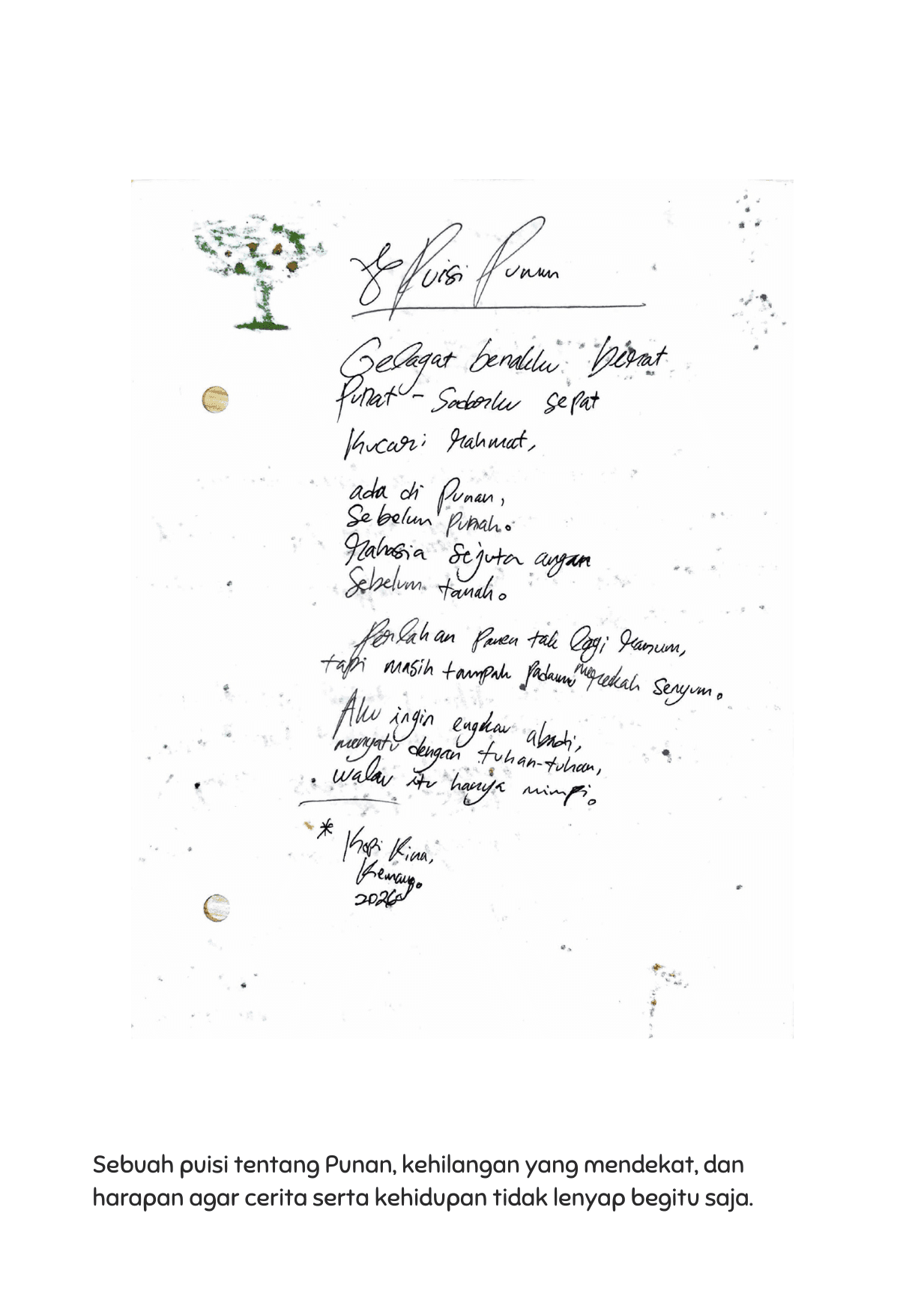
Themes such as women's labor, the diversity of experiences among Punan groups, religion, food practices, technological change, and the complexities of education appeared less frequently in the zines.
This difference does not suggest that one medium is more complete or successful than the other. Each medium produces a different form of response:
Body Mapping | Personal Zine |
Created collectively | Created individually |
Accommodates multiple themes | Selects a single imprint |
Opens conversations | Gives space for quiet processing |
Connects experiences among participants | Processes personal closeness |
Stores differences | Displays emotional intensity |
Becomes a shared map | Becomes a fragment of a personal archive |
One lesson requires the utmost caution. The empathy grown during the activity can bring people closer, but it can also make people mistakenly feel entitled to speak on behalf of others. All the drawings and sentences in that room came from the audience, not from the Punan people themselves. Therefore, imaginative works expressing third-party perspectives are always given clear context, and every piece is managed with the participant's permission. Climate justice also means respecting a community's authority over its own story.
Beyond all those notes, there was one heartening realization: a simple film screening could grow into a shared learning space. The climate crisis, usually heard as numbers of hectares and tons of emissions, returned to something human: hunger, memory, and hope. When people are given space to feel before judging, they capture far more than we ever expect.
That is what we will continue to develop. We want to open up more spaces for people to experience this crisis directly, understand it, and then choose for themselves what they wish to do next.
"The climate crisis often feels abstract, even elitist, to those who do not experience it or are insensitive to the inequality of its impacts. Therefore, Climate Creative Lab was presented as a space for participants to get closer to the reality of the climate crisis through the screening of the film Negosiasi Punan, which was followed by a body mapping session with Civic Toolkit to reflect on the experiences and messages left behind by the film. Through this series, we want to open a space for all of us to listen, reflect, and understand the inequality of climate crisis impacts, without intending to replace the lived experiences of the communities who face them directly," said Lia Amellya, Program Officer of Green Development at Madani Berkelanjutan.