Deep in the heart of the Kapuas Hulu jungle, the pounding of wooden pestles and the chanting of prayers echoed once again throughout the Dayak Iban Menua Sungai Utik Longhouse. Coinciding with the International Day of the World’s Indigenous Peoples on August 9th, the 4th Menua Sungai Utik Jungle Festival was held under the theme Sada Rimba, "A Call of Nature." This was not merely an annual ritual, but a way for the Indigenous Community to remember the roots of civilization: that from the land, the forest, and the river, life is bestowed and must be safeguarded.
For the Dayak Iban people, the land is mother, the forest is father, the river is blood, and the ancestors are a living memory holding a library of knowledge. In their cosmological worldview, nature is not simply a landscape of commodities, but a living entity with a voice. Sada Rimba resonates as a call from the Earth, urging humanity to return to honoring ancestral lands before everything is lost, crushed by greed and modernization.
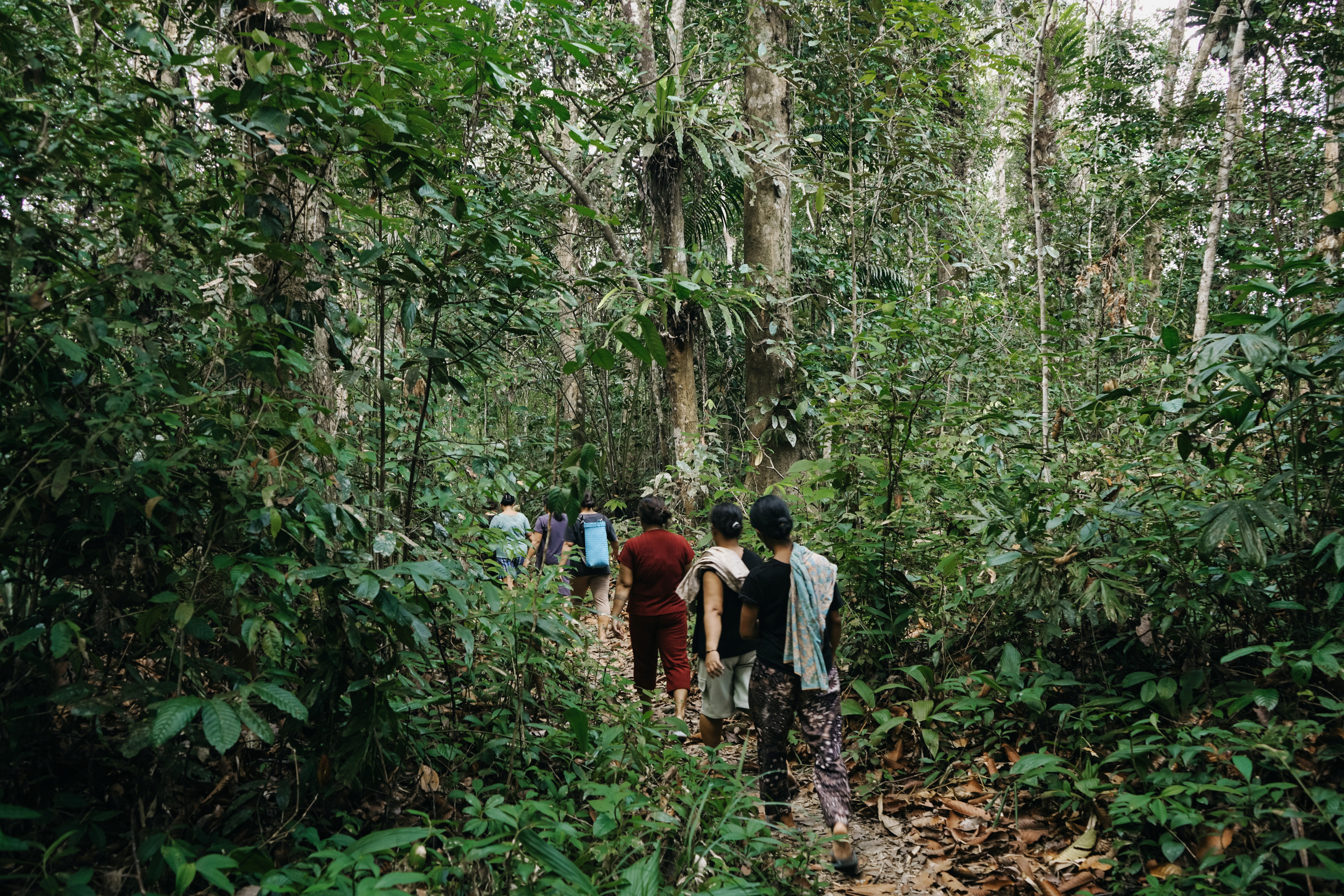
Women walking through the Customary Forest toward the land of Pamandi Keling and Kumang. Photo: Alkhalifard/Madani Berkelanjutan
Protecting nature means nurturing identity and culture. In the solemnity of traditional rituals, verses of Basampi prayers are recited; a chicken is held tightly during the Bebiau procession, where the smearing of its blood and feathers is offered as a rite to ward off misfortune and as an expression of gratitude for the universe's blessings. Beyond chanting prayers, Dayak Iban elders also read nature’s signs and the future through the markings on the liver of a pig slaughtered in the sacred ritual. Almost all the offerings laid out are not bought from modern markets, but are gathered directly from fields within the Customary Forest. Here, that philosophical connection feels profoundly real: if their Customary Forest and fields disappear, replaced by oil palm plantations or extractive industries, the rituals, identity, and cultural memory of the Dayak Iban will instantly vanish.
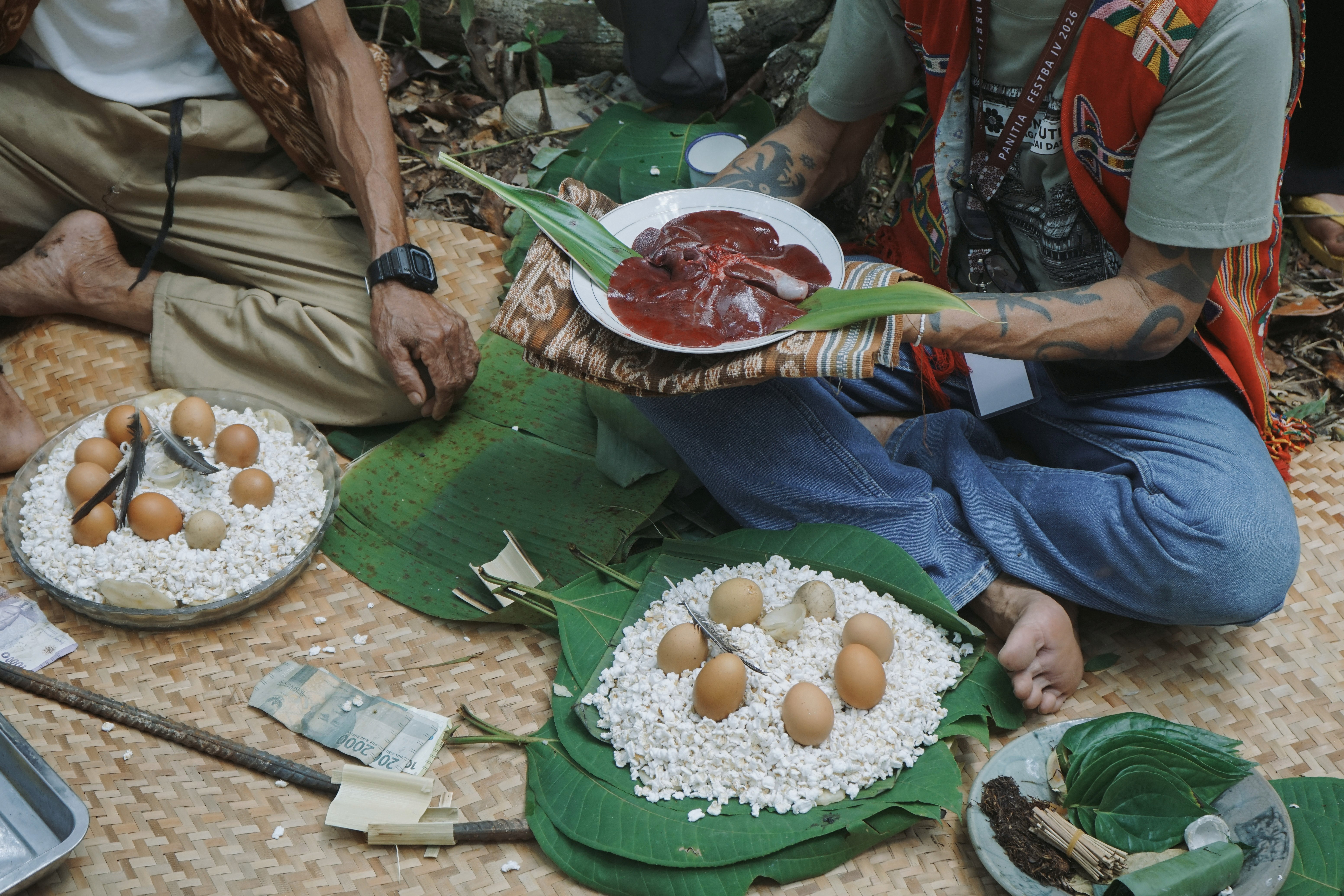
Dayak Iban elders in Sungai Utik reading nature's signs and the future through markings on a pig's liver. Photo: Alkhalifard/Madani Berkelanjutan
This living principle is deeply ingrained in an ancient Iban proverb:
"Bejalai betungkat ke adat, tinduk bepangal ke pengingat. Reregah baka pulau lelinang baka danau, oooohaaa, oooohaaa’ooohaa."
If life is walked guided by customary law and sleep rests on the memory of ancestral teachings, the community's existence will stand strong like Reregah the giant forest-guardian trees that shelter the universe, just like the sacredness of the Land of Pamandi Keling and Kumang and the holy sites along the Aji River, which they guard through guidance revealed in dreams. All yields of the earth are gathered together and redistributed fairly among all members. An authentic togetherness that transcends modern food security jargon.
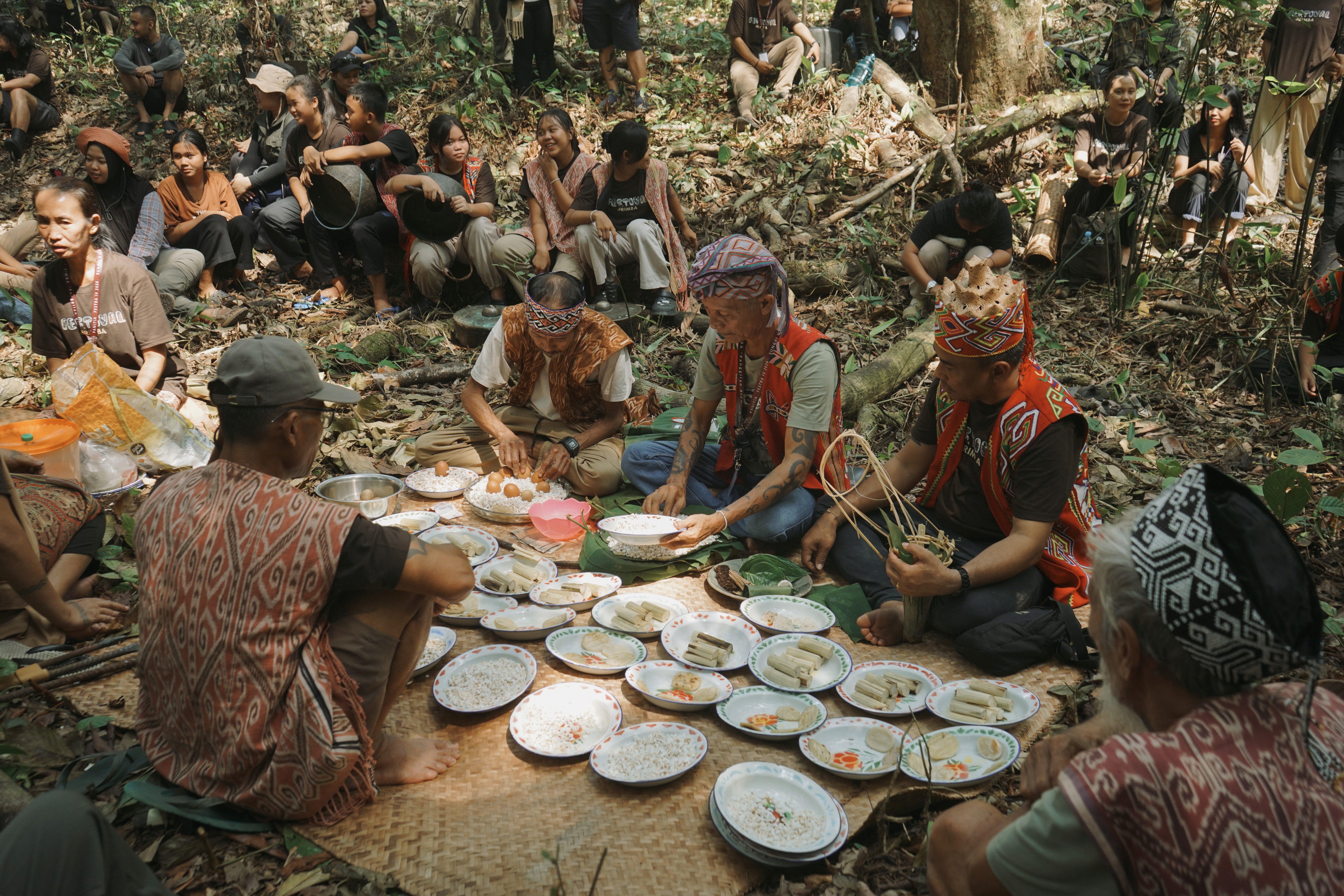
Preparation for the traditional ritual, the Basampi prayer, and the Bebiau procession. Photo: Alkhalifard/Madani Berkelanjutan
Amid the climate crisis and the threat of forest and land fires (karhutla) that recur every year, indigenous communities have proven to be the strongest line of defense. While corporations and large concessions often drain peatlands and ignite blazes, indigenous communities instead manage their fields and forests using local knowledge systems tested over thousands of years. For them, uncontrolled forest burning is a customary taboo; guarding the jungle's borders is their way of keeping clean air for the Earth. It is this self-reliant protection of Customary Forests that often turns indigenous territories into green oases spared from the siege of toxic haze.
However, the resilience of indigenous communities in guarding this last fortress of biodiversity still largely stands on vulnerable ground. Without legal certainty, their living space could at any moment be threatened by the expansion of extractive industries and State claims. Concrete support to fight for customary land rights has become a non-negotiable imperative.
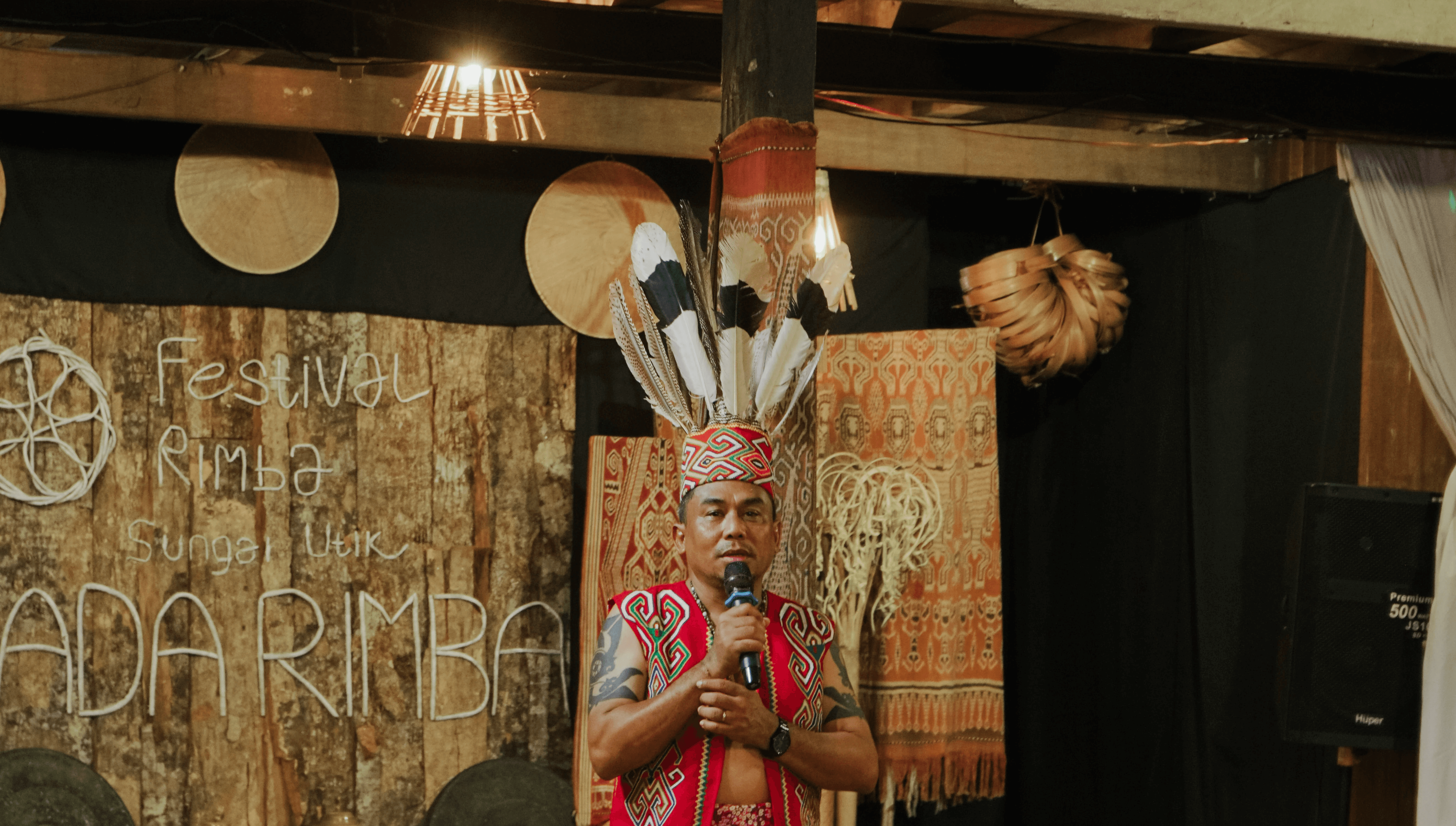
Bang Tomo, Chairman of the Indigenous Peoples Alliance of the Archipelago (AMAN) Kapuas Hulu, during the 4th Menua Sungai Utik Jungle Festival, emphasized that he will protect and fight for the home and heritage of the Dayak Community. Photo: Alkhalifard/Madani Berkelanjutan
"I will protect and fight for the home and heritage of the Dayak Community," emphasized Bang Tomo, Chairman of the Indigenous Peoples Alliance of the Archipelago (AMAN) Kapuas Hulu. Forest conservation is no longer merely local wisdom put on display during a festival, but rather the final line of climate defense for an increasingly suffering Earth.
This disparity is clearly reflected in data from the Ancestral Domain Registration Agency (BRWA). To date, BRWA has mapped at least 30.1 million hectares of Customary Territories across Indonesia. However, the state has only recognized approximately 3.2 million hectares of Customary Forest designations—less than 11% of the total identified customary territories. Millions of other hectares of communal land remain in limbo without formal legal status, leaving indigenous communities to fight alone in guarding their forests from deforestation, illegal logging, and the threat of wildfires.
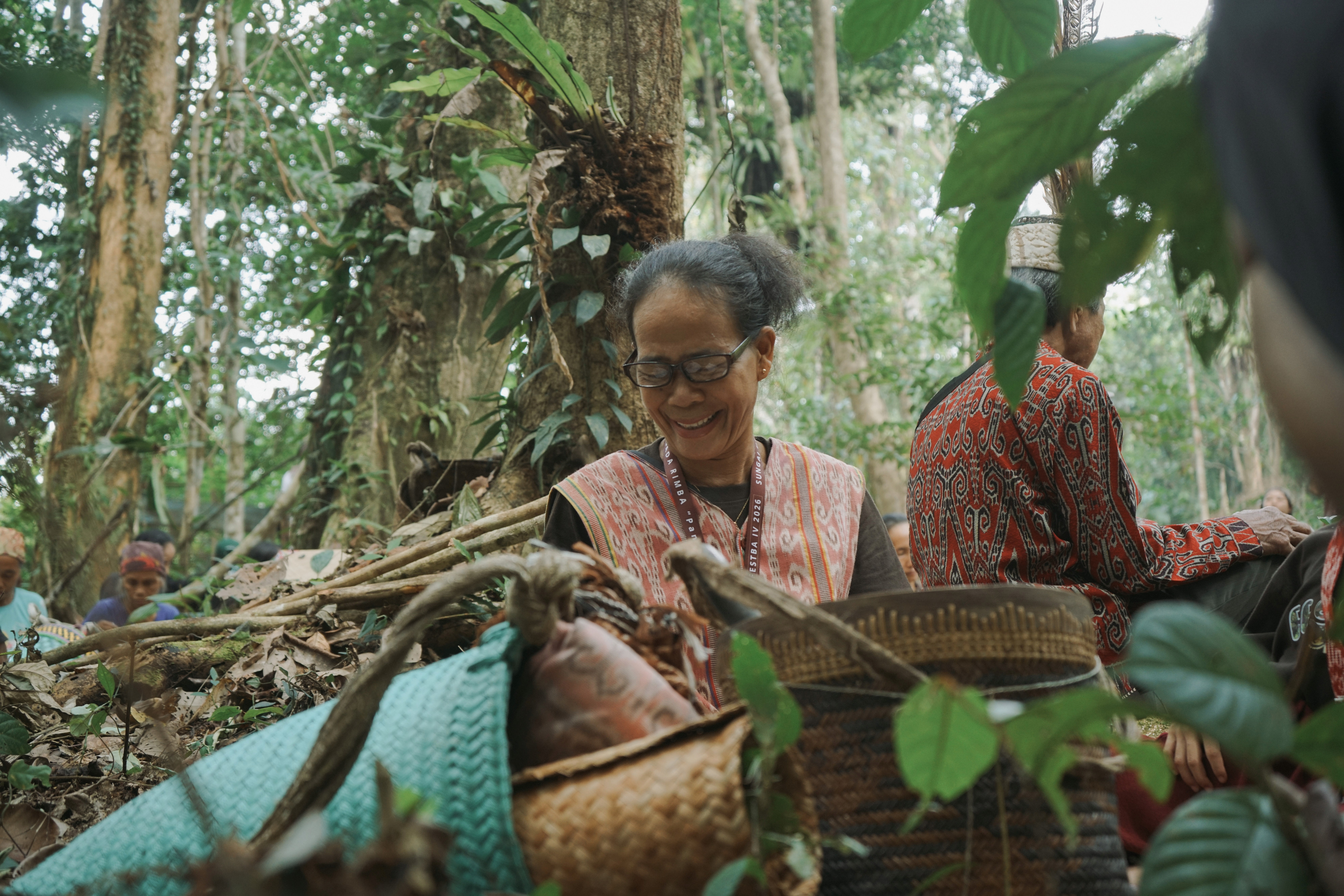
Dayak Iban women who play a crucial role in the customary ritual procession. Photo: Alkhalifard/Madani Berkelanjutan
For far too long, this wisdom has existed without full legal protection. Protecting Sungai Utik and thousands of other indigenous communities across the archipelago requires more than mere cultural appreciation or wearing traditional attire for ceremonial purposes. The State must step up to provide tangible and binding legal recognition.
It is time for the Government and the House of Representatives (DPR) to stop stalling and immediately heed the call of the jungle: #PassTheIndigenousPeoplesBill now!