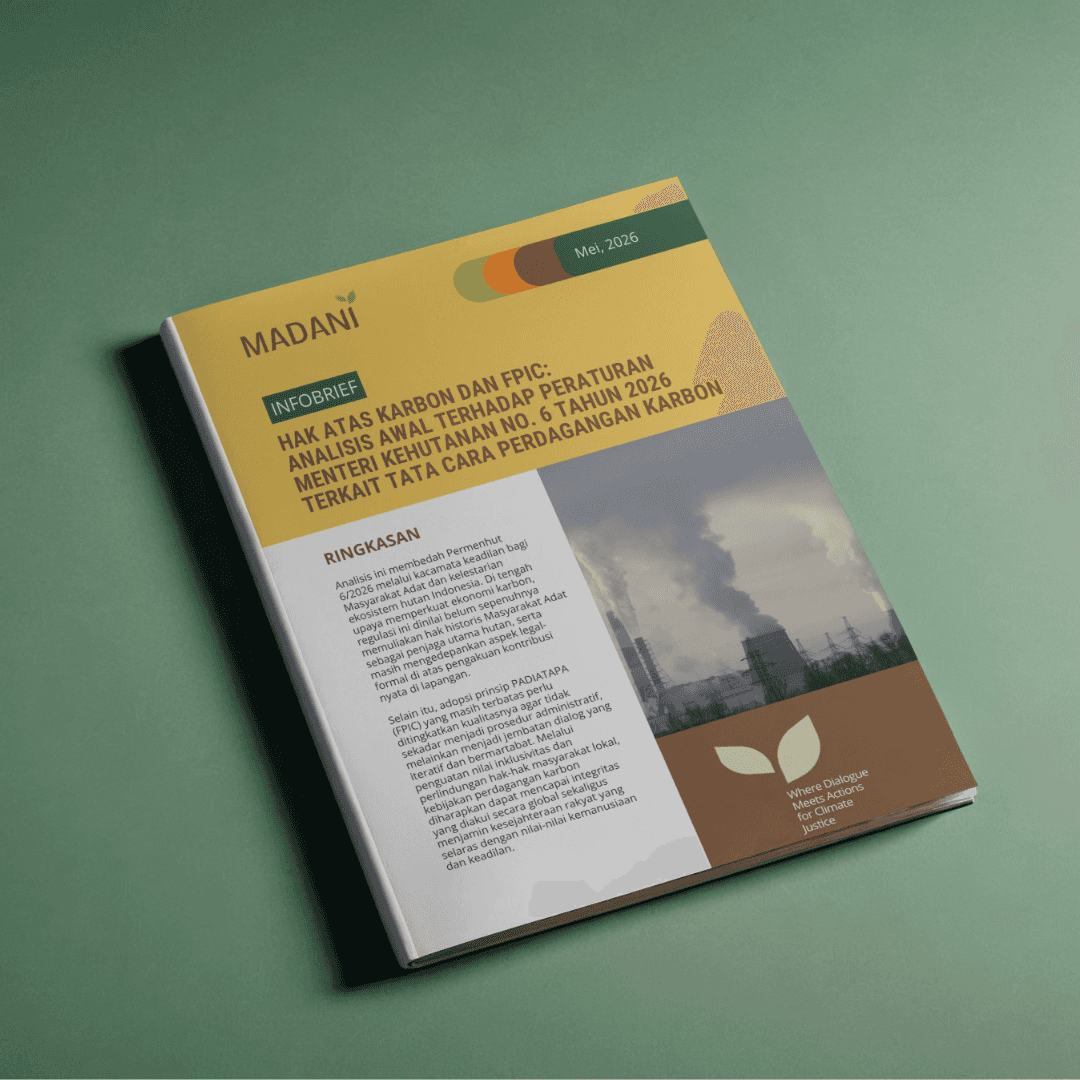
Carbon Rights and FPIC: A Preliminary Analysis of the Minister of Forestry Regulation No. 6 of 2026 Concerning Carbon Trading Procedures
This analysis dissects Permenhut 6/2026 through the lens of justice for Indigenous Peoples (Masyarakat Adat) and the sustainability of Indonesia's forest ecosystems. Amid efforts to strengthen the carbon economy, this regulation is deemed to have not fully honored the historical rights of Indigenous Peoples as the primary guardians of the forest, and still prioritizes legal-formal aspects over the recognition of tangible contributions in the field.
Furthermore, the still-limited adoption of the PADIATAPA (FPIC) principle needs a quality upgrade so that it does not merely become an administrative procedure, but rather serves as a bridge for an iterative and dignified dialogue. Through strengthening the values of inclusivity and the protection of local community rights, carbon trading policies are expected to achieve globally recognized integrity while ensuring public welfare aligned with human values and justice.
Regulatory Context
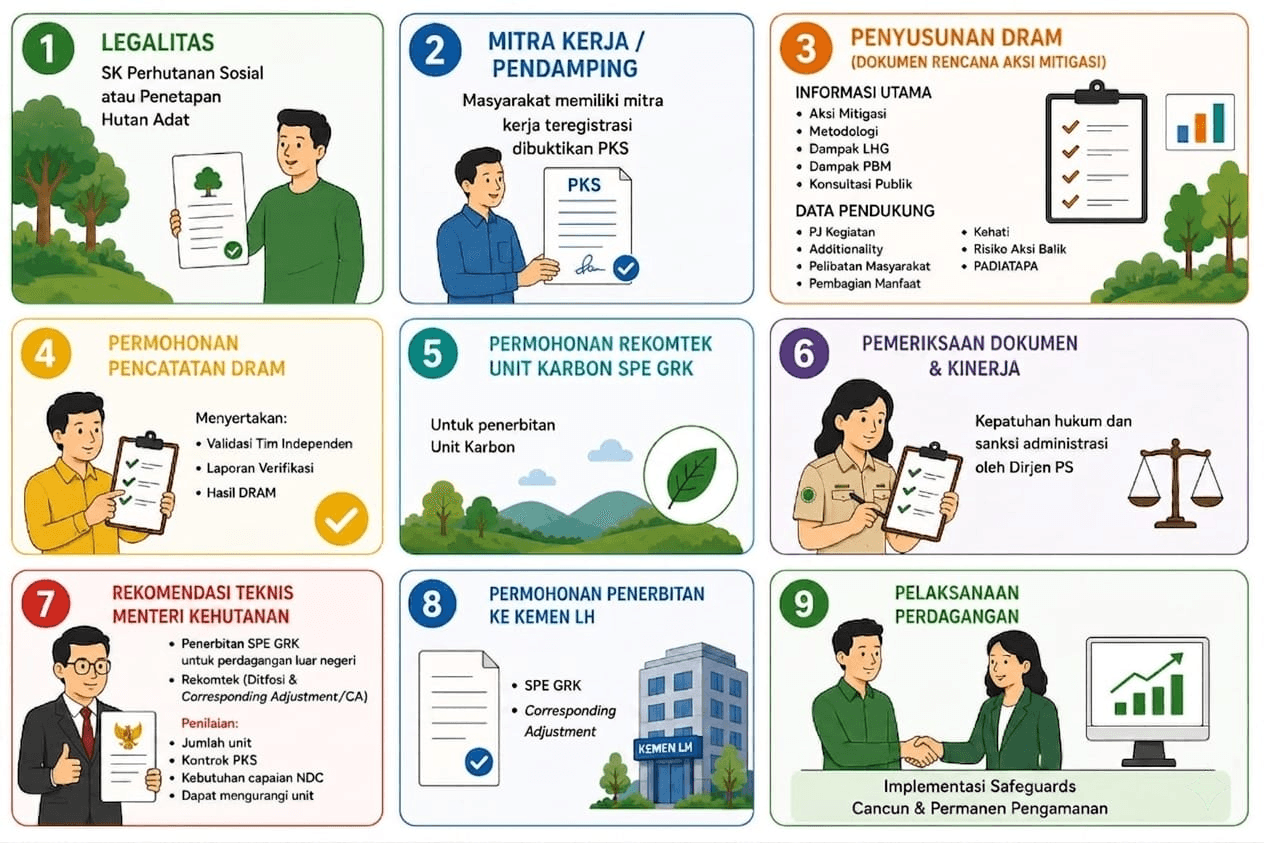
Minister of Forestry Regulation Number 6 of 2026 concerning Procedures for Carbon Trading through Greenhouse Gas Emission Offsets in the Forestry Sector (Permenhut 6/2026) is a revision of the Minister of Environment and Forestry Regulation Number 7 of 2023 concerning Forestry Sector Carbon Trading Procedures (PermenLHK 7/2023). This Permenhut 6/2026 regulates the carbon potential across more than 50% of Indonesia's territory, or equivalent to 95.5 million hectares of forest areas.
A Lack of Transparency: Despite having significant implications for forest management and the millions of residents who depend on it for their livelihoods, this revision process took place quietly. There was no process of public consultation, stakeholder consultation, or rights-holder engagement.
The primary issues that frequently come into the spotlight within the carbon regulatory regime are carbon rights and Free, Prior and Informed Consent (FPIC). To fully understand this issue, it is necessary to trace the legal umbrella of Permenhut 6/2026 and the debates surrounding it.