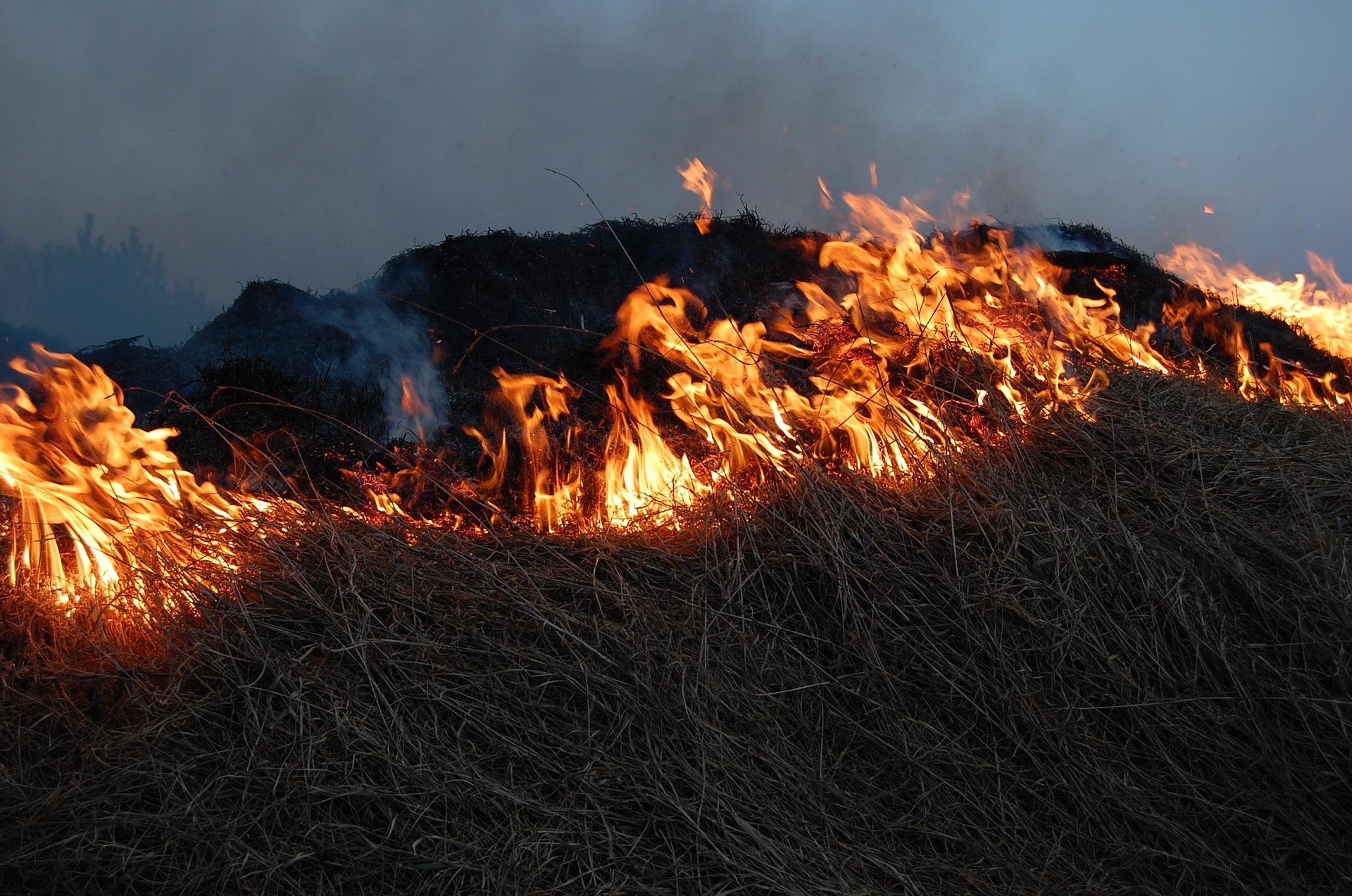
[Jakarta, July 23, 2020] Indonesia’s economic development still heavily relies on the exploitation of natural resources. This model is highly vulnerable to shocks and must urgently transform. The impacts of this extractive development approach are already visible, including the recurring forest and land fires that occur almost every year. Although recent fires have not been as extreme as those in 2015, there was a significant increase between 2018 and 2019—from 720 incidents to around 3,700 fire cases. Meanwhile, the budget for fire mitigation at the Ministry of Environment and Forestry (KLHK) has declined. This presents a major challenge for both the government and all of us.
The ongoing COVID-19 pandemic is the latest shock to the global economy. According to the Global Risks Report 2020, Indonesia’s economic growth or GDP was projected to reach 0% by the end of 2020. However, the longer-term risks to the global economy lie in environmental problems, including ecosystem loss—such as natural forests, peatlands, and mangroves—and the failure to adapt to and mitigate climate change.
This was conveyed by Nadia Hadad, Program Director of Yayasan Madani Berkelanjutan, during the online discussion titled “1,000 Ideas for Economic Development Without Environmental Destruction: Uniting Ideas for a New Indonesia”, held on July 23, 2020.
“Regarding the national economic recovery, the government’s focus has been on health, food security, and economic and social assistance. It is crucial to ensure that the recovery strengthens Indonesia’s economic foundation to transform into a more sustainable model that does not destroy forests. Of the Rp 695.2 trillion allocated for the National Economic Recovery (PEN), there is no explicit mention of economic transformation. Are the stimulus packages sufficient to address the current threats? This moment gives us an opportunity to change course and shift toward sustainable development. Moving forward, development should no longer depend on natural resource exploitation but prioritize environmental protection and green recovery,” Nadia added.
Meanwhile, Prof. Emil Salim, Founder and Trustee of KEHATI Foundation and keynote speaker at the discussion, emphasized that forest enrichment is the key. “The keyword is enrichment—not exploitation. Forests and trees must be preserved, while the resources they provide are utilized to enrich development,” he explained. “Indonesia is incredibly rich in biodiversity. We should not fall behind countries like Korea, known for ginseng. We too can be recognized globally for our natural products.”
Ronny P. Sasmita, Executive Director of Economic Action Indonesia (EconAct), highlighted the need for stronger strategic alignment in fiscal policy, regulation, and political will to create space for conservation-oriented practices and policies. “Going forward, we must promote and increase literacy on the green economy among political parties, parliament, the presidency, media, and all elements of civil society,” he said.
Joko Tri Haryanto, Researcher at the Fiscal Policy Agency, Ministry of Finance, proposed that forest and land fire prevention should become a Key Performance Indicator (KPI) for public leaders. “Fire prevention is not a sectoral issue—both local and central governments must contribute. The way to ensure that is by making it part of their performance index,” he stated.
He also introduced ideas related to funding mechanisms for forest protection and environmental justice. “We need an Ecological Fiscal Transfer (EFT) scheme—particularly from provinces to districts/cities and villages—known as Ecological-Based Provincial Budget Transfers (TAPE) and from districts to villages through Village Fund Allocations (ADD), referred to as Ecological-Based District Budget Transfers (TAKE). Every year, provincial governments allocate fiscal funds to districts through financial assistance, social assistance, grants, and tax-sharing mechanisms. These transfers can be designed to incentivize environmental protection.”
Dr. Mubariq Ahmad, Executive Director of Conservation Strategy Fund Indonesia, shared proposals for preventing forest and land fires. “First, reform the Integrated Fire Management (IFM) system so that 80% of efforts and budget focus on prevention, and only 20% on suppression. A dedicated Fire Prevention Unit with sufficient funding is needed. Second, eliminate suppression funds that may unintentionally create perverse incentives—since without fires, those funds cannot be used. Some of these funds exist within the KLHK budget, while most are emergency ‘on-call’ funds managed by the National Disaster Management Agency (BNPB). Third, the government must demonstrate the courage to enforce court decisions imposing trillions of rupiah in fines on corporations proven responsible for fires. These steps would align incentives toward prevention.”
The urgency of transforming development toward a sustainable, forest-friendly model is what inspired Yayasan Madani Berkelanjutan to initiate the #1000EconomicIdeas Movement. The movement aims to serve as both a catalyst and a platform to gather and amplify concrete, forward-looking ideas from across the country to build Indonesia’s economy without sacrificing forests and the environment—for the sake of future generations.
Let’s share ideas and work together to achieve economic development that does not come at the cost of our environment.
oooOOOooo
Contacts:
– Nadia Hadad, Program Director, Yayasan Madani Berkelanjutan – +62 811 132 081
– Luluk Uliyah, Senior Media Communication, Yayasan Madani Berkelanjutan – +62 815 1986 8887