Earthquakes, tsunamis, liquefaction, and volcanic eruptions are terrifying disasters that frequently plague the Indonesian people. These disasters occur due to natural geological factors in Indonesia, as it lies directly along the convergence lines of tectonic plates—both on land and on the ocean floor. These geological disasters are impossible to avoid unless Indonesia relocates to a region that isn't at the confluence of tectonic plates, which, of course, is equally unlikely.
However, geological disasters are not the main or most frequent disasters to hit the country. During 2019, the National Disaster Management Agency (BNPB) recorded 3,768 disasters in Indonesia. Of those 3,768 disasters throughout the year, only 1% were geological disasters, while 99% were hydrometeorological disasters (Kompas, 1/1/2020). Droughts, floods, storms, forest fires, El Niño, La Niña, landslides, tornadoes, whirlwinds, typhoons, whirlwinds, cold waves, heat waves, and Föhn winds (gending winds, brubu winds, bahorok winds, and kupu-kupu winds) are some examples of these hydrometeorological disasters.
READ ALSO: Providing Space for Pro-Conservation Economic Practices
Hydrometeorological disasters are disasters caused by rainfall, humidity, temperature, and wind—which are also components of the Earth's climate. A number of international media outlets have even used the term "Climate Disaster" to prevent this serious problem from becoming a public nuisance. For example, in the articles "Climate Disaster Is Upon Us" published by The Nation on January 15, 2019; " Do We Really Have Only 12 Years to Avoid Climate Disaster?" by the New York Times on September 19, 2019; " 2019 Has Been a Year of Climate Disaster. Yet Still Our Leaders Procrastinate" by The Guardian on December 19, 2019; and " We Live in an Age of Climate Disaster. Now What?" by the Washington Post on January 17, 2020.
Three Levels of Preparation
If this climate disaster is imminent, we must prepare for prevention, mitigation, and adaptation efforts. First, at the international level, world leaders are gradually beginning to recognize the threat of climate change. Under the Paris sky, at the end of 2015, the United Nations Climate Change Conference was held and produced a source of international law called the Paris Agreement. The key points in the agreement are (i) a shared commitment to holding the rate of increase in global average temperatures below 2°C above pre-industrial levels and continuing efforts to limit the temperature increase to 1.5°C above pre-industrial levels; (ii) Increasing the ability to adapt to the impacts of climate change, increasing climate resilience, and implementing low-greenhouse gas emission development without threatening food production; and (iii) consistent financial supply to achieve low-greenhouse gas emission and climate change-resilient development.
Second, in the national context, where each country is currently experiencing a crisis due to the pandemic, green recovery can be implemented. This is because, in economic development to recover more quickly from the crisis, governments need projects that experts call shovel-ready . These projects, more than labor-intensive projects, do not require high-level skills or extensive training, and provide infrastructure that benefits the economy. Clean energy infrastructure construction is one example, which generates twice as many jobs as fossil fuel projects.
We can see the need for cyclist- and pedestrian-friendly infrastructure in cities. Then there's the need to build broadband internet connection infrastructure, as online schooling and work will become increasingly prevalent. And networks for charging electric vehicles. With this in mind, we will undoubtedly need more electricity in the future. Massive projects for solar, wind, micro-hydro, and biogas power plants are also needed.
READ ALSO: Opportunities for the Green Sharia Industry
Cameron Hepburn of the University of Oxford recently published an interesting study on global recovery plans for the Covid-19 pandemic. The study, titled " Will Covid-19 Fiscal Recovery Packages Accelerate or Retard Progress on Climate Change?" (2020), focused on comparing green stimulus projects with traditional stimulus measures, such as those taken after the 2008 global financial crisis. The researchers found that green projects created more jobs, provided higher short-term returns, and led to long-term savings in upgrade costs.
Third, action at the individual level. There are many simple things we can do to preserve nature, such as conserving electricity. Did you know that the primary source of global greenhouse gas emissions is electricity (31%), followed by agriculture (11%), transportation (15%), forestry (6%), and manufacturing (12%). Energy production of all types contributes 72% of all emissions (data: WRI (2017)). The energy sector is the most dominant factor causing greenhouse gas emissions. This is how our lives are still dependent on fossil fuels under the "old normal." The "new normal" should replace old energy sources with renewable energy.
Green Economy Opportunities
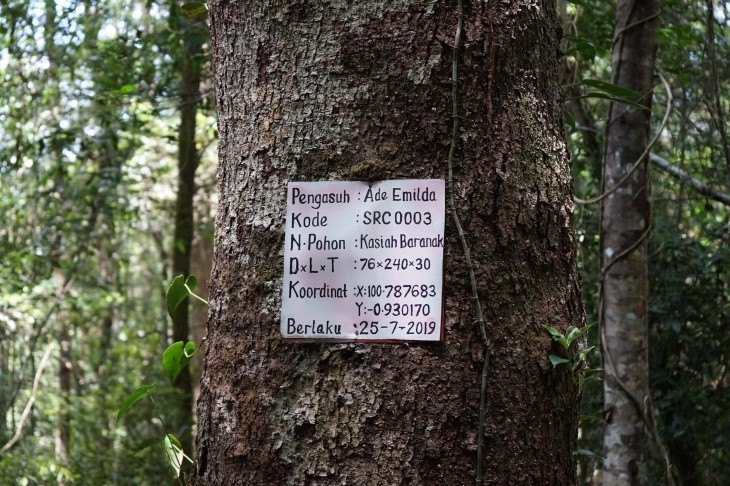
The imminent climate disaster should not only stimulate increased environmental awareness and concern, but also raise awareness that a green economy offers significant potential for realization. We can start with simple steps like recycling waste into creative products, prioritizing public transportation to reduce fossil fuel consumption, planting or adopting trees, such as the "Tenguhan Asuh" initiative developed by KKI Warsi, and, as much as possible, eliminating the use of environmentally damaging industrial products.
The increasingly massive environmental damage, which is also marked by the emergence of climate disasters, is a turning point for increasing environmental awareness so that the development agenda without damaging the environment can truly be realized.
Remember, we (humans) are intimately connected to the environment, and we must behave well toward it. However, to do so, we need an ecological understanding. We must study every activity that will negatively impact the ecosystem around us. Because if the ecosystem is damaged, our lives are also threatened. Therefore, it's time for us to start thinking that the current climate disaster is a slap in the face for the world to abandon environmentally damaging methods and shift to environmentally friendly ones. It's time to implement a sustainable green economy without damaging the environment.
Policy Analyst at the Indonesian Conservation Community