According to the Financial Services Authority (OJK), as of November 2019, Indonesia's financial inclusion and literacy rate has increased by 38%. The financial inclusion index reached 76.19%. According to the World Bank, financial inclusion refers to individuals or business groups having sufficient access to obtain or purchase goods and services on a sustainable basis. Practically, financial inclusion refers to the state of society that utilizes financial services products such as insurance, fintech, banking, and other financial products.
To increase financial inclusion, the public must have a good understanding of financial products and services, eliminating skepticism. Financial inclusion can also reduce economic inequality within society by providing equitable access to financial services.
READ ALSO: Sustainable People-Friendly Marine Tourism
People will be confident in using a financial product or service if they understand its benefits, regulations, and systems. This is closely related to a person's level of financial literacy. A person with a high level of financial literacy will be more likely to understand the risks of engaging in potentially detrimental financial activities. With a high level of financial literacy, the financial services sector will also benefit from increased use of financial products and services.
The government and financial institutions have implemented several strategies to increase financial inclusion, such as financial education programs, public financial facilities, the use of financial technology, and consumer protection. However, when we look at national economic development, many parties and development programs are still perceived as detrimental or insufficiently addressing sustainable development aspects, particularly its impact on the environment.
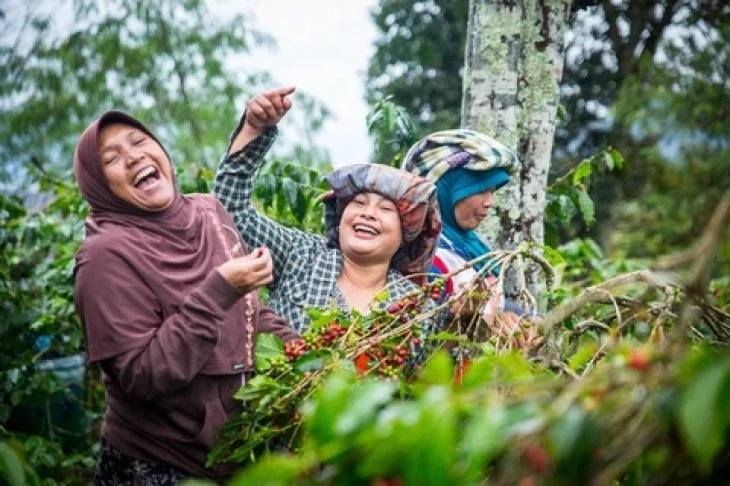
Returning to the topic of financial inclusion, there's another crucial aspect to consider, particularly for women. Without women, the economy would never progress. Most women work in the informal sector, where opportunities for economic empowerment are limited. For example, traditional markets are excluded from economic policy. Similarly, health insurance and workplace safety are lacking.
Women are potential economic actors, yet they struggle to access capital, are perceived as lacking skills, and are sometimes even undervalued. Some financial services, such as credit, are restricted to salaried women or employees. Women with low levels of education or those who work as housewives lack access to such services. Women are a vulnerable group, whether as workers, entrepreneurs, or housewives dependent on the head of the family. Empowering women economically also empowers the family economy. This will indirectly transform society, leading to greater prosperity, with women empowered and economically independent.
Financial inclusion is expected to not only facilitate public access to financial services such as savings, insurance, and investments, but also reduce existing economic disparities by stimulating economic growth. An appropriate financial inclusion model that benefits women is expected to empower women economically and independently.
READ ALSO: Blue Economy as a Model for Coastal Area Development
In our view, a suitable financial inclusion model for women requires a program designed to improve financial literacy and provide a breakthrough or innovation based on ecofeminist thinking, the belief that women are the primary actors in environmental sustainability. We designed this program, called the Eco-Woman Program, to realize women's economic empowerment in Indonesia.
The Eco-Woman program is our initiative, focusing on improving women's financial literacy and creating business opportunities for them. These opportunities will be environmentally-based, such as processing organic and inorganic waste, selling eco-friendly products (eco-lifestyle), and so on. The Eco-Woman program also hopes to create an appropriate model of inclusion for women's economic empowerment.
Get the full idea from Tina Monroe entitled “ Eco-Woman Program in Realizing Economic Development Based on Environmental Concern ” by downloading the attachment available below.
By: Tina Monroe
Tunas Markatin Vocational School Teacher