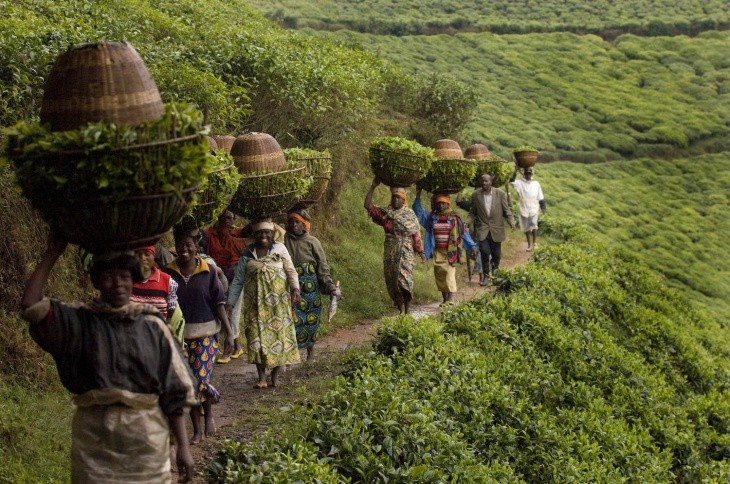
The official website of the Association of Southeast Asian Nations (ASEAN), as quoted by kompas.com, states that Southeast Asia is one of the most productive agricultural baskets in the world. Indonesia is one of the countries in the region that utilizes the agricultural sector as a dominant pillar of its national economy. Therefore, it is natural that Indonesia is called an agricultural country. Indonesia is the second-largest tropical agricultural country in the world after Brazil. Of the 27 percent of the world's tropical zones, Indonesia contains 11 percent.
Indonesia boasts tropical rainforests that play a vital role in many aspects, including environmental, social, and economic well-being. However, their importance seems to be largely unknown to some. They often overlook this, leading to widespread destruction and burning to clear land for personal gain. However, these fires not only damage the forests but also lead to the loss of their habitats and the extinction of many of the forest's fauna.
The Central Statistics Agency (BPS) noted that according to the Ministry of Environment and Forestry (KLHK), Indonesia's forest area in 2019 was approximately 93.52 million hectares. In fact, in 2011, Indonesia's forest area reached 98.7 million hectares. This indicates that between 2011 and 2018, Indonesia's forest area continued to experience a significant decline. This condition is very worrying considering that for the past decade, the global community has been discussing the threat of a climate crisis ( Climate Crisis) , which can lead to hydrometeorological disasters, one of the causes of which is forest destruction.
READ ALSO: Palm Oil Moratorium Extension: Momentum to Build Back Better
Forest destruction continues. Logging and burning are carried out in many places. For example, the 2019 forest fires in Riau, which were widely publicized internationally, claimed many lives and took time to resolve due to the dry season and strong winds. More recently, the burning and clearing of forests in Papua by a South Korean company to expand its oil palm plantations has drawn public attention. This practice will undoubtedly cause greater losses than profits, as the losses are long-term.
It should be noted that the actions of foreign investors that cause significant harm to Indonesia's forest areas are due in part to weak regulations established by the Indonesian government and a lack of oversight. If the government were to establish strict policies, regulations, and oversight of various economic activities involving forest areas, forest destruction and conversion under the pretext of expanding oil palm plantations and so on would be minimized and, hopefully, stopped.
What we're talking about now is a sustainable economy, meaning one that takes environmental considerations into account, not just to meet current needs but also for future generations. Unless the government takes decisive action on this issue, Indonesia's forest area will soon experience a rapid decline compared to previous periods, accompanied by the extinction of various animals and the biodiversity that rely on it for habitation.
I propose to the government to revise various regulations for economic activities involving forests to ensure they comply with environmental impact assessments (EIA) and prevent overexploitation. These regulations also carry the threat of severe criminal penalties and require the restoration of damaged forests. For example, one tree cut down must be replaced with ten trees planted. One protected animal killed must be replaced with two of the same kind, and so on. Furthermore, if forest destruction results in a hydrometeorological disaster, the perpetrators of forest destruction must also compensate the surrounding communities affected by the disaster.
READ ALSO: Climate Change Budget Included in 2020-2024 National Medium-Term Development Plan
Equally important to establishing regulations is their implementation and oversight. No matter how good a regulation is, without proper implementation and oversight, it will be meaningless. Therefore, established regulations must be implemented comprehensively and monitored extensively by law enforcement officials. It's also important to note that the law enforcement officers selected must be honest and not susceptible to bribery by anyone or anything.
There's one more thing I'd like to mention, even though it falls outside the regulations I'm referring to, but it will significantly impact them. Hopefully, this won't actually happen. Hopefully. One thing that's already an open secret in our country is the existence of money politics . This seems to be commonplace in regional and general elections in some parts of Indonesia. For example, a candidate campaigned using a large amount of money, even though their wealth didn't even reach half of the campaign funds they used. It turns out the campaign funds they used were obtained from businesspeople with the guarantee that if the candidate was elected, they would have to enact policies that would facilitate business development, even if it would damage the environment.
My statement above is not intended to discredit any party. Rather, it is important to note that establishing environmental protection policies requires more than just environmental regulations—in this case, forests. Other related regulations, both directly and indirectly, must also be considered. These include regulations related to the election and formation of government. After all, the government is the central agent and policymaker, and can be a key factor in forest protection in Indonesia, leading to a sustainable economy.
By: Muhammad Mufti
Padjajaran University Students