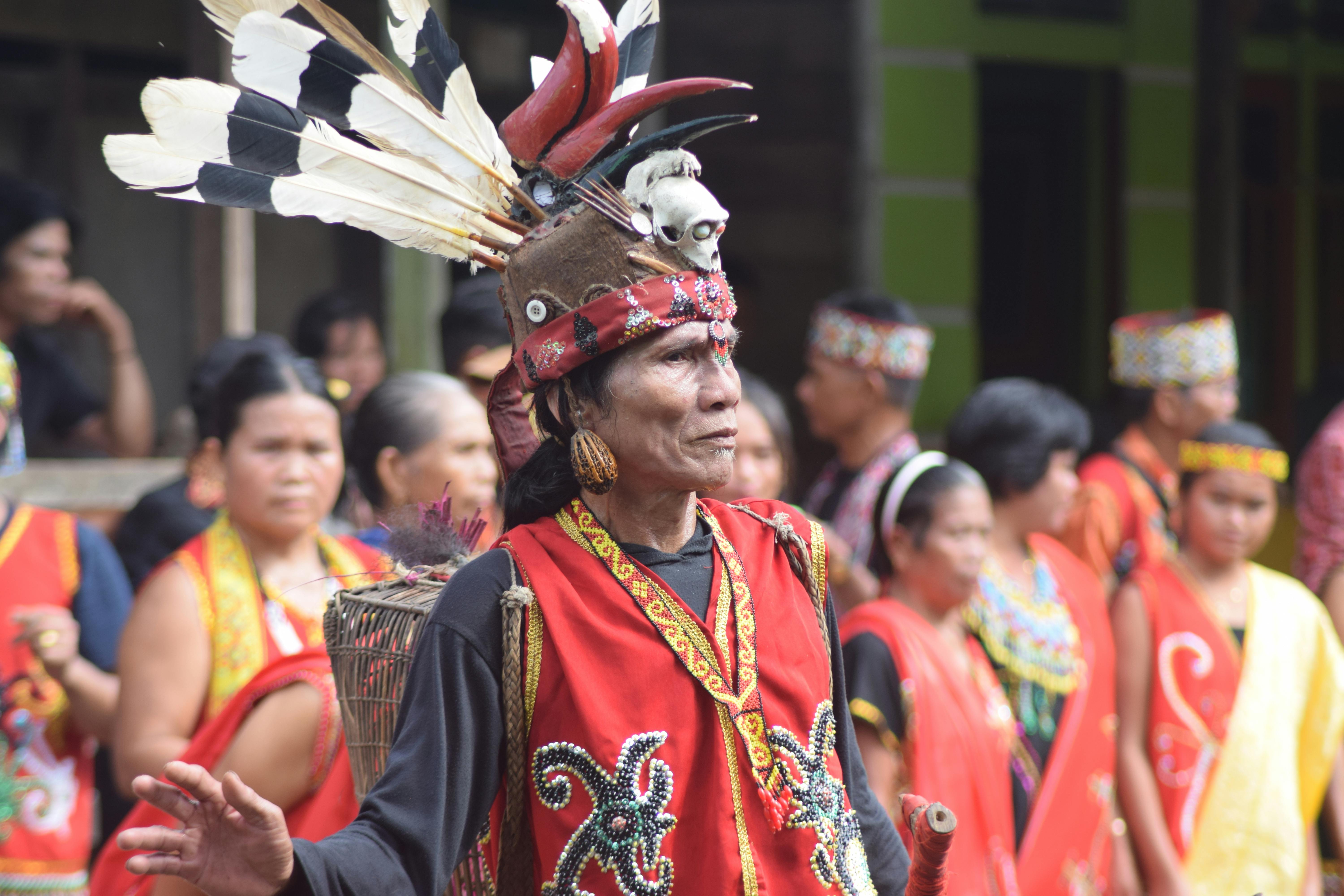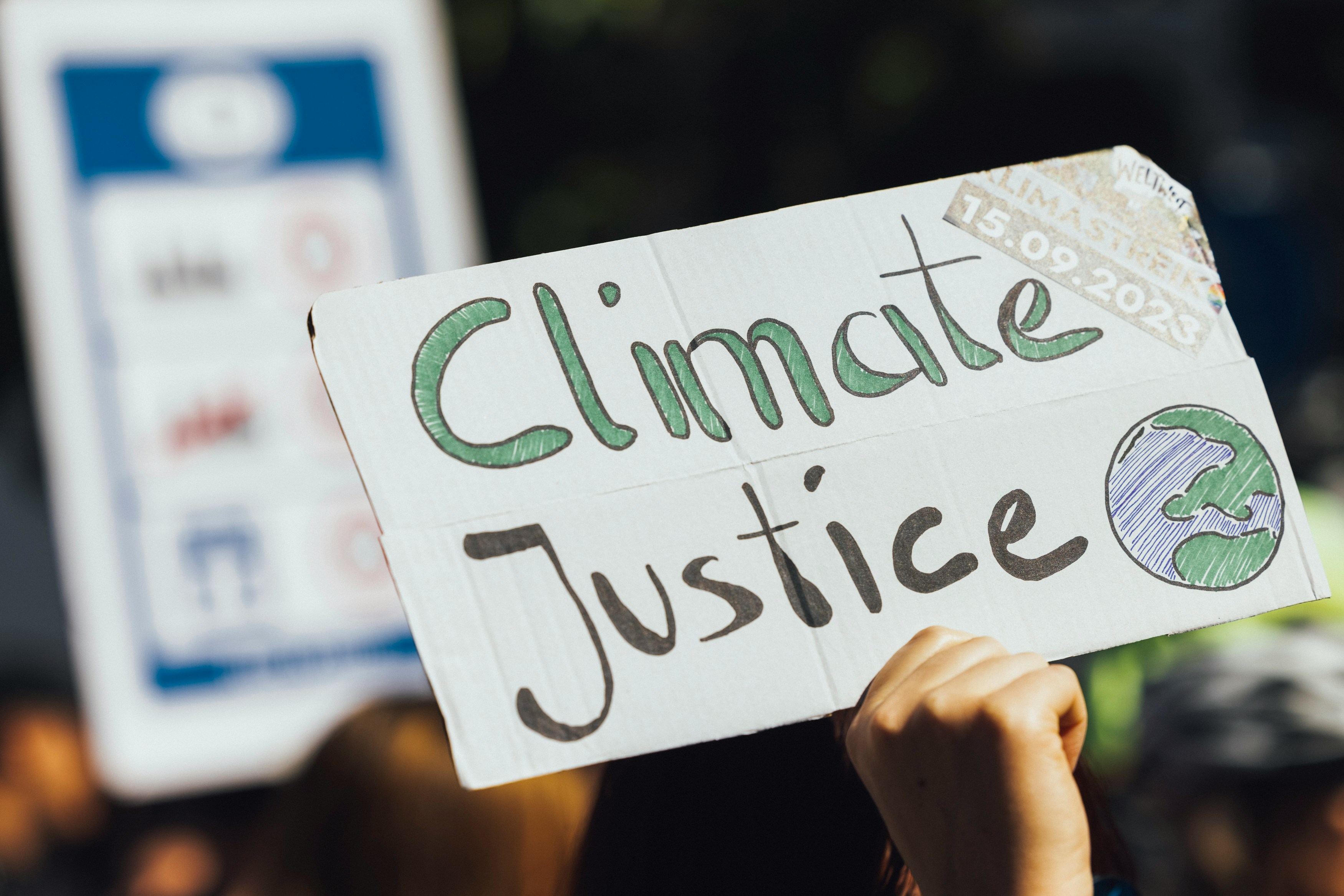
[JAKARTA, 4 October 2022] The impacts of climate change are increasingly being felt by communities across Indonesia. One of the most pressing consequences is the growing food crisis. Vulnerable groups such as farmers, Indigenous Peoples, and fishers are steadily declining in number as their livelihoods become more difficult due to climate disruption. As those most directly affected, their voices are crucial in shaping adaptation and mitigation policies. Yet, public participation spaces are shrinking—making climate justice ever harder to achieve.
Two clear examples of climate-related disasters are villages sinking due to flooding and fishers struggling to go out to sea. According to Parid Ridwanudin, Coastal, Marine and Small Islands Campaign Manager at WALHI National Executive, four villages in Demak, Central Java, have already submerged—one of them being Bedono Village.
Between 2010 and 2019, the number of fishers also declined significantly, partly because many lost their lives at sea. The fisher population dropped by 330,000—from 2.16 million in 2010 to just 1.83 million in 2019.
Parid explained that fishers are directly impacted by climate change because their work depends entirely on weather conditions. The climate crisis has made weather patterns increasingly unpredictable, limiting their fishing days to around 180 days per year.
“In the future, we will face a marine food crisis,” Parid warned during the discussion “Unpacking Climate Justice Elements in Global Climate Action and Its Implementation in Indonesia” held in Jakarta on Monday (3/10).
If left unchecked, Parid added, more than 12,000 coastal villages and over 86 outermost small islands could sink. This would force many coastal residents to become climate refugees. “By 2050, future generations will face rising sea levels and severe food insecurity,” he said.
At the event, Torry Kuswardono, Executive Director of Yayasan PIKUL, delivered a public lecture highlighting the long struggle to integrate climate justice into international frameworks.
“It has been a long journey,” Torry said.
The climate justice movement has passed several important milestones. In 1990, a report titled “Greenhouse Gangsters vs Climate Justice” published by CorpWatch in San Francisco highlighted how oil companies’ environmental damage disproportionately affected poor communities. This marked the beginning of a movement emphasizing justice and the protection of vulnerable groups in climate mitigation and adaptation efforts.
Another key milestone was the formation of the Durban Group for Climate Justice in 2004. Legal cases brought by Nigerian communities against Shell between 2000 and 2020 further strengthened global momentum around climate justice.
The declaration of “Climate Justice Now!” by civil society groups during COP13 in Bali in 2007 was also pivotal. In 2015, Pope Francis’ encyclical Laudato Si’ – Care for Our Common Home underscored global challenges including pollution, climate change, water scarcity, biodiversity loss, and inequality—criticizing the unchecked use of technology and economic interests that separate humans from nature.
Climate justice, therefore, is both a critique of prevailing development models and an effort to reduce inequality.
“After four decades of advocacy by activists worldwide, climate justice is now finally reflected in official IPCC documents,” Torry noted, referring to the IPCC Assessment Report 6.
Climate justice cannot be ignored if the world hopes to slow climate change effectively. If inequality is reduced, adaptation and mitigation efforts can reinforce each other. “If climate justice is implemented, communities will be able to adapt. And if adaptation succeeds, it will produce a more just society,” Torry said.
The latest IPCC Assessment Report—spanning 3,675 pages—emphasizes the importance of expanding public participation in climate policymaking to ensure climate actions benefit everyone.
Torry stressed that climate justice requires governments to formally recognize and guarantee meaningful participation from vulnerable groups through legal procedures. Those who suffer the most from climate disasters should receive greater benefits in return.
“In principle, those who suffer the most must receive greater benefits than the average person in order to address inequality,” he explained.
Bivitri Susanti, founder and senior researcher at the Center for Law and Policy Studies (PSHK) and lecturer at JENTERA Law School, emphasized that public participation—especially from vulnerable groups—must be broad and free from coercion.
“We need transformative change to ensure vulnerable voices are truly reflected in policy,” she said.
Public participation, she argued, is often treated as a mere formality. For example, policymaking in sectors such as palm oil and taxation has often been dominated by oligarchic interests. In the drafting of the Job Creation Law (Omnibus Law), public participation was formally conducted but lacked substance. Even a Constitutional Court judge who attempted to address problems in the law was later removed from his position.
“So even if the process appears legal, it doesn’t necessarily mean it is just,” Bivitri said.
Siti Rakhma Mary Herwati of the Indonesian Legal Aid Foundation (YLBHI) pointed out that climate injustice stems from power imbalances and privileges granted to extractive industries, while vulnerable communities bear the consequences—such as evictions, air pollution, and environmental destruction.
Many National Strategic Projects (PSN) handled by legal aid groups have severely impacted vulnerable communities without proper public consultation. In North Java’s coastal areas, communities face frequent flooding while infrastructure projects continue unchecked. In Manado, land reclamation proceeded without community engagement, and protests were met with criminalization.
“In these cases, multiple human rights are violated—the right to information, the right to safety, and the rights to water, a healthy environment, and food,” Rakhma said.
She criticized the government’s contradictory stance—treating climate change as a strategic issue while continuing to facilitate extractive industries that increase greenhouse gas emissions.
Parid added that communities directly affected by climate disasters are often excluded from policymaking processes that shape their futures. Even when participation is offered, it is often technocratic and superficial.
For this reason, Parid called for the enactment of a Climate Justice Law to address structural inequalities in climate governance. Torry added that climate justice is fundamentally a development issue—one that can reduce inequality and deliver tangible benefits for poor and vulnerable communities.
Editor’s Note
The Climate Justice Coalition is a civil society movement advocating for just climate and environmental policies. It consists of Yayasan PIKUL, Yayasan Madani Berkelanjutan, WALHI National Executive, Kemitraan, and the Institute for Essential Services Reform (IESR).
For those who missed the discussion titled “Unpacking Climate Justice Elements in Global Climate Action and Its Implementation in Indonesia”, recordings are available at:
https://youtu.be/YJACQufJMO0
https://youtu.be/xyso4kQnGsE
Presentation materials can be downloaded at:
http://bit.ly/paparankeadilaniklim
Speakers Contact
Torry Kuswardono – Executive Director, Yayasan PIKUL | +62 811 383 270
Bivitri Susanti – PSHK & JENTERA Law School | +62 812 1041 593
Siti Rakhma Mary Herwati – YLBHI | +62 812 2840 995
Parid Ridwanudin – WALHI National Executive | +62 812 3745 4623