MadaniNews, Jakarta, April 23, 2021. The virtual Leaders Summit on Climate, held on Thursday, April 22, 2021, demonstrated growing global awareness of climate crisis mitigation. The conference, attended by 41 heads of state, government, and heads of international organizations, also marked the United States' return to its global climate commitments, the Paris Agreement.
The return of the United States to the fight against the global climate crisis should serve as a stimulus and encouragement for many countries to become more optimistic in combating the climate crisis. The conference, initiated by United States President Joseph Robinette Biden Jr., also known as Joe Biden, can also be interpreted as momentum to further strengthen the climate commitments of many countries, including Indonesia.
Regarding the Climate Commitment or Nationally Determined Contribution (NDC), Indonesia has set a target of reducing Greenhouse Gas emissions in Indonesia, namely 29% unconditionally (with its own efforts) and 41% conditionally (with adequate international support) by 2030.
At the Leaders Summit on Climate , Indonesian President Joko Widodo, or Jokowi, conveyed three thoughts related to the issue of climate change. First, he emphasized that Indonesia is very serious about controlling climate change and called on the world to take concrete actions. Second, Jokowi invited world leaders to advance green development for a better world. According to him, Indonesia has updated its nationally determined contribution (NDC) to increase adaptation capacity and climate resilience – although it has not increased mitigation ambition. Third, to achieve the targets of the Paris Agreement and the subsequent joint agenda, President Jokowi believes that global partnerships must be strengthened.
In line with President Jokowi's thinking, the Sustainable Madani Foundation revealed four things that should be the government's priority in addressing the climate crisis;
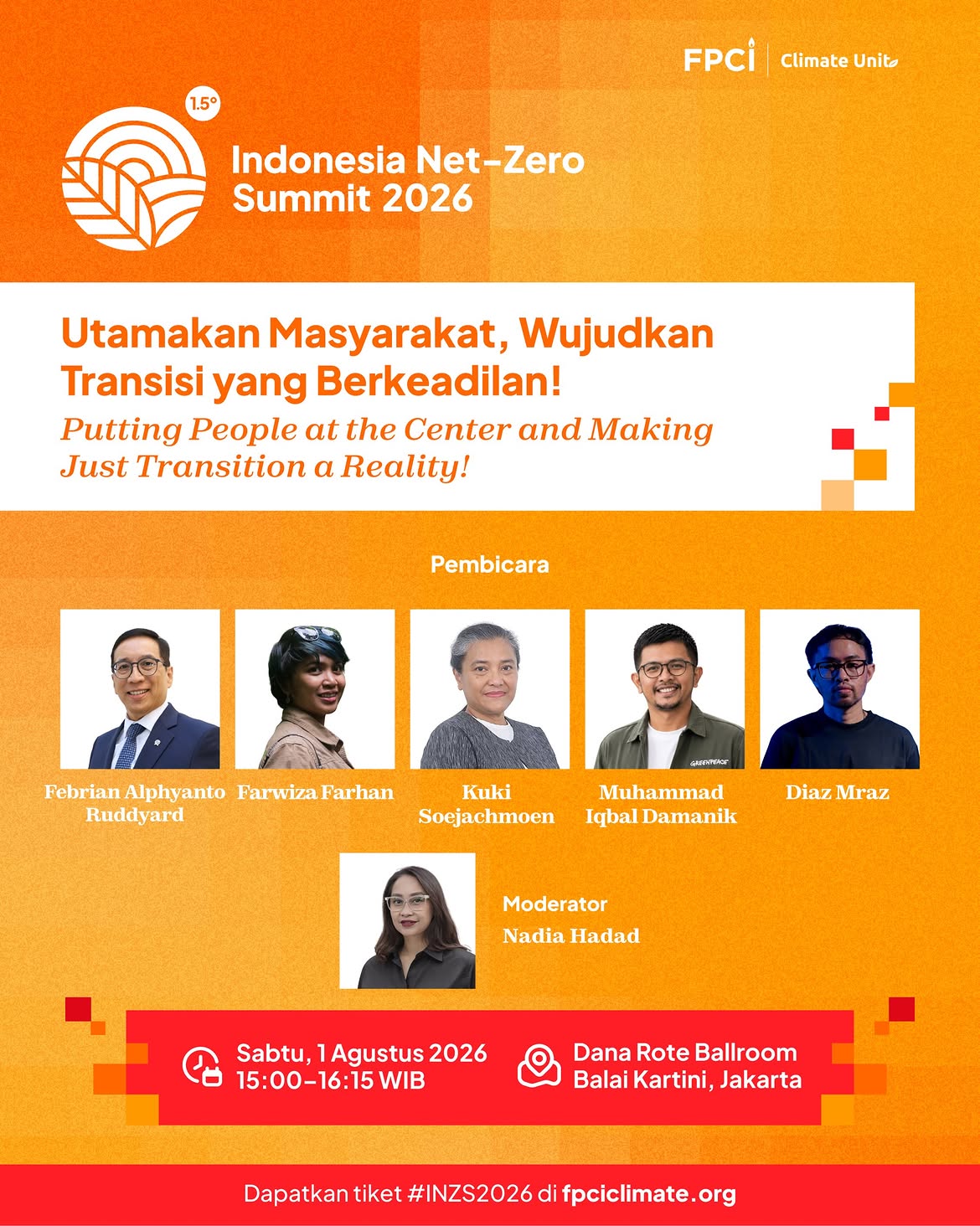
A major transformation in the forestry sector. Nadia Hadad, Program Director of the Sustainable Madani Foundation, stated that to achieve Indonesia's climate commitment (NDC) and net-zero emissions targets , policy transformation to strengthen forest and land protection and a serious commitment to expanding the implementation of degraded area rehabilitation programs are essential. Indonesia needs to commit to preventing forest and peatland fires and recognize indigenous and local communities who manage natural resources as key stakeholders in achieving Indonesia's climate commitments.
Achieving Zero Deforestation. Indonesia has the opportunity to achieve its long-term vision, aligned with the Paris Agreement. This can be achieved by reducing Indonesia's deforestation quota in its updated NDC for the 2020-2030 period and strengthening its forest moratorium policy by including 9.4 million hectares of unprotected and vulnerable natural forest, equivalent to 16 times the size of Bali, in the Indicative Map for the Halt to New Permits (PIPPIB).
Optimistic about achieving Carbon Neutrality in 2050. By implementing the reduction quota in the Updated NDC document, the net zero emission target in 2050 should be very possible compared to the plan to use the net zero emission scenario in 2070. Indonesia's weak ambition to achieve carbon neutrality (net zero emissions) in 2050 is reflected in the document Long-Term Strategy on Low Carbon and Climate Resilience 2050 (LTS-LCCR 2050) prepared by the Ministry of Environment and Forestry (KLHK). The LTS-LCCR 2050 document states that to keep the earth's temperature from rising beyond 1.5℃, the government targets carbon neutrality in 2070. This means that Indonesia is 20 years late from the target set in the Paris Agreement.
Promoting Economic Development Without Harming the Environment. The Madani Berkelanjutan Foundation welcomes the efforts of the Ministry of Environment and Forestry (KLHK) to reduce deforestation by 75% in the 2019-2020 period, as stated in a press release on March 3, 2021. According to Madani, this reduction in deforestation is a good starting point for Indonesia to build the Indonesian economy without damaging forests and the environment. This proves that concrete positive steps can be taken and it is hoped that this can be maintained going forward.