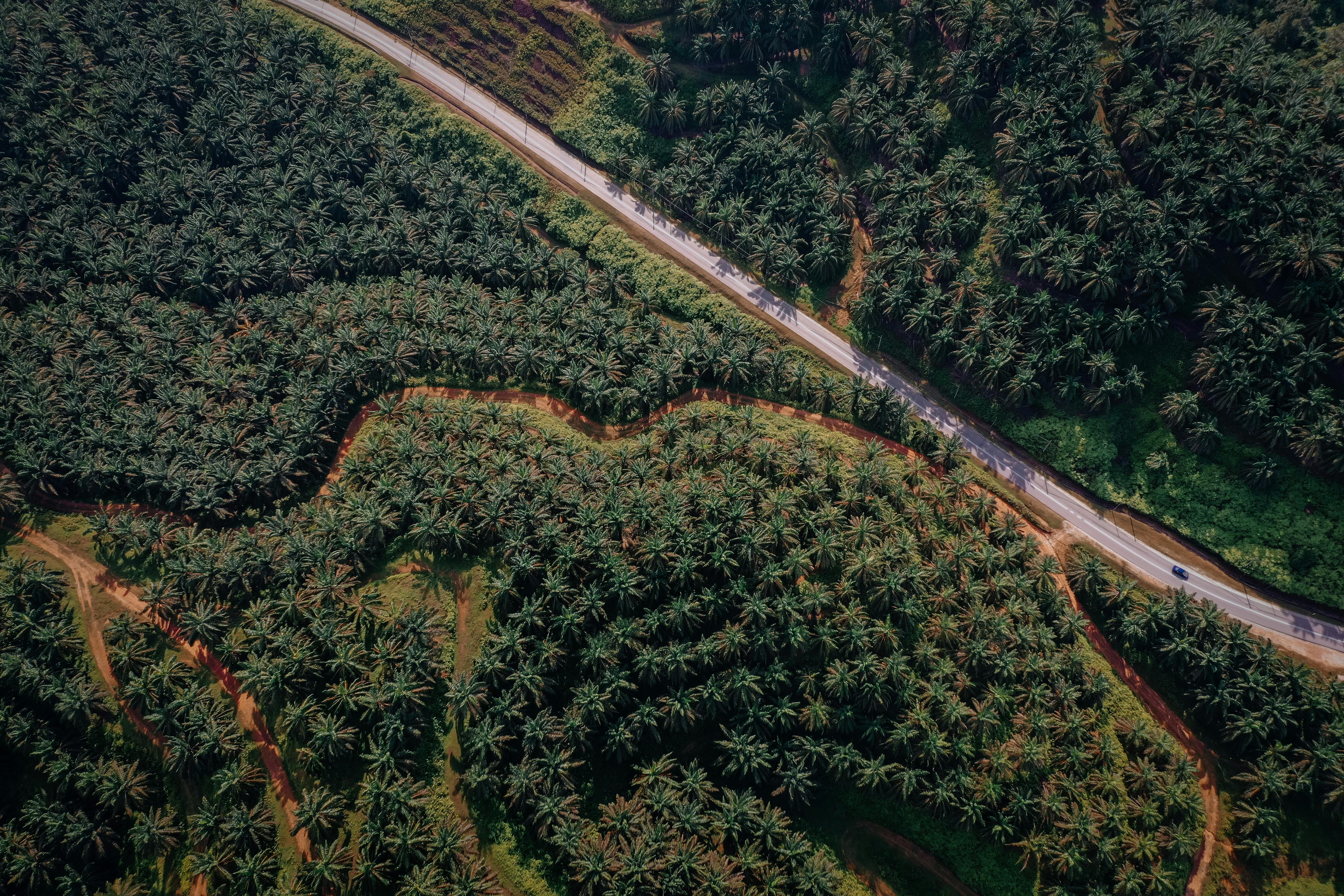
[Jakarta, 6 November 2024] As the world’s largest palm oil–producing country, Indonesia has oil palm plantations covering 16.8 million hectares. With export contributions reaching USD 37.76 billion in 2022 and USD 29.54 billion in 2023, the palm oil industry has become a backbone of the national economy. However, despite the vast plantation area, oil palm expansion in Indonesia is expected to continue in order to meet export demand and support the ambitions of Indonesia’s Biodiesel Program.
In his inauguration speech, President Prabowo Subianto stated that he would focus on food and energy self-sufficiency, one of which would be pursued through the use of palm oil for biodiesel. Development scenarios for B40 to B50 biodiesel are currently being designed, which will require the expansion of oil palm plantations. This has raised concerns about the potential increase in deforestation and the loss of land that serves as a source of food in the future.
Restrictions on oil palm plantation expansion have in fact been regulated through Presidential Instruction (Inpres) No. 8 of 2019 on the Suspension and Evaluation of Oil Palm Plantation Licenses, commonly known as the Oil Palm Moratorium. However, these efforts continue to face many challenges. The Oil Palm Moratorium Coalition emphasizes that the moratorium must be supported by comprehensive economic and environmental analyses, including an analysis of Environmental Carrying Capacity and Assimilative Capacity (D3TLH), in order to achieve a balance between economic interests and environmental sustainability.
In an effort to improve palm oil governance in Indonesia, the Oil Palm Moratorium Coalition organized a public discussion on a policy paper entitled “The Urgency of Improving Palm Oil Governance through a Policy of Halting the Issuance of Licenses from an Economic and Environmental Carrying Capacity (D3TLH) Perspective.” The discussion aimed to evaluate the need to halt permits for large-scale oil palm expansion while prioritizing productivity intensification. The coalition hopes that the discussion will generate constructive ideas to support sustainable palm oil governance during the Prabowo–Gibran administration.
Lokahita researcher Jesika Taradini shared insights on the development of oil palm plantations based on research on the oil palm plantation cap in Indonesia.
“Considering the fact that oil palm plantations on the three major islands—Sumatra, Kalimantan, and Papua—have exceeded their thresholds, instead of opening the door to new oil palm expansion, all parties must work toward restoring environmental conditions on these three islands,” Jesika explained.
At the national level, she continued, Indonesia’s domestic demand for palm oil is already being met by the existing plantation area. The addition of new plantations would only benefit large-scale business actors while providing minimal impact for communities and state revenue.
From an economic perspective, Nailul Huda, an economist at the Center of Economics and Law Studies (CELIOS), observed that an oil palm moratorium policy would bring significant positive economic impacts, particularly when combined with a replanting program.
“The impact of implementing an oil palm moratorium plus replanting policy is projected to generate economic contributions by 2045 in the form of: economic output of IDR 28.9 trillion, GDP of IDR 28.2 trillion, household income of IDR 28 trillion, business surplus of IDR 16.6 trillion, net tax revenue of IDR 165 billion, exports of IDR 782 billion, labor income of IDR 13.5 trillion, and employment for 761 thousand people. These figures are very significant compared to scenarios without a moratorium, which tend to be negative across all aspects, underscoring the urgency of implementing an oil palm moratorium policy in line with its economic benefits,” explained Nailul Huda.
Achmad Surambo, Executive Director of Sawit Watch, highlighted the urgency of implementing a policy to halt the issuance of oil palm licenses, noting that oil palm expansion continues, particularly as future policy directions support the expansion of palm oil–based biodiesel programs.
In his inauguration speech, President Prabowo Subianto emphasized a focus on food and energy self-sufficiency, including through the use of palm oil for biodiesel.
“This creates a very high risk of deforestation and threatens the existence of land that serves as a source of food. Economic studies and threshold ‘cap’ values for oil palm have already demonstrated the urgency of halting the issuance of oil palm licenses for plantation business actors.
“Halting the issuance of oil palm licenses combined with replanting can have positive economic impacts. The current oil palm area is also already approaching its threshold. Therefore, the implementation of an oil palm moratorium policy is increasingly important to stop uncontrolled expansion, ensure sustainable practices, and create fair and transparent governance for the welfare of society,” Surambo stated.
Meanwhile, Andi Muttaqien, Director of Satya Bumi, highlighted the ineffectiveness of existing regulations in addressing governance issues in Indonesia’s oil palm plantation sector. Although there are provisions related to the legalization of oil palm plantations located within forest areas, these policies have not been able to resolve overlapping land issues and instead risk causing losses to the state in the form of lost tax revenue.
“Existing regulations are not sufficient to untangle the deeply problematic governance of the palm oil sector,” said Andi.
Rather than providing legal certainty, Andi explained, the legalization of oil palm plantations within forest areas risks creating loopholes that result in state losses and reduced potential tax revenue. With a licensing system that remains vulnerable to corrupt practices, strong law enforcement and transparent data consolidation are urgently needed to protect state and environmental interests.
Regarding the European Union Deforestation Regulation (EUDR), Andi noted that the urgency of an oil palm moratorium has become even more relevant in responding to the new regulation.
“This moratorium is a progressive government policy to address the provisions of the EUDR. In addition to being a commitment to reducing global deforestation rates, the moratorium can also encourage palm oil production that is free from elements of illegality and help facilitate due diligence documentation, given that the moratorium mandates permit evaluations,” Andi explained.
Sadam Afian Richwanudin, a researcher at Madani Berkelanjutan, examined Presidential Instruction (Inpres) No. 8 of 2018 on the Suspension and Evaluation of Oil Palm Plantation Licensing and the Improvement of Oil Palm Plantation Productivity.
“The oil palm moratorium is still very much needed to improve plantation governance that remains suboptimal,” said Sadam Afian. “There are still many issues related to data consolidation, permit violations, and uncontrolled plantation expansion across various provinces, including Papua and Kalimantan. This moratorium policy is necessary to evaluate existing permits and ensure that palm oil industry management becomes more transparent, sustainable, and does not harm the environment.”
Sadam added that the moratorium would also support Indonesia’s climate targets. “Halting permits and new land clearing will support Indonesia’s climate commitments, as the FOLU and Energy sectors remain the backbone of climate targets. New land clearing will increase carbon emissions. By stopping new permits and land clearing, the contribution of the FOLU sector in achieving climate targets will increase.”
“In addition to climate commitments, the moratorium also contributes to ensuring a decent, healthy, and sustainable environment for today and future generations. A moratorium on permits and new land clearing, combined with improvements in governance, must be viewed as a single, integrated effort toward achieving fair and sustainable palm oil,” he added.
Summarizing the coalition’s views, Olvy Tumbelaka, Senior Campaigner at Kaoem Telapak, stated that Indonesia needs to reinstate a stronger moratorium on new oil palm licensing—stronger than Inpres No. 8—for three key reasons. First, to protect forests and biodiversity in critical regions such as Sumatra, Kalimantan, and Papua from deforestation. Second, to meet sustainability standards set by international markets, particularly the anti-deforestation regulations of the European Union, the United Kingdom, and China.
“This is important to maintain market access and the competitiveness of Indonesian palm oil. And third, to protect the welfare of smallholders, local communities, and Indigenous Peoples through better and more sustainable plantation governance,” Olvy concluded.
Media Contact:
Hady Saputra (Email: hadi@sawitwatch.or.id)