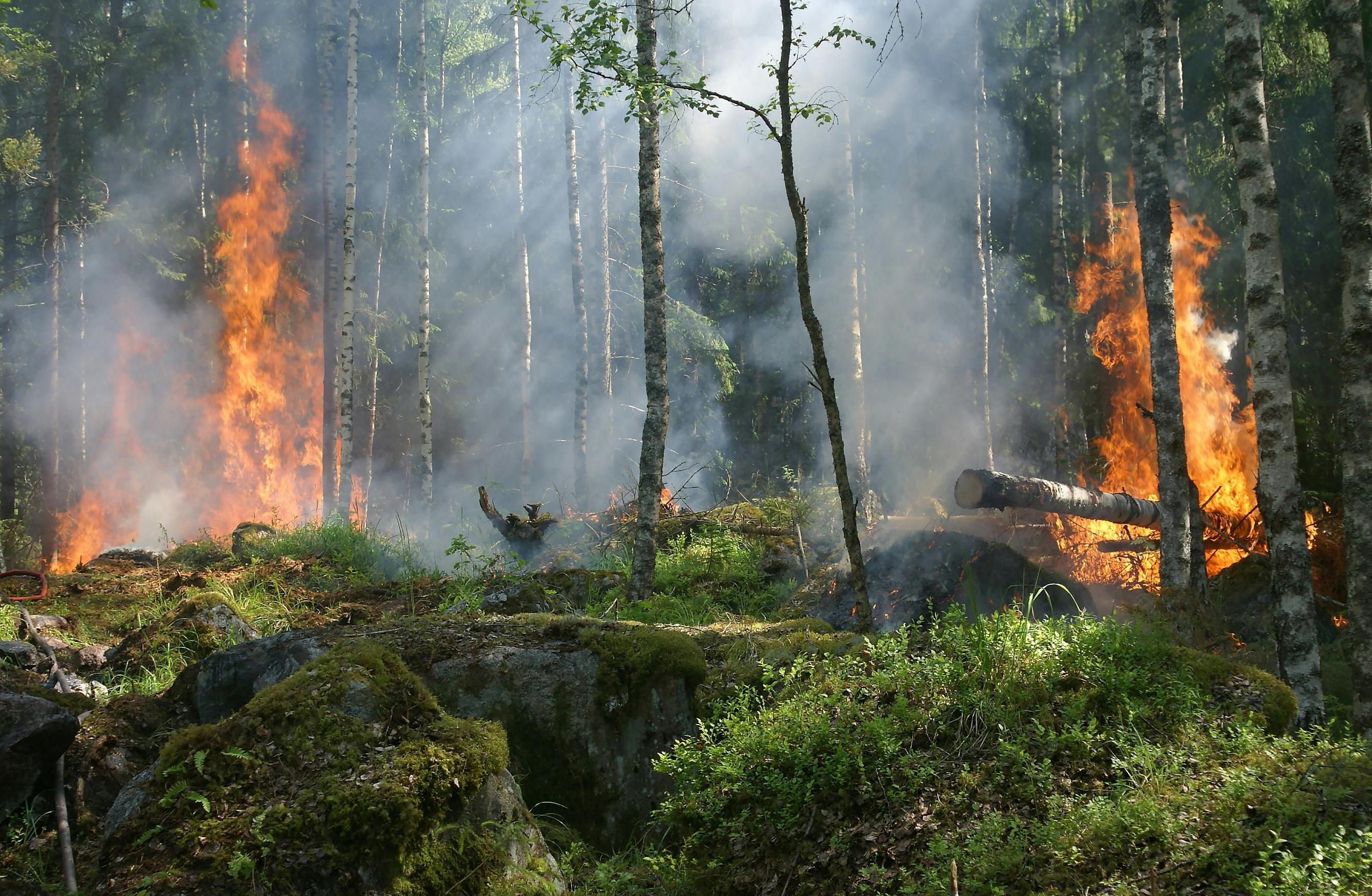
[Jakarta, 13 May 2020] The forest and land fires that swept across Indonesia in 2019 were the second worst since 2015, burning 1.6 million hectares of forest and land and causing losses estimated at IDR 75 trillion.
Yayasan Madani Berkelanjutan revealed five key findings related to the 2019 forest and land fires and early warnings for 2020. First, South Sumatra and Central Kalimantan recorded the largest burned areas in 2019, and both provinces are priority areas for peatland restoration. Second, 44 percent of the 2019 fires occurred in peatland ecosystems, which are difficult to extinguish, with the majority located in protected peat ecosystems. Third, more than 1 million hectares, or 63 percent, of the burned area in 2019 consisted of areas that burned for the first time that year and were closely linked to the presence of permits—particularly oil palm plantations and industrial timber plantations (HTI). Fourth, the largest burned areas in 2019 occurred on non-forest land cover, underscoring that protecting forests is key to fire prevention. Fifth, five provinces require special attention—Central Kalimantan, West Kalimantan, Papua, East Kalimantan, and South Sumatra—as they are projected to have the largest fire-prone areas in 2020.
These findings were presented by Fadli Naufal, GIS Specialist at Yayasan Madani Berkelanjutan, during the online discussion “Examining the 2019 Forest and Land Fires and Potential Fire-Prone Areas in 2020,” held on 13 May 2020.
Fires occurring within the PIPPIB (Indicative Map for the Suspension of New Permits) and PIAPS (Indicative Map for Social Forestry Areas) were also closely linked to the presence and proximity of oil palm and HTI concessions. As much as 51.82 percent of fires within PIPPIB areas were located near or overlapping with these concessions, while the figure reached 57.46 percent in PIAPS areas.
The majority of fires in Production Forests (58.97 percent) also occurred in areas overlapping with or burdened by large-scale permits, including oil palm plantations, HTI, and logging concessions (IUPHHK-HA), with the largest burned area occurring within HTI concessions (51.57 percent). Among these permit types, the largest burned area in 2019 occurred in oil palm concessions (217,497 hectares), followed by HTI concessions (190,831 hectares) and IUPHHK-HA areas (30,813 hectares).
“Given the central role of plantation and forest management permits in the 2019 fires, oversight of fire prevention and control facilities and infrastructure in concession areas must be strengthened, along with law enforcement against permit holders whose concessions experienced fires,” said Muhammad Teguh Surya, Executive Director of Yayasan Madani Berkelanjutan.
“The continuation of deliberations on the Job Creation Bill would pose a serious risk of increasing regional vulnerability to forest and land fires,” Teguh added.
Beyond permitting issues, peatland ecosystems also played a significant role in the 2019 fires. Forty-four percent of fires in 2019—covering 727,972 hectares—occurred in peatland ecosystems. Alarmingly, the majority (54.71 percent) took place in protected peatland ecosystems (FLEG).
“Peatland ecosystems located within and around concession areas—particularly oil palm plantations and industrial timber plantations—require special attention because they played a crucial role in the 2019 fires. Fires in peatlands are extremely dangerous, as they are difficult to extinguish, generate far greater carbon pollution, and produce highly toxic haze that poses serious risks to public health,” Teguh added.
Given the critical role of peatland ecosystems in preventing forest and land fires, peatland restoration must be a core strategy for both the government and permit holders in preventing fires in 2020. Law enforcement against concession holders who continue to drain peatlands and fail to carry out peatland restoration must be intensified. Regulations that weaken peatland ecosystem protection—such as Minister of Environment and Forestry Regulation No. 10/2019 and Regulation No. 62/2019—should be revoked immediately.
Contacts:
Muhammad Teguh Surya
Executive Director, Yayasan Madani Berkelanjutan
Phone: +62 819 1519 1979
Email: teguh@madaniberkelanjutan.idFadli Ahmad Naufal
GIS Specialist, Yayasan Madani Berkelanjutan
Phone: +62 813 1916 1932
Email: fadli@madaniberkelanjutan.idLuluk Uliyah
Senior Communication Officer, Yayasan Madani Berkelanjutan
Phone: +62 815 1986 8887