[Jakarta, 6 May 2020] Community welfare and food security must be built on a diverse range of commodities, with a balanced emphasis on plantation crops and food agriculture. Relying solely on palm oil as the dominant commodity poses serious risks to both food security and community welfare at the regional level. This was stated by Muhammad Teguh Surya, Executive Director of Yayasan Madani Berkelanjutan, during the online discussion “Welfare and the Harvest of Disasters in Riau, a Palm Oil Hub Province,” organized by Yayasan Madani Berkelanjutan on 6 May 2020.
Although Riau Province has the largest oil palm plantation area in Indonesia—covering approximately 3.4 million hectares—this sector has proven unable to deliver optimal benefits for community welfare or for smallholder palm oil farmers in the province. As of 2018, seven districts in Riau recorded the largest oil palm plantation areas: Kampar (430,000 hectares), Rokan Hulu (410,000 hectares), Siak (347,000 hectares), Pelalawan (325,000 hectares), Rokan Hilir (282,000 hectares), Indragiri Hilir (227,000 hectares), and Bengkalis (186,000 hectares).
“Madani’s study shows that among the seven districts with significant oil palm plantation areas, six districts—Indragiri Hulu, Bengkalis, Pelalawan, Rokan Hulu, Kampar, and Rokan Hilir—have low levels of community welfare. Meanwhile, four districts (Bengkalis, Rokan Hulu, Indragiri Hulu, and Kampar) are experiencing food insecurity,” said Intan Elvira, Junior Researcher at Yayasan Madani Berkelanjutan.
From an ecological perspective, Madani’s analysis also reveals a strong correlation between forest cover loss and ecological disasters in Riau. “Forest loss in Riau during the 2010–2013 period triggered ecological disasters two to three years later. Between 2017 and 2019, Riau ‘reaped’ disasters resulting from forest loss that occurred during 2011–2015. Forest degradation in Riau not only damages ecosystems but also harms communities, as 194 villages and urban wards depend on forest areas for their livelihoods,” Intan added.
Between 2010 and 2018, Riau lost a total of 1.7 million hectares of forest cover—equivalent to an average loss of 190,000 hectares per year. Pelalawan District ranked first in terms of forest cover loss, with 316,000 hectares lost—equivalent to five times the size of Singapore—followed by Rokan Hilir (220,000 hectares), Indragiri Hilir (212,000 hectares), Bengkalis (184,000 hectares), and Indragiri Hulu (163,000 hectares).
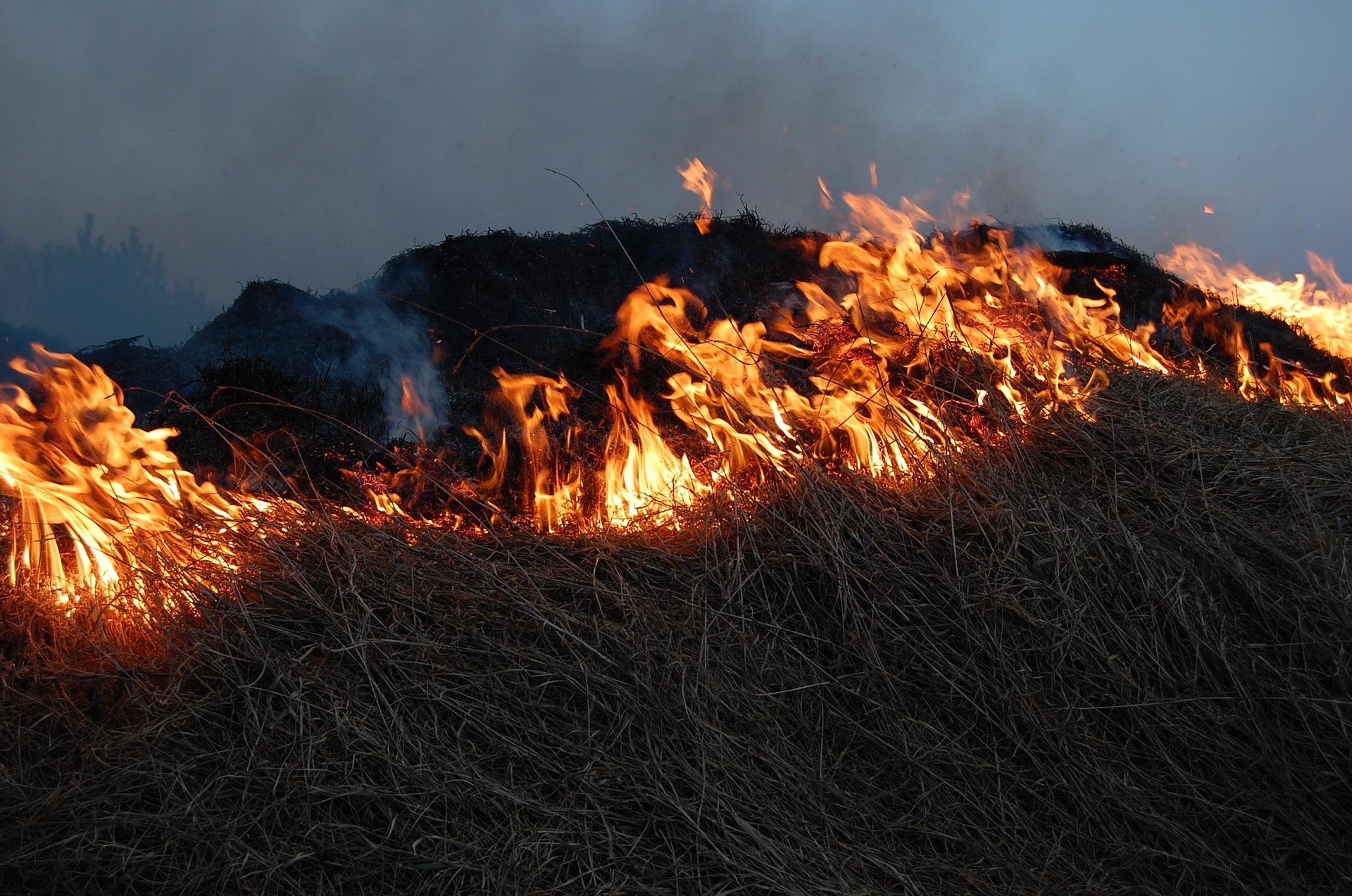
The threat of ecological disasters is particularly severe for villages located near oil palm plantations, especially droughts and fires. “Out of 573 villages located around oil palm plantations in six districts—Indragiri Hilir, Kampar, Rokan Hulu, Siak, Pelalawan, and Rokan Hilir—82 percent (471 villages) are identified as vulnerable to ecological disasters. Five of these six districts—Pelalawan, Rokan Hulu, Rokan Hilir, Indragiri Hilir, and Siak—face dominant risks from forest and land fires, while Kampar is primarily vulnerable to drought. Disaster risk levels in villages surrounding oil palm plantations are extremely high; however, only 15 percent of these villages possess adequate disaster management capacity,” Intan explained.
Forest fires pose particularly severe economic threats. In 2019 alone, potential losses from peatland fires in oil palm plantation areas in Riau reached an estimated IDR 1.5 trillion in carbon-related losses, even before accounting for the time required for peat ecosystems to recover.
The implementation of the palm oil moratorium policy can serve as a foundation for local governments to improve farmer welfare by enhancing productivity, access to capital, land legality, and the sustainability of smallholder palm oil farming—thereby strengthening competitiveness and reducing the risk of smallholders being excluded from formal markets.
Meanwhile, to address the limited disaster management capacity in villages surrounding oil palm plantations, local governments must prioritize collaboration with multiple stakeholders through village fund allocation schemes and by integrating corporate social and environmental responsibility (CSER/TJSL) programs.
Finally, ecological fiscal transfer mechanisms from the Ministry of Finance—through the Ecological-Based Provincial Budget Transfer (TAPE) and Ecological-Based District Budget Transfer (TAKE) frameworks—present an opportunity for local governments to secure fair financial incentives and benefits for safeguarding forests and peatland hydrology.
Contacts:
M. Teguh Surya
Executive Director, Yayasan Madani Berkelanjutan
Phone: +62 812 9480 1453Intan Elvira
Junior Researcher, Yayasan Madani Berkelanjutan
Phone: +62 812 2838 6143Luluk Uliyah
Senior Media Communication, Yayasan Madani Berkelanjutan
Phone: +62 815 1986 8887