Dokumen Indonesia:
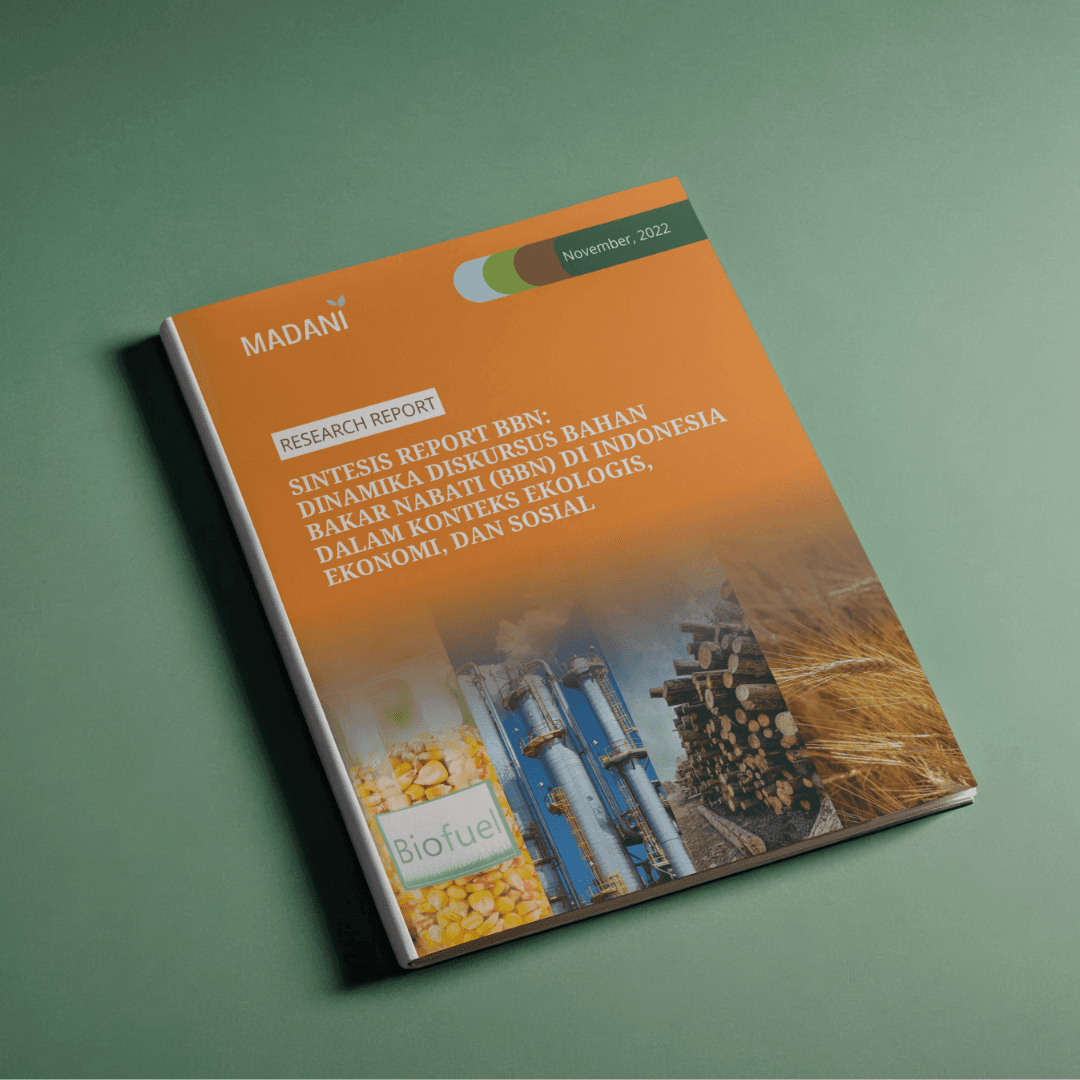
Laporan Sintesis Bahan Bakar Nabati (BBN): Dinamika Wacana Bahan Bakar Nabati di Indonesia dalam Konteks Ekologis, Ekonomi, dan Sosial
Kebijakan bahan bakar nabati (BBN) Indonesia awalnya dirancang sebagai strategi multi-komoditas namun kemudian bergeser didominasi oleh biodiesel berbasis minyak sawit (CPO). Pergeseran ini didorong oleh upaya untuk mengurangi ketergantungan pada bahan bakar fosil, mencapai kedaulatan energi, dan menyerap surplus CPO nasional. Akibatnya, arah kebijakan lebih terfokus pada rekayasa pasar minyak sawit daripada diversifikasi energi.
Pengembangan bahan bakar nabati berbasis minyak sawit menghadapi tantangan ekologis, ekonomi, dan sosial yang serius. Secara ekologis, produksi hulu terutama deforestasi dan konversi lahan gambut menghasilkan emisi yang signifikan meskipun emisi gas buang kendaraan lebih rendah. Secara ekonomi dan sosial, kebijakan ini sangat bergantung pada subsidi, belum secara signifikan meningkatkan pendapatan daerah atau kesejahteraan petani swadaya, dan masih menyisakan kesenjangan ketertelusuran rantai pasok yang berisiko melanggar hak asasi manusia.
Pemerintah perlu memperbarui peta jalan bahan bakar nabati nasional, yang belum direvisi sejak tahun 2006, guna memperjelas arah dan meningkatkan tata kelola. Diversifikasi bahan baku di luar minyak sawit harus menjadi prioritas utama untuk meningkatkan keberlanjutan dan ketahanan energi. Alternatif yang menjanjikan meliputi sumber berbasis limbah seperti minyak jelantah, jerami padi, dan ampas tebu, serta tanaman non-pangan seperti nyamplung, malapari, dan kemiri sunan.