Dokumen Indonesia:
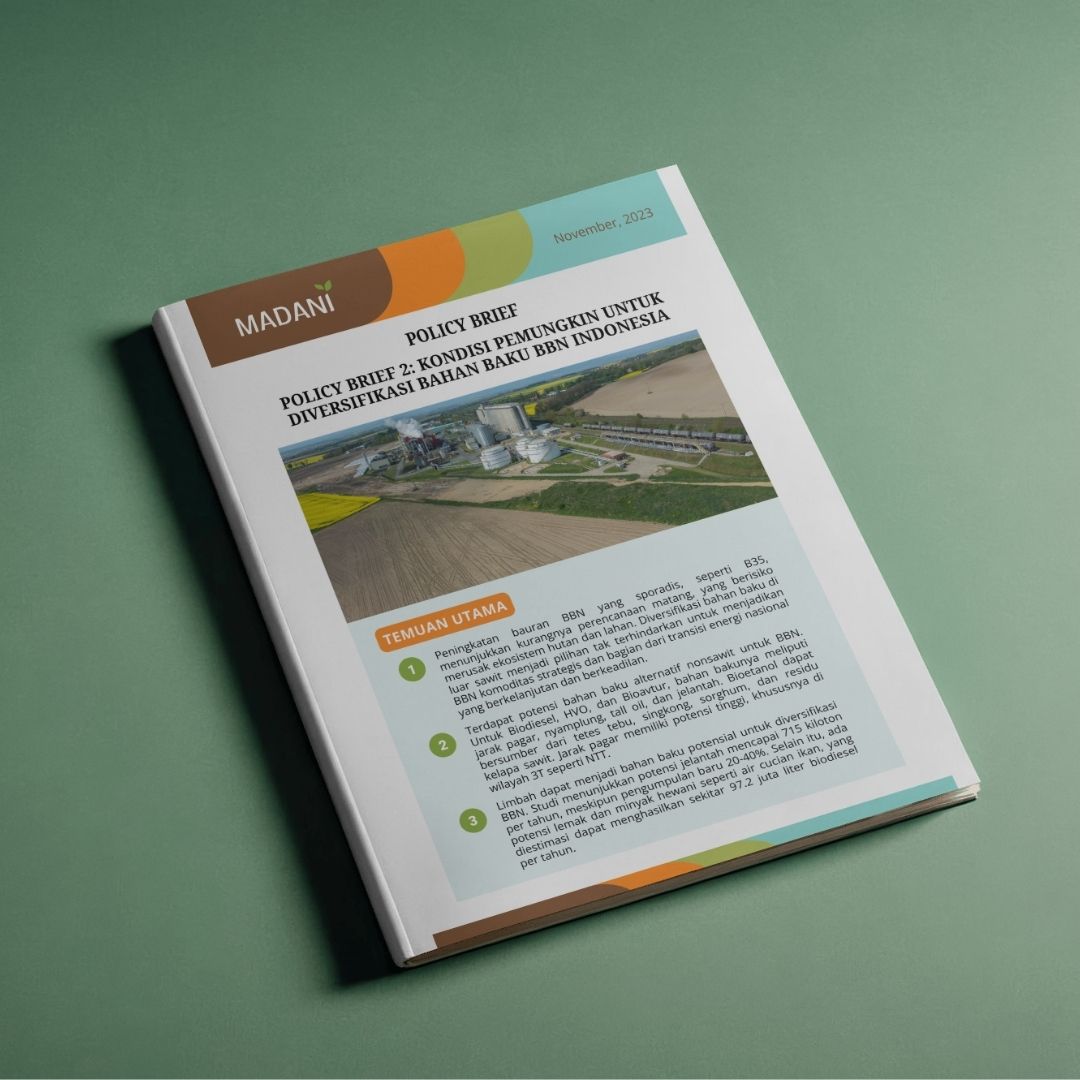
Kondisi Pemungkin untuk Diversifikasi Bahan Baku Bahan Bakar Nabati (BBN) di Indonesia
Peningkatan mandat pencampuran bahan bakar nabati secara sporadis, seperti B35, mencerminkan kurangnya perencanaan yang matang, yang berisiko merusak ekosistem hutan dan lahan. Diversifikasi bahan baku di luar minyak sawit merupakan langkah yang tidak dapat dihindari untuk memposisikan bahan bakar nabati sebagai komoditas strategis dan sebagai bagian dari transisi energi nasional yang adil dan berkelanjutan.
Terdapat potensi signifikan pada bahan baku non-sawit untuk bahan bakar nabati. Untuk biodiesel, HVO, dan bioavtur, bahan baku yang potensial meliputi jarak pagar, nyamplung (Calophyllum inophyllum), tall oil, dan minyak jelantah. Bioetanol dapat diproduksi dari tetes tebu (molase), singkong, sorgum, dan limbah kelapa sawit. Jarak pagar memiliki potensi yang sangat tinggi, terutama di wilayah 3T di Indonesia seperti Nusa Tenggara Timur (NTT).
Limbah juga merupakan bahan baku yang menjanjikan untuk diversifikasi bahan bakar nabati. Penelitian menunjukkan bahwa potensi pasokan minyak jelantah mencapai sekitar 715 kiloton per tahun, meskipun tingkat pengumpulan saat ini baru sekitar 20-40%. Selain itu, lemak dan minyak hewani, seperti air limbah pengolahan ikan, diperkirakan berpotensi memproduksi sekitar 97,2 juta liter biodiesel per tahun.