Dokumen Indonesia:
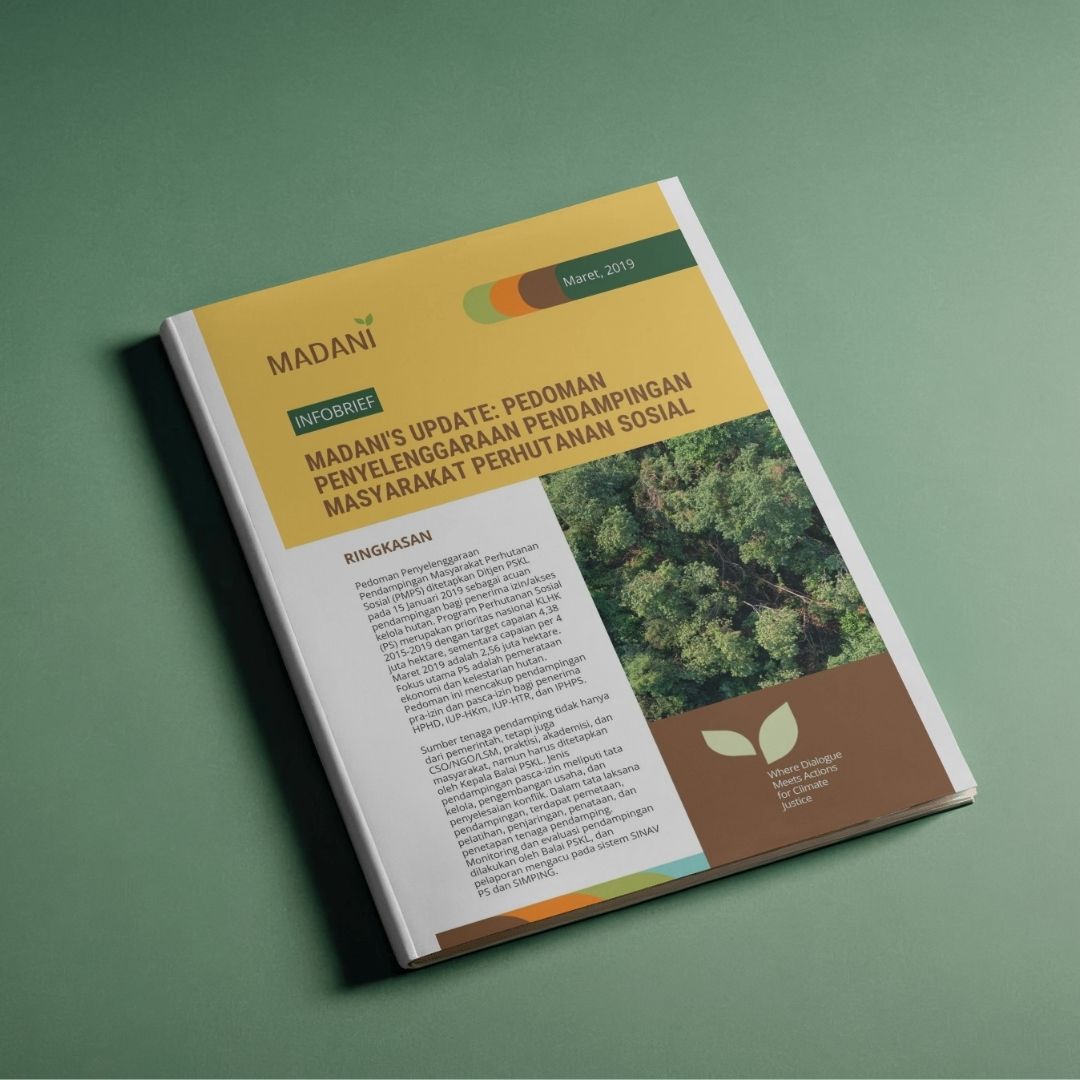
Pedoman Pelaksanaan Pendampingan Masyarakat Perhutanan Sosial
Program Perhutanan Sosial (PS) merupakan prioritas nasional Kementerian Lingkungan Hidup dan Kehutanan (KLHK) tahun 2015-2019 dengan target 4,38 juta hektar, namun hingga 4 Maret 2019 baru terealisasi sebesar 2,56 juta hektar, menyisakan target sebesar 1,82 juta hektar dalam waktu sembilan bulan. Panduan Pendampingan Masyarakat Perhutanan Sosial (PMPS) ditetapkan pada tanggal 15 Januari 2019 sebagai acuan bagi semua pihak dalam mendampingi masyarakat penerima izin/akses kelola hutan. Pendampingan ini meliputi aspek kelola kelembagaan, kelola usaha, dan kelola konflik, dengan sumber daya pendamping yang tidak hanya berasal dari pemerintah tetapi juga dari LSM, praktisi, akademisi, dan masyarakat, yang semuanya harus ditetapkan melalui Surat Keputusan (SK) Kepala Balai PSKL.
Sinergi dan kolaborasi multipihak sangat didorong dalam panduan ini, yang melibatkan sepuluh aktor termasuk LSM dan sektor usaha, berdasarkan empat prinsip dasar: kesetaraan, pemberdayaan, sinergi, dan keberlanjutan. Kerja sama dapat dilakukan dalam empat bidang: peningkatan kapasitas pendamping, pengembangan usaha, pengadaan sarana dan prasarana, serta manajemen pengetahuan. Prosedur pelaksanaan pendampingan meliputi pemetaan, pelatihan, seleksi, penataan dan penunjukan pendamping, pembiayaan, pemantauan, serta pelaporan, di mana pendamping yang ditunjuk dapat melaporkan informasi termasuk konflik tenurial melalui aplikasi SIMPING.