Dokumen Indonesia:
Perkembangan NDC di Sektor Kehutanan Indonesia
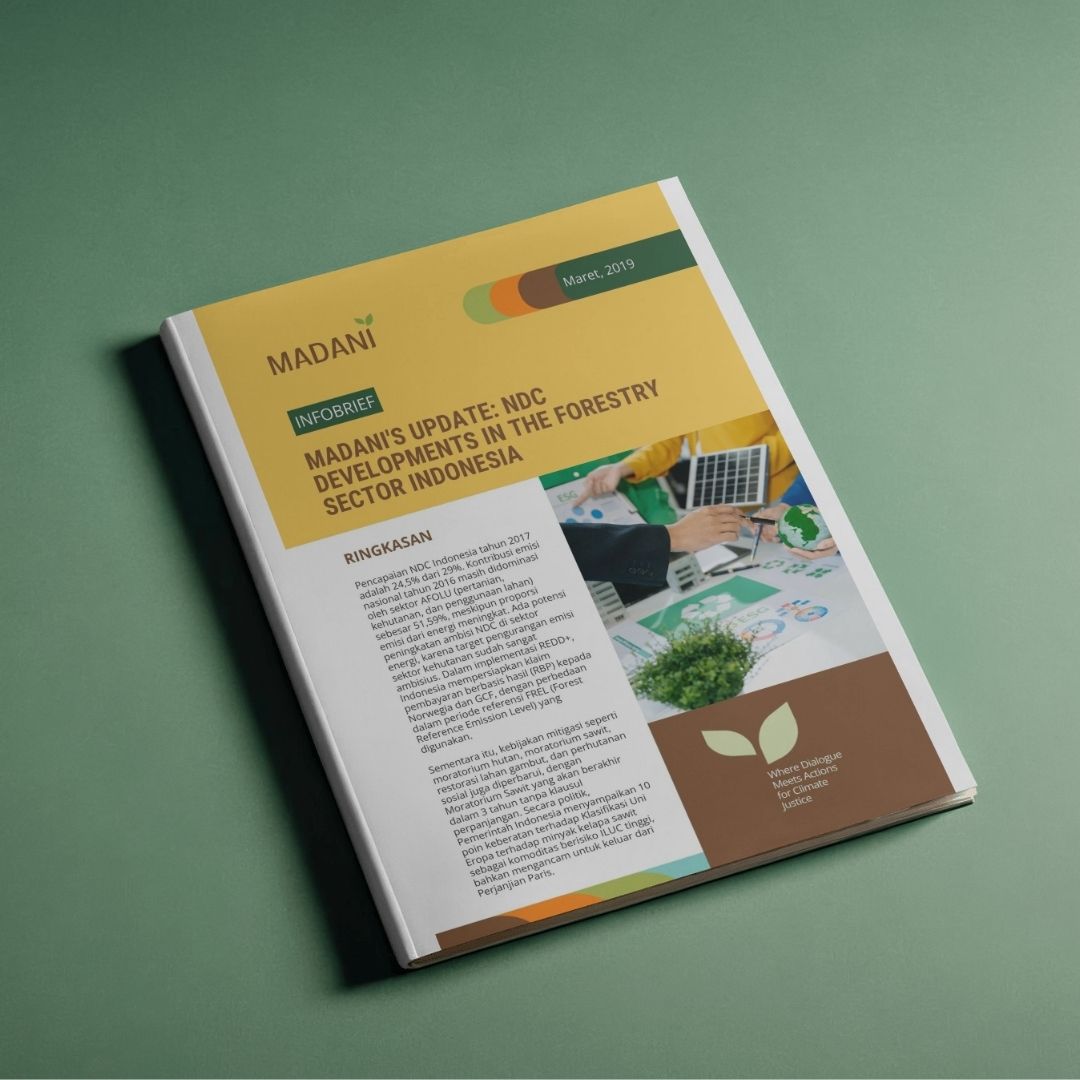
Pencapaian NDC Indonesia pada tahun 2017 mencapai 24,5% dari target 29%. Emisi nasional pada tahun 2016 masih didominasi oleh sektor AFOLU (pertanian, kehutanan, dan penggunaan lahan lainnya), yang menyumbang 51,59%, meskipun pangsa emisi dari sektor energi terus meningkat. Terdapat potensi untuk meningkatkan ambisi NDC di sektor energi, karena target penurunan emisi di sektor kehutanan sudah sangat ambisius. Dalam implementasi REDD+, Indonesia telah mempersiapkan klaim pembayaran berbasis hasil (RBP) kepada Norwegia dan Green Climate Fund (GCF), dengan perbedaan dalam periode referensi Tingkat Emisi Rujukan Hutan (FREL) yang digunakan.
Sementara itu, kebijakan mitigasi seperti moratorium hutan, moratorium kelapa sawit, restorasi lahan gambut, dan perhutanan sosial juga telah diperbarui, di mana moratorium kelapa sawit akan berakhir dalam tiga tahun tanpa klausul perpanjangan. Secara politik, Pemerintah Indonesia telah menyampaikan sepuluh poin keberatan terhadap klasifikasi kelapa sawit oleh Uni Eropa sebagai komoditas berisiko ILUC tinggi, bahkan mengancam akan keluar dari Perjanjian Paris.