The figure of 99.83% sounds nearly perfect. That is Indonesia's national electrification ratio as of the first semester of 2025, according to data from the Ministry of Energy and Mineral Resources (ESDM). However, national figures often conceal the reality behind them.
In West Papua, the electrification ratio has only reached 89.80%. In East Nusa Tenggara, it stands at 89.22%. And behind these percentages, there are 658,000 families living entirely without electricity. There are another 1.17 million households relying on diesel generators: noisy, expensive, and dirty.
This article breaks down the data behind energy inequality in Indonesia and explains why the solution is not just giant power plants in Jakarta, but small-scale plants built and managed by the villagers themselves. If you are not yet familiar with the concept of community-based energy transition, read the full introduction first.
Article #1: /transisi-energi-berbasis-komunitas-indonesia
A Portrait of Inequality: Figures That Must Not Be Ignored
Indonesia already has an electricity surplus. The national installed capacity exceeds demand, especially in Java-Bali. However, this surplus is unevenly distributed. On many small islands and in remote inland areas, residents still rely on diesel power plants (PLTD), whose fuel must be transported across the sea or through muddy roads.
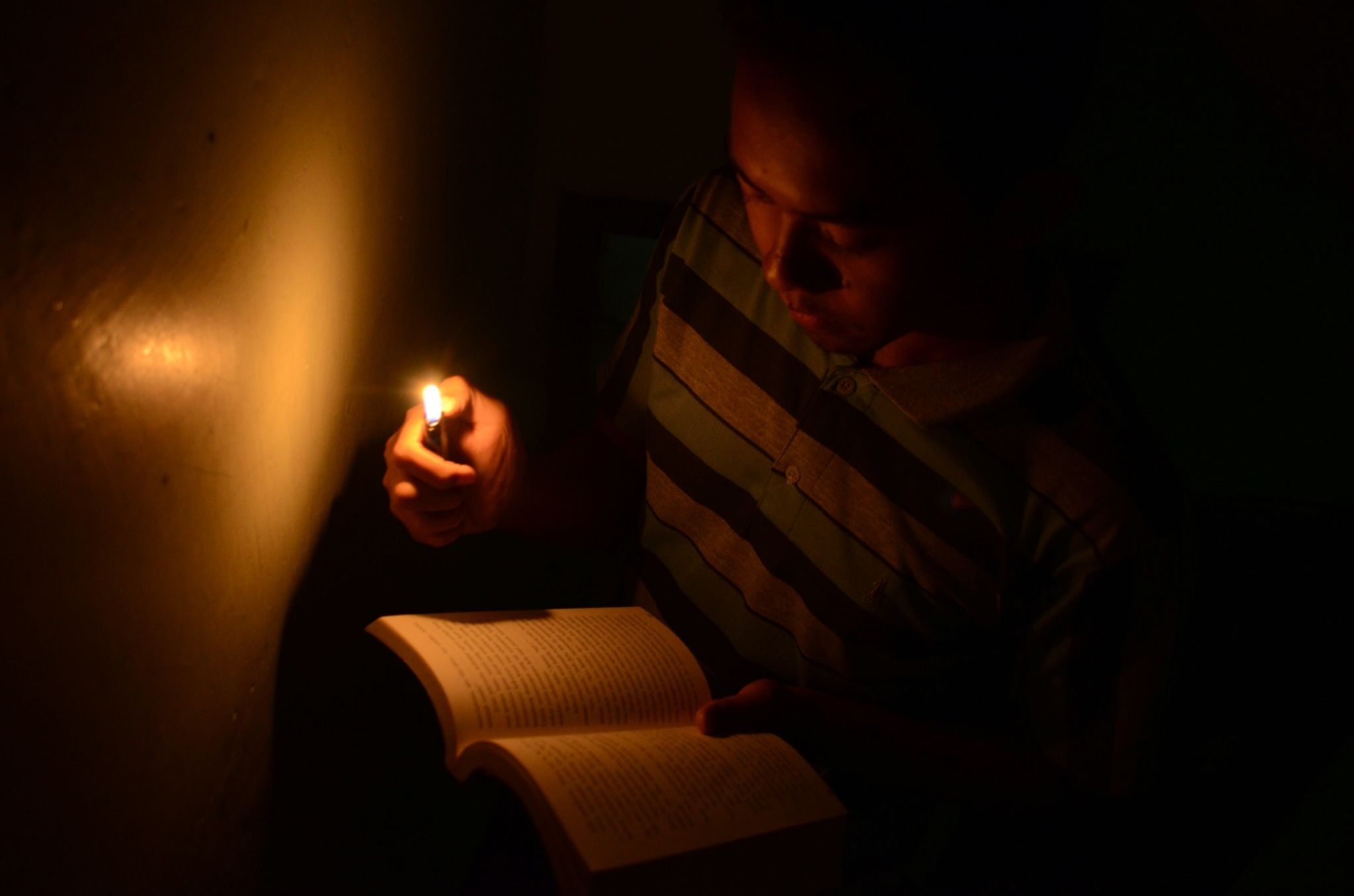
Photo: Dok. Nuril Ahsan
CELIOS data (2026) shows that most of the 658,000 families without electricity are concentrated in Eastern Indonesia, particularly in Highland Papua and Central Papua. Meanwhile, another 1.17 million households using non-PLN sources, in many cases, rely on expensive, inefficient, and high-emission diesel generators.
Regional Electrification Ratio Comparison (First Semester 2025)
Region | Electrification Ratio | Notes |
National | 99.83% | Nearly complete, but... |
North Sulawesi | 99.40% | 11-12 villages not yet electrified |
Central Sulawesi | 98.95% | Electrified village ratio at 95.64% |
West Papua | 89.80% | Priority for the Rural Electrification (Lisdes) program |
NTT (East Nusa Tenggara) | 89.22% | Sumba Iconic Island serves as a pilot |
Highland Papua | Lowest | Granular data needs to be confirmed |
Source: Ministry of Energy and Mineral Resources (ESDM) and Antara News, Oct 2025.
High Prices Mean Darkness: The Economic Burden of Diesel Dependency
For residents in 3T (frontier, outermost, and remote) regions, the issue is not just about whether electricity is available or not. It is also about how much they have to pay for it. The cost of generating electricity from diesel power plants (PLTD) has risen sharply in recent years. In 2020, the cost was recorded at IDR 4,746 per kWh. By 2023, that figure surged to IDR 8,748 per kWh. In archipelagic regions like Maluku, the cost of diesel electricity can even reach 40 to 50 US cents per kWh, while the average electricity price in Java is only 3 to 4 cents per kWh. This difference can be up to tenfold.
This price disparity has direct consequences. Remote villagers, whose incomes are already low, end up paying the most for electricity. Many are forced to limit their electricity use to just lighting for a few hours at night. Productive economic activities, children's education at night, and healthcare services that require refrigeration or medical equipment are all severely hindered.
According to the Minister of Energy and Mineral Resources, Bahlil Lahadalia, in October 2025, the future of the nation must not be left without proper facilities. Fishermen must be able to preserve their catch and sell it at a good price. Children must be able to attend school with adequate lighting.
Five Times Cheaper: Energy Cost Comparison Data
The good news: the solution is already available, and it makes far more economic sense. The price of electricity from solar PV combined with batteries is now in the range of 8 to 10 US cents per kWh. Without batteries, the price can even go as low as 4 cents per kWh. Compare this with diesel power plants (PLTD) in remote areas, which can reach 29 to 65 cents per kWh.
For micro-hydro, the contrast is even sharper. In several villages that manage micro-hydro power plants (PLTMH), the electricity cost is only IDR 300 to IDR 500 per kWh, while diesel can surpass IDR 2,000 per kWh. In Sumber Rejo Village, Lumajang, residents using PLTMH pay a monthly fee of IDR 25,000 to IDR 40,000 for 450 watts of power. This is an amount that is hard to match using diesel generators.
Electricity Cost Comparison: Diesel vs Community Renewable Energy
Source | Cost per kWh | Price Trend | Notes |
PLTD (Diesel) | IDR 4,746 - 8,748 | Continuously rising | Dependent on imported fuel |
Archipelagic PLTD | 40 - 65 US cents | Fluctuating | Maluku, NTT, Papua |
Solar PV + Battery | 8 - 10 US cents | Decreasing | Competitive and stable |
Solar PV without Battery | ~4 US cents | Decreasing | For daytime use |
Community Micro-Hydro (PLTMH) | IDR 300 - 500 | Stable | No fuel costs |
Community Biogas | ~4.5 US cents | Stable | Livestock/agricultural waste |
Source: ScienceDirect/Heliyon 2024.
Key Figures: Savings Potential from Converting Diesel to Renewable Energy
IDR 64 trillion per year can be saved if all PLTD are converted to solar PV (IEEFA, 2026).
IDR 18,636 trillion potential cumulative economic impact from community-based renewable energy over 25 years (CELIOS & 350.org).
16 million people could potentially be lifted out of poverty through access to community energy (CELIOS & 350.org).
13 GW of PLTD capacity can be converted to solar PV as the initial phase of the 100 GW program (ESDM/IEEFA).
Evidence from Villages: When Community Electricity Drives the Economy
The figures above are not mere projections. In many villages, the economic impact of renewable energy for communities is already tangible.
Muara Enggelam, Kutai Kartanegara (East Kalimantan)
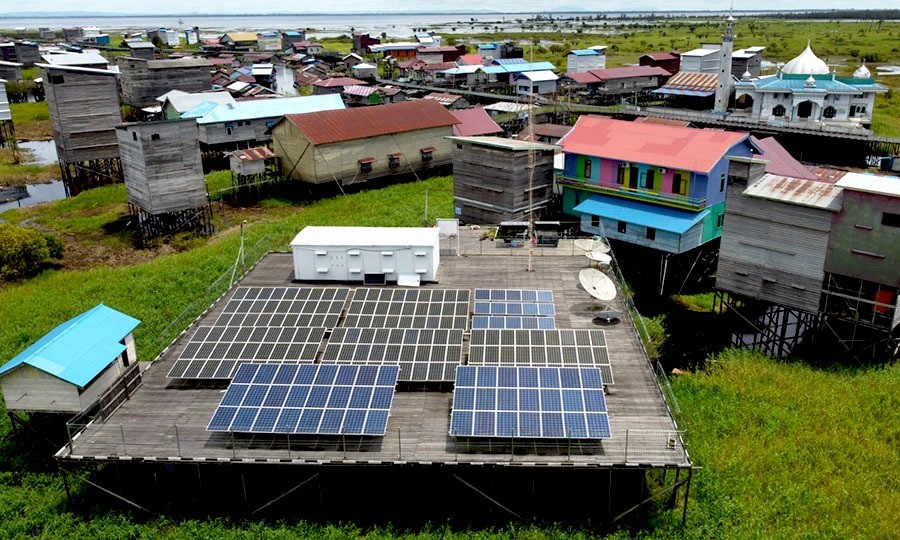
The Muara Enggelam Communal Solar PV Panels, managed through the Village-Owned Enterprise [BUMDes] Bersinar Desaku. Photo: Yovanda/Mongabay Indonesia
Since 2015, 150 solar panels with a capacity of 35 kWp have provided electricity to 160 homes in this village. Management is carried out by the BUMDes. In 2020, the capacity was increased by the residents themselves to 45 kWp after they mastered the skills to repair damaged panels. Each house pays IDR 100,000 per month for 24-hour electricity access.
Kampung Mao Kelim, Papua
After electricity entered through the community solar PV system, women in Mao Kelim could step up the production of noken (traditional Papuan bags) at night. Children started studying after sunset. Micro-businesses grew from something previously impossible: lighting.
Seloliman, Mojokerto (East Java)
The Kali Maron Micro-Hydro Power Plant (PLTMH) has been operating since 1994. Residents running wood processing businesses only need to pay IDR 12,000 for 35 days of electricity use. Compare this with the cost of diesel for wood milling or sawing, which can consume tens of thousands of rupiah per day. In addition, 80% of the electricity generated is sold to PLN, becoming a source of collective income through the Kalimaron Association (Paguyuban Kalimaron).
Sumba Iconic Island (NTT)
This program, initiated by the Ministry of Energy and Mineral Resources (ESDM), Bappenas, and Hivos since 2010, has provided electricity access to 4,158 households, with an investment of more than IDR 135 billion in renewable energy. Sumba's electrification ratio rose from 24.5% (2010) to over 50% (2018), with the contribution of renewable energy reaching 55%. In villages supplied with solar electricity, farmers can now harvest vegetables during the dry season thanks to solar-powered irrigation.
If It Is Already Proven, Why Has It Not Happened on a Mass Scale?
This is a fair question. If community energy is cheaper, cleaner, and already proven in the field, why is the scale still small? There are several interlocking factors.
Centralized energy planning
Indonesia's electricity planning system is still heavily dependent on PLN's RUPTL. Energy initiatives born from the bottom up from villages and communities do not yet have adequate regulatory space. In some areas like Silit Hamlet (Dusun Silit) in West Kalimantan, residents are even worried that the PLTMH they have built will go to waste when the PLN grid arrives.
Article #1, challenges section and Silit Hamlet
Limited access to financing
Renewable energy investment in Eastern Indonesia is estimated to require IDR 1,682 trillion. A large figure, but it must be seen in context: the government already spends a very high amount on diesel power plant (PLTD) subsidies every year. The problem is that financing instruments for community-scale projects (as opposed to corporate-scale) are still very minimal. Banks are not yet accustomed to funding energy cooperatives or BUMDes.
Post-construction technical capacity
Many village renewable energy projects are successfully built but then stall because residents lack the skills to maintain the equipment. In Sumba, damaged solar PV systems are difficult to repair because there are no local technicians and no reserve funds for repairs. The success of Muara Enggelam (a BUMDes that can repair its own panels) remains an exception, not the norm.
Energy politics have not shifted
Indonesia submitted its Second Nationally Determined Contribution (SNDC) in October 2025, reaffirming its 2060 net-zero target. However, on the other hand, the cancellation of the early retirement plan for the Cirebon-1 coal-fired power plant (PLTU) in late 2025 shows that institutional and political barriers remain strong. The JETP program was also affected by the US withdrawal in early 2025.
What Must Change: Five Concrete Steps
A community-based energy transition will not grow on its own. Deliberate policy shifts and changes in approach are required.
First, shift planning logic. The 100% electrification target for 2029–2030 launched by President Prabowo will only be achieved if planning is not just top-down through PLN. The 2025–2029 Rural Electrification Program (Lisdes), which targets over 10,000 locations and 1.28 million new customers, is a good start, but it needs to ensure there is room for community ownership, rather than just infrastructure installation.
Second, create financing instruments for the community scale. Green sukuk, village energy mutual funds, or crowdfunding schemes can serve as bridges. Banks and venture capital institutions need incentives to fund projects whose value might only be hundreds of millions of rupiah, not trillions.
Third, build local capacity before and after construction. Every community renewable energy project must be accompanied by technical training programs and governance mentoring. The Paguyuban Kalimaron model (Seloliman) or the Solar PV BUMDes (Muara Enggelam) can serve as templates to be replicated.
Fourth, protect community energy infrastructure from regulation. There needs to be a legal mechanism to ensure that PLTMH or solar PV systems built by residents are not sidelined when PLN enters the area. This could be done through community feed-in tariff schemes or power purchase agreements that protect small producers.
Fifth, involve civil society organizations as facilitators. IBEKA has already proven this by building over 80 micro-hydro power plants (PLTMH) across Indonesia. MADANI Berkelanjutan, through its Community-Based Energy Transition program, acts as a bridge for dialogue between communities, local governments, and the private sector to ensure an inclusive and just energy transition.
Frequently Asked Questions
How much does it cost to build a micro-hydro power plant (PLTMH) for one village?
It depends on the capacity and field conditions. For a 20–30 kW scale that can electrify 30–55 households, construction costs range from IDR 300 million to IDR 500 million. This figure will continue to drop with technological advancements and community experience. Once built, operational costs are very low as there are no fuel costs.
Is community energy reliable enough to meet 24-hour needs?
Yes, depending on the model. PLTMH can operate 24 hours a day as long as the water flow is stable. Solar PV requires batteries for nighttime use, but the solar PV+battery combination has been proven in Muara Enggelam and villages across Sumba. For biogas, as long as the supply of organic waste is available (from livestock or agriculture), production can proceed sustainably.
What is the role of local government?
Local governments can include community energy targets in the RPJMD (Regional Medium-Term Development Plan), facilitate permits, provide land, and connect communities with financing programs. Several regencies in NTT have already done this through the Sumba Iconic Island program.
Article #1 for full explanation
What is the relationship between community energy and forest protection?
When villages have access to clean energy, the pressure on forests for firewood decreases. Biogas replaces firewood. PLTMH encourages residents to preserve the forest as a water source buffer. In Seloliman, residents actively protect the forest of Mount Penanggungan because they realize that Kali Maron (their source of electricity) depends on the preservation of the forest upstream.
658 thousand families. This is not an abstract number. Those are our neighbors, our relatives, children studying under oil lamps. The solution is already proven: cheaper, cleaner, fairer. What is lacking is the political will to shift the paradigm from large, centralized projects to empowering community initiatives.
Start from here: identify the energy potential in your village, speak with the local BUMDes or cooperative, and connect with assisting organizations. Explore MADANI’s Community-Based Energy Transition program or subscribe to the MADANI Newsletter to follow energy data and policy developments in Indonesia.
Reference List
MADANI Berkelanjutan (2022). Dynamics of the Biofuel Discourse in Indonesia in Ecological, Economic, and Social Contexts (Synthesis Report).
MADANI Berkelanjutan & Mongabay Indonesia (2022). Achieving the Hope of Indonesian Biofuels: A Collection of Journalistic Narrative Essays.
MADANI Berkelanjutan (2023). Biofuel Diversification Policy Brief Series, Series 1–3 (Alternative Perspectives on Indonesian Biofuels; Enabling Conditions for Diversification; Development of Incentives for Diversification).
Madani, Sawit Watch, Coaction Indonesia & Traction Energy Asia. Promoting Sustainability Principles and Feedstock Diversification for Biofuels in the New and Renewable Energy Bill (Policy Brief).
MADANI Berkelanjutan. Energy, Forest Ecosystems, and Community Empowerment: Community-Based Bioenergy Development (Kapuas Hulu Study, West Kalimantan).
CELIOS & The Conversation (2026). Great Potential of Village Renewable Energy Wasted: 658 Thousand Families Live Without Electricity.
Ministry of Energy and Mineral Resources (October 2025). Freedom from Darkness Program: Bringing Light to Eastern Indonesia.
CELIOS & 350.org (2023). Opportunities and Challenges in Funding Community-Based Renewable Energy.
IEEFA (2026). Building Credibility in Indonesia's Energy Transition: Insights from ETM and JETP.
IEEFA via Kompas.com (April 2026). Converting PLTD to Solar PV Estimated to Save Electricity Costs Up to IDR 64 Trillion Per Year.
SustainReview.id (April 2025). Solar PV, a New Hope for Cheap and Clean Energy in Remote Areas.
Energika.id (October 2025). PLN Replaces Diesel with Solar PV, Lowering Eastern Electricity Prices.
TransisiEnergiBerkeadilan.id. 4 Success Stories of Energy Transition Revitalizing Village Activities.
Hivos (2024). Sumba Iconic Island Initiative.
Mongabay Indonesia (January 2020). Challenges of Renewable Energy Development on Sumba Island.
Antara News (November 2025). Fulfilling the Electrification Ratio in 3T Regions through the Utilization of Renewable Energy.
Antara News (October 2025). Government Accelerates 100% Electrification Ratio by 2029.
Puskep UI via Investor.id (October 2025). National Electrification Ratio Reaches 99.83%.
LIPI/IPB (2014). The Impact of Micro-Hydro Electricity on the Socio-Economic Life of the Community in Gunung Sawur Hamlet, Lumajang.
ScienceDirect/Heliyon (2024). Biomass Power Plant Prospects in Indonesia's Energy Transition.
Kompas.com (August 2020). The Story of Mojokerto Residents Enjoying Electricity from the River.