[Jakarta, September 7, 2020] Amid this multidimensional crisis, the General Elections Commission (KPU) should make greater efforts to encourage the public to elect regional head candidates with a clean record of corruption—including corruption related to natural resources—and candidates who are strongly committed to not being involved in money politics, such as rent-seeking practices and permit-selling practices before and after the regional elections. Furthermore, the KPU should openly and comprehensively publish the track records of the candidates.
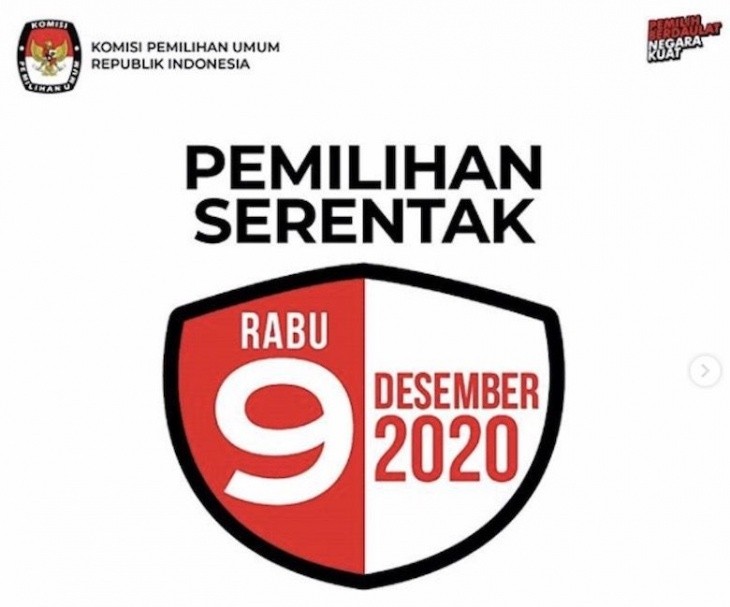
This was conveyed by Muhammad Teguh Surya, Executive Director of the Madani Berkelanjutan Foundation, in response to the grand contestation of the 2020 Simultaneous Regional Head Elections (Pilkada). The 2020 Simultaneous Regional Head Elections are currently entering a crucial stage, namely the registration of regional head candidates. The regional head candidate pairs will be determined on September 23, 2020.
" In this pandemic situation, regional elections must be a momentum to produce strong, pro-environment leaders. Especially strong in guiding the regions they lead through the current crisis and those that may arise in the future. Electing candidates with environmental awareness (read: carrying out the constitutional mandate) is a necessity at this time ," he stressed.
Undeniably, at this stage, the role of political parties and the General Elections Commission (KPU) in selecting and screening the best candidates is crucial and under scrutiny. The public expects political parties and the KPU to select the best individuals, who not only possess the capacity and capability to run the government, but also possess strong insight and commitment to environmental protection.
" It is time, amidst the multidimensional crisis of the Covid-19 pandemic, coupled with the economic and environmental crises that are looming, for political parties to play their recruitment role effectively ," Teguh said.
" The registration process for prospective regional head candidates from September 4-6 went smoothly, and we should commend it. However, in the midst of a crisis like the current one, regional elections must be a solution, not a burden. This solution, of course, begins with political parties choosing the best individuals who are ready to compete in the contest, enabling them to make the leap forward ," he added.
Teguh Surya also stated that this year's regional elections are very different from those in previous years. The pandemic has changed everything, and political parties must take this into account. " This year's regional elections must produce leaders with a grand vision for developing their regions during the recovery period, as well as strong insight and commitment to resolving the nearly unstoppable environmental problems ," he added.
Insight Analyst of the Sustainable Madani Foundation, Muhammad Arief Virgy, said that currently there has been quite worrying environmental damage, including the shrinking area of Indonesia's forest cover.
" We know very well that Indonesia's natural forests serve various functions, both ecological and economic. It would be truly regrettable if the forests were further eroded, meaning a brighter future would be further diminished ," Virgy said.
Virgy also revealed another fact: the increasing expansion of palm oil plantations is increasingly squeezing people's living space, leading to increased agrarian conflicts. Palm oil plantation expansion has also not been accompanied by improvements in regional prosperity, as reflected in the low Human Development Index and Village Development Index in several palm oil-producing regions.
Learning from the 2018 simultaneous regional elections, Madani's analysis shows that of the 17 provincial election winners, only three regional heads mentioned specific environmental issues they would address, while the rest simply mentioned environmental conservation issues without any specific programs. Even more concerning, almost none of the elected governors and deputy governors had a specific platform to accelerate the recognition of indigenous peoples' rights in their regions, including those with large indigenous populations.
Madani has written to the leaders of the eight major political parties competing in the 2020 regional elections, urging them to recommend environmentally conscious candidates: the Indonesian Democratic Party of Struggle (PDI-P), the Golkar Party, the Democratic Party, the Prosperous Justice Party (PKS), the Gerindra Party, the National Mandate Party (PAN), the Nasdem Party, and the National Awakening Party (PKB). The outcome is still uncertain, but the public spotlight is now on the General Elections Commission (KPU), which will verify the candidates.
Editor's Note:
MADANI's previous reports on the Indonesian Regional Elections and Forests can be downloaded at the following link:
Media Contact:
Muhammad Teguh Surya, Executive Director of the Madani Berkelanjutan Foundation, HP 0812 9480 1453
M. Arief Virgy, Insight Analyst, Madani Berkelanjutan Foundation, HP. 0877 0899 4241
Luluk Uliyah, Senior Media Communications Officer, Madani Berkelanjutan Foundation, HP. 0815 1986 8887