Dokumen Indonesia:
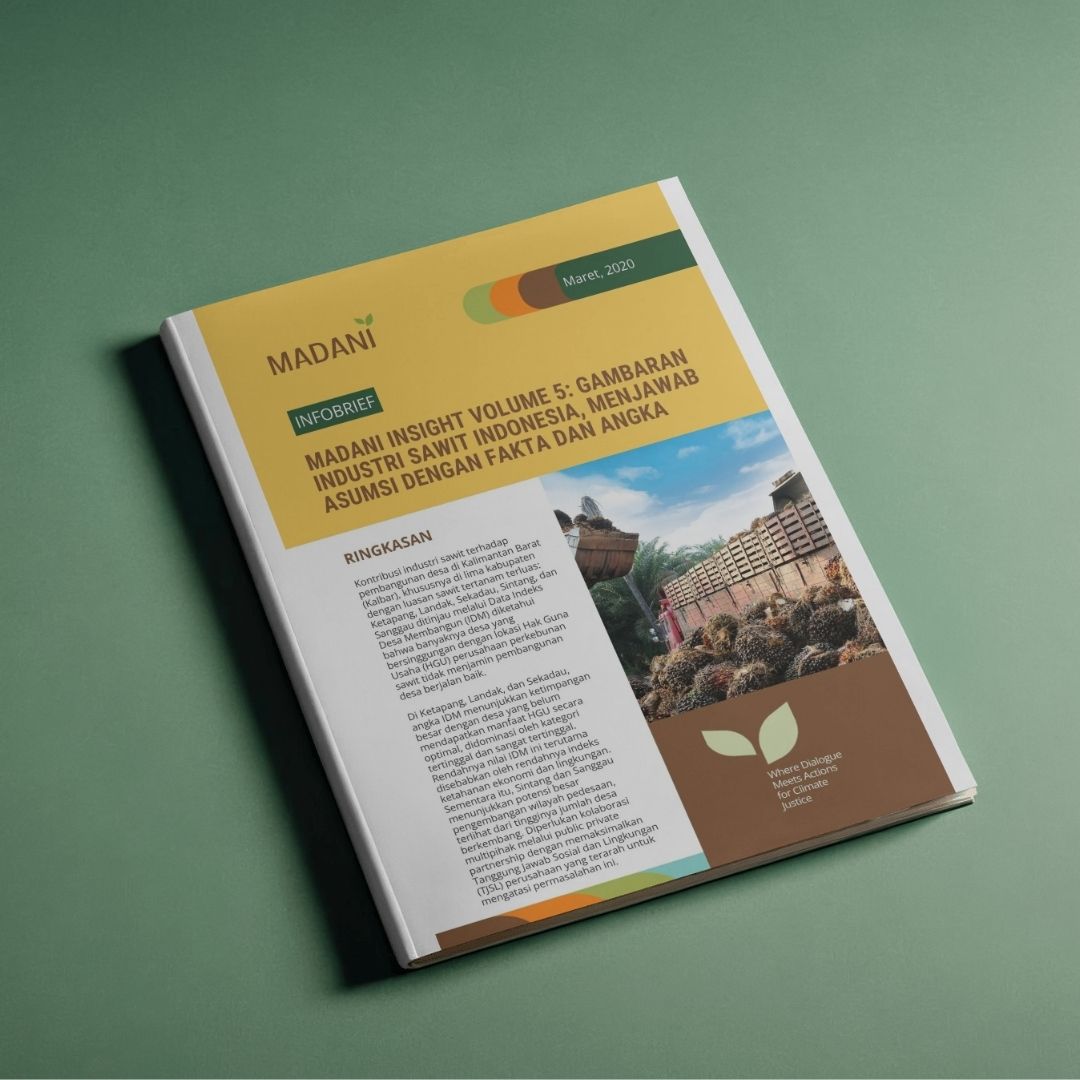
Tinjauan Industri Kelapa Sawit Indonesia: Menjawab Asumsi dengan Fakta dan Angka
Keberadaan perusahaan perkebunan kelapa sawit pemegang Hak Guna Usaha (HGU) di lima kabupaten di Kalimantan Barat, yaitu Ketapang, Landak, Sekadau, Sintang, dan Sanggau, belum secara optimal mendukung pembangunan desa-desa di sekitarnya, meskipun provinsi ini memiliki area perkebunan kelapa sawit terluas ketiga secara nasional. Studi kasus di Ketapang, Landak, dan Sekadau menunjukkan disparitas yang signifikan dalam Indeks Desa Membangun (IDM), dengan banyak desa yang masih menerima manfaat terbatas dari operasional HGU. Skor IDM yang rendah terutama didorong oleh lemahnya ketahanan ekonomi dan lingkungan, yang tecermin dari terbatasnya akses masyarakat terhadap peluang ekonomi, tingginya risiko bencana, serta buruknya kualitas lingkungan di desa-desa sekitar kawasan HGU.
Sementara itu, data IDM dari Sintang dan Sanggau menunjukkan potensi besar untuk pembangunan perdesaan, dengan banyak desa berkategori "berkembang" yang mampu melangkah lebih maju. Untuk mengurangi disparitas dan mengoptimalkan kontribusi industri kelapa sawit, diperlukan kolaborasi multipihak melalui kemitraan pemerintah swasta, yang didukung oleh program Tanggung Jawab Sosial dan Lingkungan (TJSL) Perusahaan yang lebih tepat sasaran. Pemerintah daerah dapat mengarahkan keterlibatan perusahaan ke desa-desa berkembang dan tertinggal, menerapkan mekanisme penghargaan dan sanksi, serta mempromosikan inisiatif konkret seperti peningkatan akses jalan desa, pembentukan Pusat Pelatihan Kewirausahaan (PPK), dan penggalangan Masyarakat Peduli Api (MPA) untuk memitigasi risiko kebakaran hutan dan lahan.