Dokumen Indonesia:
Tren dan Prospek Pengelolaan Sumber Daya Alam di Indonesia
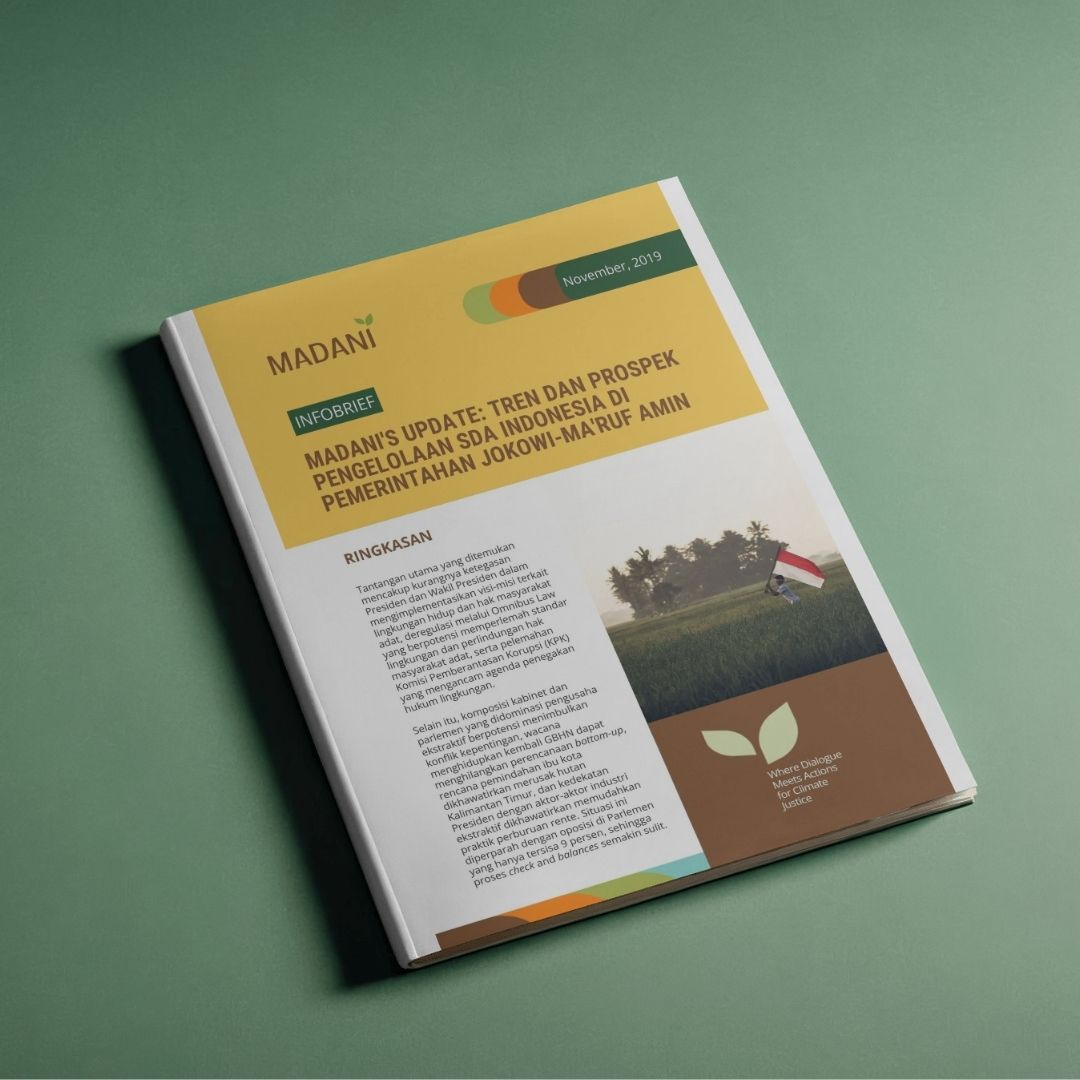
Studi ini memetakan berbagai peristiwa politik terkait pengelolaan sumber daya alam, seperti visi-misi Presiden, kebijakan Omnibus Law, pelemahan KPK, serta komposisi Kabinet dan Parlemen yang berpotensi menimbulkan konflik kepentingan. Tantangan utama yang diidentifikasi meliputi kurangnya ketegasan Presiden dalam menerapkan misi untuk lingkungan hidup yang baik dan sehat serta hak-hak masyarakat adat, deregulasi yang berisiko melemahkan standar pengendalian lingkungan dan hak-hak masyarakat adat, serta pelemahan agenda antikorupsi di sektor sumber daya alam. Lebih jauh lagi, faktor kekhawatiran lainnya adalah komposisi kabinet dan parlemen yang didominasi oleh pengusaha industri ekstraktif, wacana menghidupkan kembali GBHN, pemindahan ibu kota negara, dan kedekatan Presiden dengan aktor-aktor industri ekstraktif yang dapat mempermudah praktik perburuan rente.
Berbagai pidato Presiden Jokowi menekankan pembangunan infrastruktur, pengembangan sumber daya manusia, mengundang investasi secara luas, dan reformasi birokrasi, namun jarang sekali menyinggung komitmen terhadap perlindungan dan pengelolaan lingkungan hidup yang berkelanjutan. Kebijakan Omnibus Law direncanakan untuk merevisi sekitar 74 undang-undang demi meningkatkan peringkat kemudahan berusaha dan mengurangi defisit neraca perdagangan, tetapi dikhawatirkan hal ini akan menurunkan regulasi perlindungan lingkungan dan mengikis nilai-nilai budaya masyarakat adat. Pelemahan KPK melalui revisi undang-undang dan proses seleksi pimpinan baru yang tidak transparan dikhawatirkan akan mengganggu agenda penegakan hukum lingkungan, mengingat besarnya potensi korupsi di sektor sumber daya alam.